From Lubbock to Luck: Joe Ely
A Look Back
When Joe Ely passed away, Texas lost not just a musician, but a dream of what Texas music is. Someone who carried all of Texas in the grain of his voice. For those who knew Ely the best, though, his defining trait was something much quieter… a sharp, merciful view of the world.
Joe honed his craft as a barroom poet, a punk-adjacent outlaw, and a border music aficionado on the streets and in the back rooms of Lubbock, honing his craft one song at a time. His career, spanning over five decades, reads less like a traditional ascent and more akin to the sloping, meandering features of the Llano Estacado. A true blur of geography, genre, and generation, but always firmly anchored to the West Texas dust he was born and raised in.
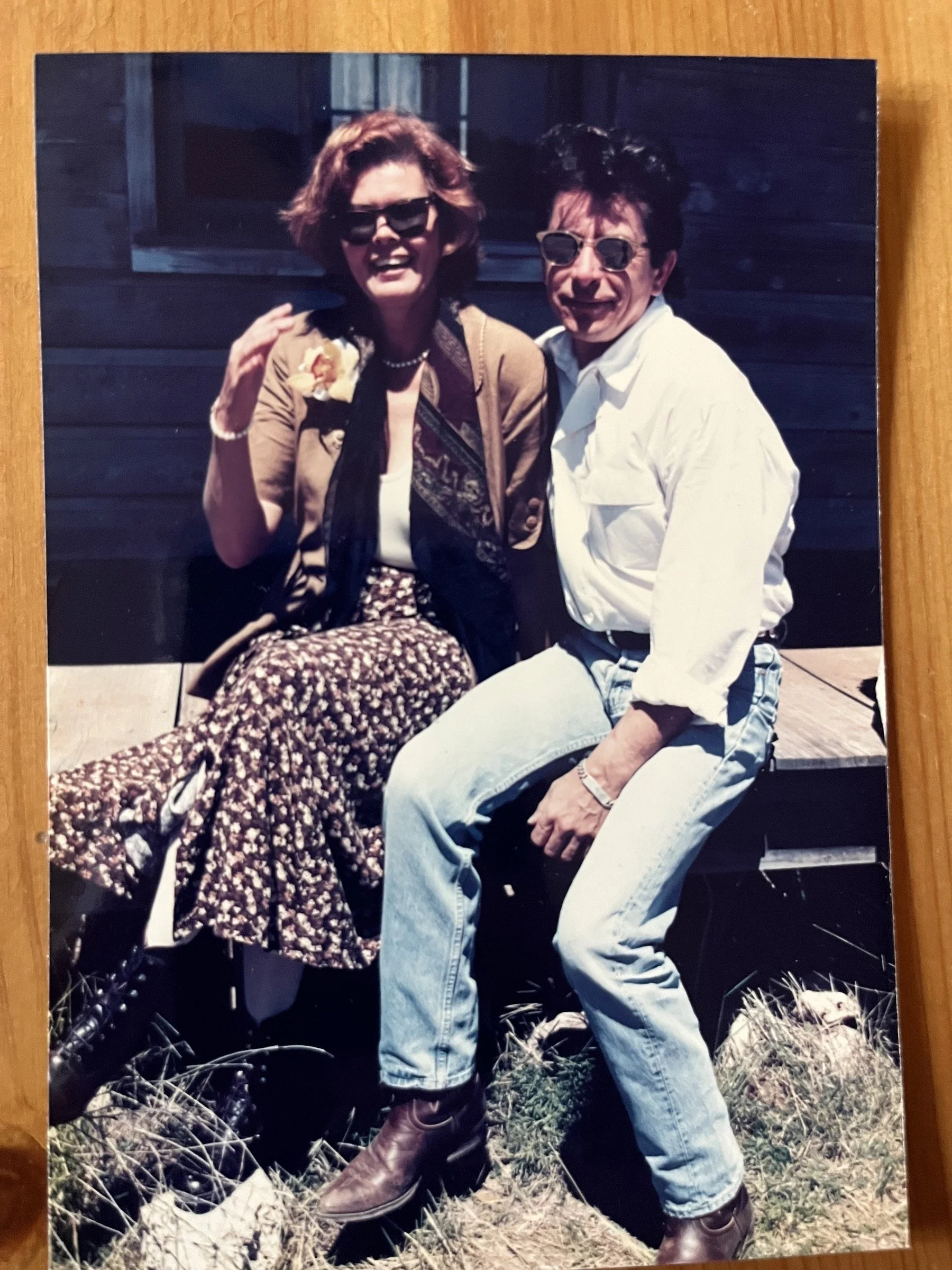
“Joe had a perspective on the world and a sense of humor that gave him a unique hi-res coolness,” says Kimmie Rhodes, longtime collaborator, friend, and fellow Lubbockite. “There was irony in his voice, but also sweetness. That’s what people heard.”
Rhodes remembers seeing him play the first concert she ever attended. A back alley in Lubbock, Joe in a high hat, armed with a guitar and harmonica. “I thought he was like the Bob Dylan of Lubbock or somethin’.” Rhodes says. “I always loved him after that.”
Their bond ran deeper than Lubbock, than music. Shared histories intertwined, over late nights in pool halls, with Ely remembering Rhode’s family long gone, a shared anchor to their story and the grit of Lubbock. A bond neither could fully explain to anyone else.
“He told me once, ‘You’re kind of like my sister,” Rhodes recalls. “We understood each other because we came from that gritty Texas street background.”
That shared history found its way to Luck, Texas. Long before the modern incarnation of Luck Reunion, it was Rhode’s play “Small Town Girl,” that played a part in the inspiration of the community events and productions that continue to take place on these hallowed grounds. This play starred none other than Joe Ely, leaving a truly remarkable footprint on Luck and setting the stage for a moving and memorable performance in the now infamous Luck Saloon.
“So when I started writing that play, kind of accidentally — I didn’t even know it was a play at the time — I was hanging out with John Lacey who was building the playhouse [now the Saloon] out at Luck,” Rhodes recalls. “We just had to do it there. And I had this idea we’d move the audience from site to site, building to building. Sharon [Ely, Joe’s wife] was playing my mom. Joe knew my dad, and I said to him, ‘Please, will you play him?’, because he knew him. He said he’d love to, so he played my dad. And Jolie [my daughter] played me.”
Jolie shares her memories with Joe on set: “When I think back on my time spent at Luck with Joe, it’s so him: a kaleidoscope of circus stripes; hill country dust; pastel easter eggs; music drifting through the western town and, of course, gifts of wisdom imparted from the king of cool.”
The play meant more to Rhodes than just a play. It was art, communion, and shared histories moving through a fragile space in time, marked in the epic setting of Luck. “That’s what art really is.” says Rhodes. “The perfect people, like Joe, running around together.”
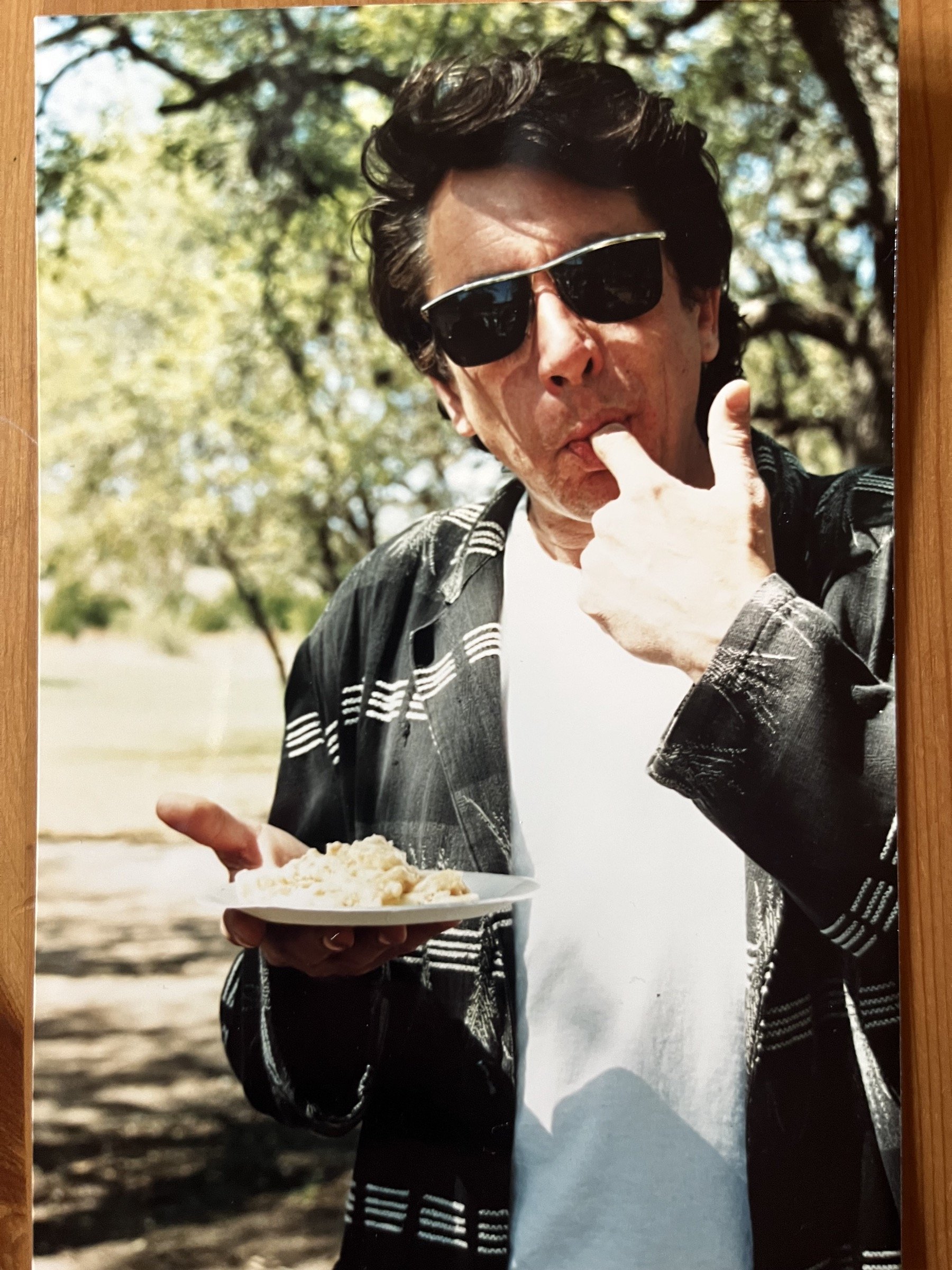
Ely spent his life roaming. Across highways, borders, genres, and lives. But his greatest gift may have been how fully rooted he stayed. In Lubbock, in Texas, in Luck. He carried the past forward with him, making it sharp and alive.
At the heart of it all, Rhodes says, was Ely himself: unforced, enduring, and true… just like an Ely song.
“It was a magical time,” Rhodes says, “and Joe was at the center of it all.”