Willie, Trigger, and The Art of Staying
Every night before the lights hit the stage, a ritual took place in the shadows of stage left. Tom “Tunin’ Tom” Hawkins adjusted the pegs on a worn nylon string guitar - an instrument scarred by decades of pick wear, signed by legends, and bearing its iconic second soundhole. He gave it one final test before handing it over to Willie Nelson, who stepped out to meet the crowd.
In an era where artists replace gear at the first scratch and rotate crews every season, Willie Nelson’s entire world has always been an exercise of radical devotion. When Tom Hawkins passed away, it marked the loss of one of the few human beings entrusted with the physical life of Trigger.
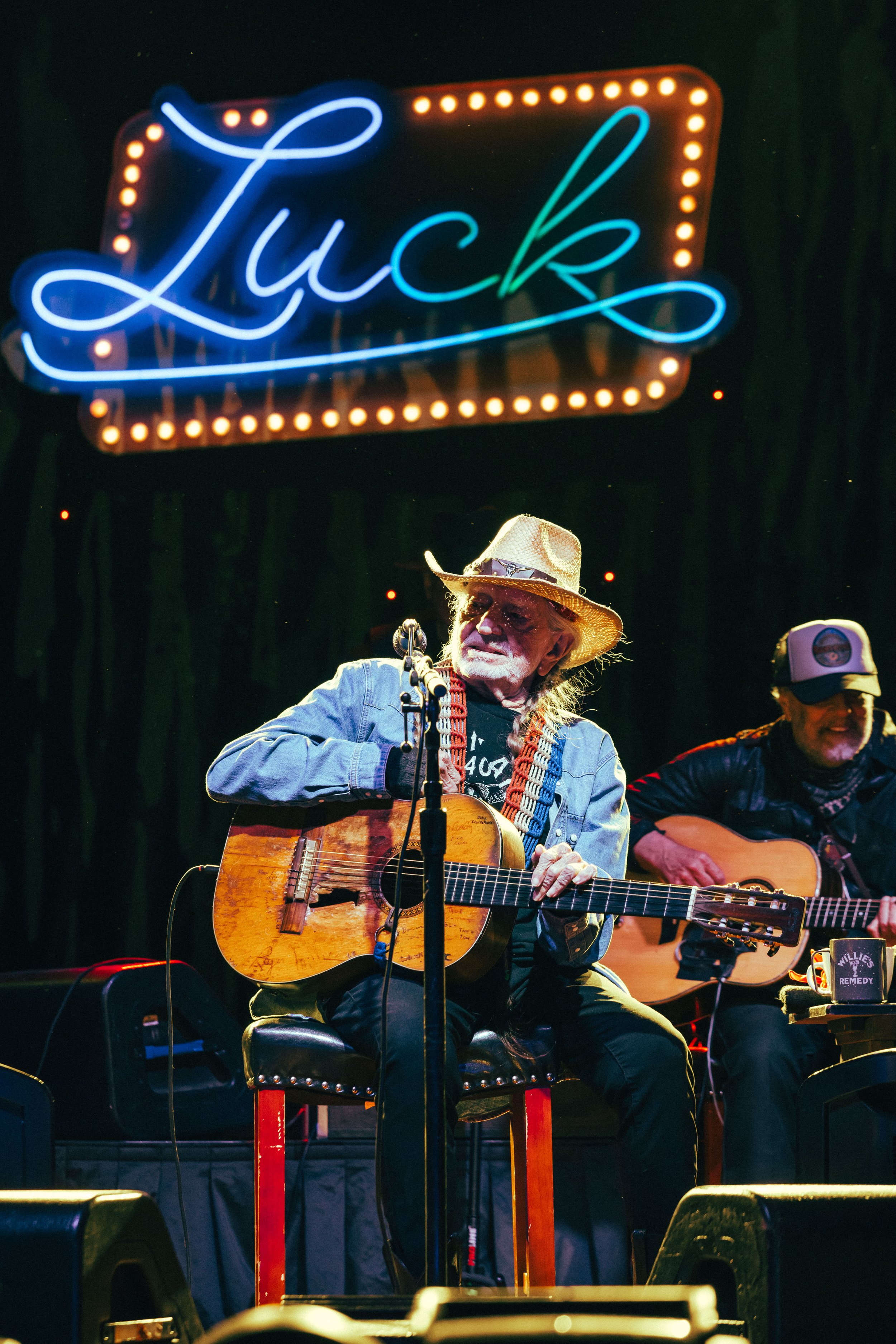
Photo by Justin Cook
Most touring setups rely on redundancy. If a primary guitar snaps a string or loses a pickup on stage, a tech hands off a backup within seconds. Willie Nelson doesn't have a backup. There is only Trigger. Without a backup guitar in sight, Hawkins’ role required an intuitive, quick thinking expertise that went well beyond standard maintenance; it was about preserving a fragile, living artifact. The 1969 Martin N-20 classical guitar was never engineered to withstand the friction of a flatpick, let alone six decades of relentless touring. Its spruce top is worn thin, its frets are deeply grooved, and its internal bracing relies on delicate, ongoing craftsmanship to hold together.
That refusal to replace what works is deeply rooted in the ecosystem where Trigger’s story began. Back in 1969, after a drunk audience member stepped on Willie’s Baldwin guitar at a show, he sent it to luthier Shot Jackson at 416 Broadway in Nashville - the very building that would later become the legendary Robert’s Western World. When Jackson declared the Baldwin beyond repair, he told Willie about a classical Martin N-20 sitting in his shop. Willie bought it sight unseen over the phone.
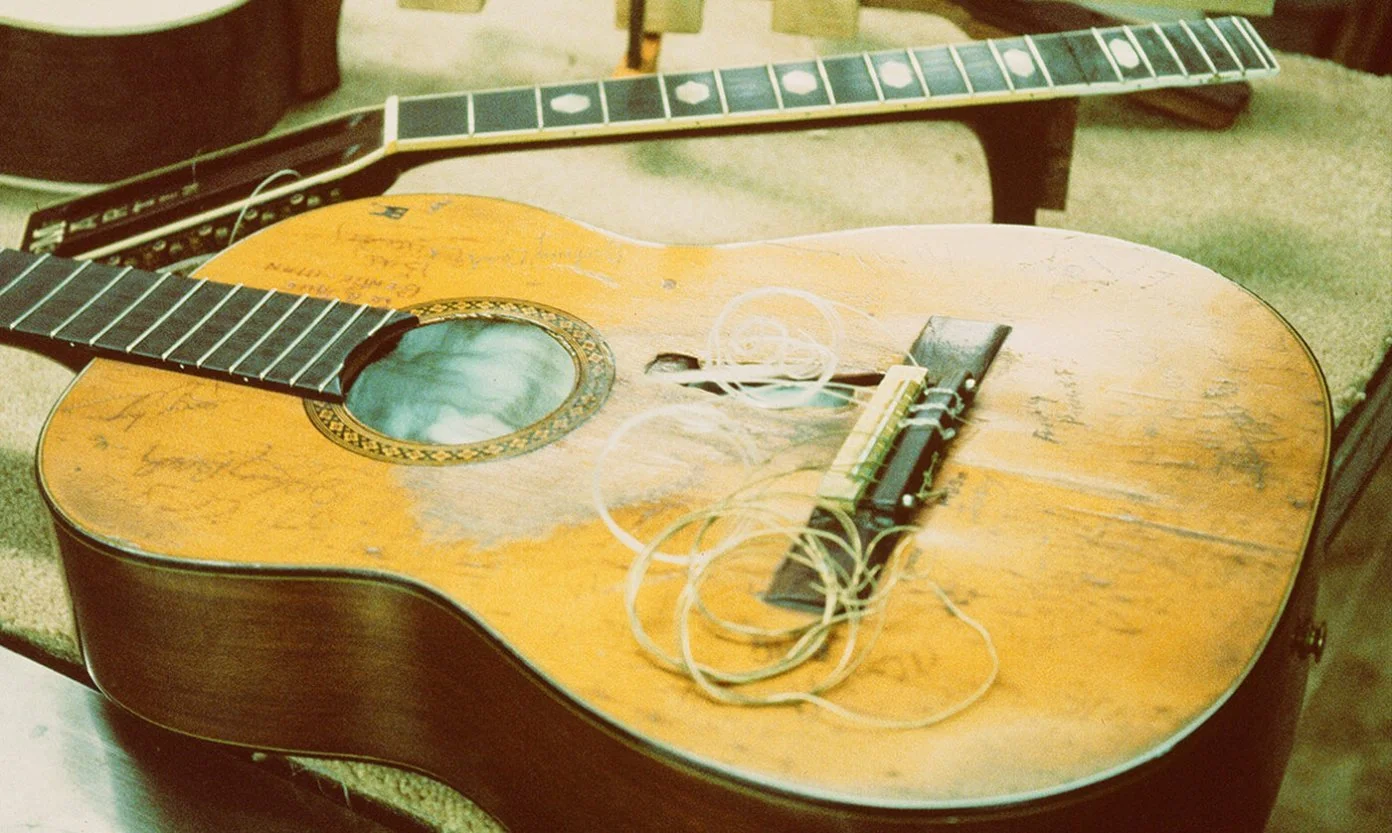
Long before it was known as Robert’s Western World, that storefront was home to Sho-Bud Guitars, a shop built on honest sweat, raw wood, and gear crafted to stand up to the road. Trigger was born from that exact ethos. Right there on Broadway, Jackson removed the Baldwin’s internal pickup and retrofitted it into the classical Martin, creating an instrument that defied every standard in country music. By shoving an electric pickup into a nylon string acoustic and running it through a cranked amp, Willie shattered Nashville's rule of pristine steel string rhythm, carving out a sharp, percussive tone that was entirely his own.
Willie built an empire around an unwavering code of loyalty. He didn't swap out his team as his star rose; he brought them along for the ride. From his late sister Bobbie on piano and his long running bandmates to the photographers, stylists, and road crew who have documented and sustained his world for decades, "The Family" is an operational philosophy. There is an immense, irreplaceable power in a crew that knows every nuance of a show before it happens, built on years of shared dust, long drives, and genuine, lived experience. Trigger wasn't just an instrument, and Hawkins wasn't just another tech on the payroll - they were both essential gears in a finely tuned machine, bonded by a shared history that you simply cannot buy or replace.
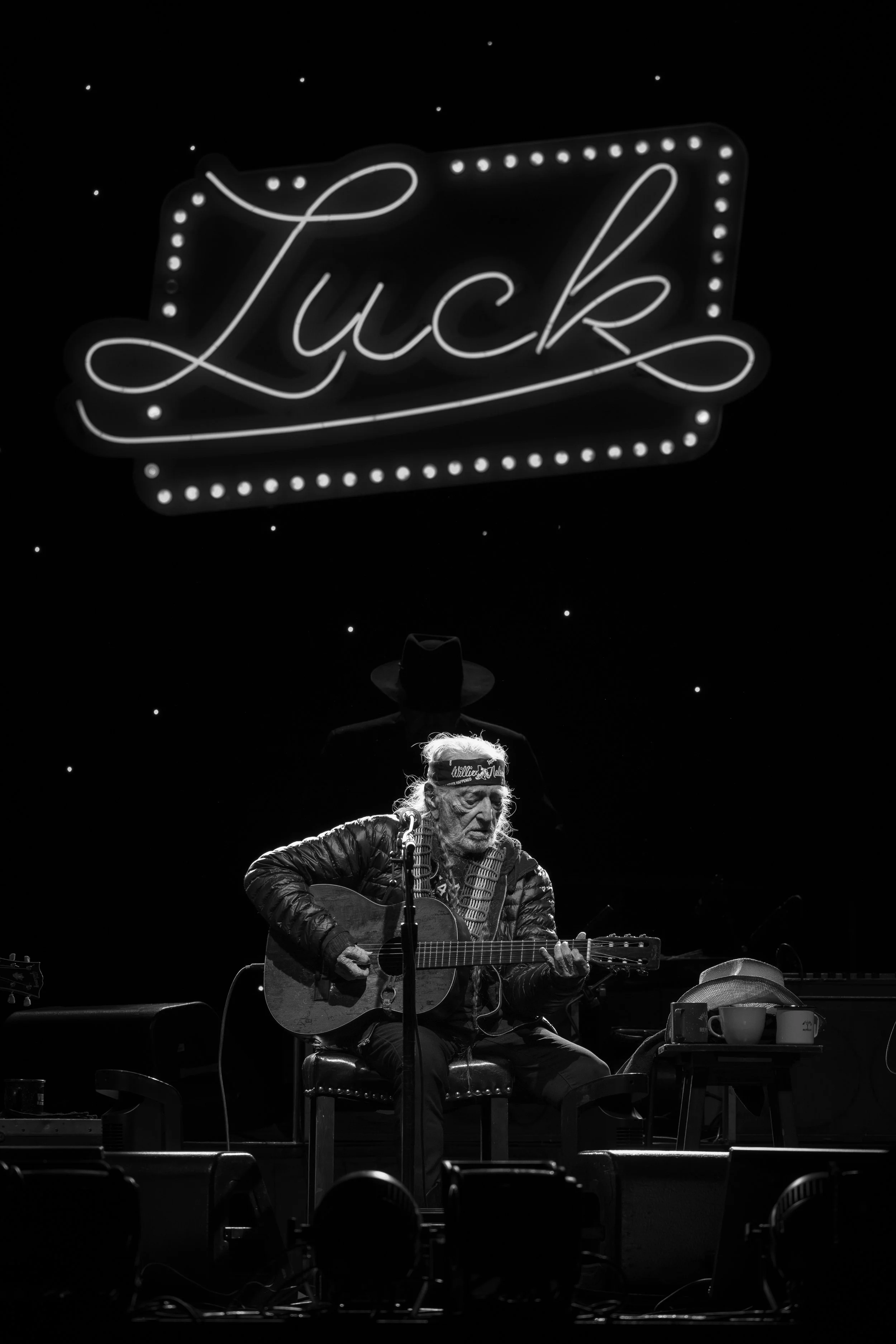
Photo by Taylor Hannan
Tours roll on, but the spirit of the road stays behind in the details. Every time Trigger rings out with that sharp, unmistakable bite, it carries the echo of the men who guarded it. Honor the songs all you want, but save a thought for the icons like Tunin’ Tom Hawkins - the guys who made sure that when Willie stepped up to the mic, the magic was ready to happen.
Trigger’s legacy continues to grow to this day. In 2027, we plan to honor this legacy at Luck Reunion with a very special offering. Stay tuned for more details!