American Remains: The Country Music Split
How do you draw a definitive boundary around a type of music?
Define it and categorize it just right, so you’re capturing the essence of the thing without squashing it?
For sixty-seven years, the Grammy Awards have tried.

Margo Price, Photo courtesy of Skin Your Knees Creative
And for sixty-seven years, country music, by the Academy’s own structure, was defined more or less like this: country music is…country music. A circular definition that left the gates wide open to interpretation. Which is exactly what’s been happening since 1959, as the Academy has tried to keep pace with an art form that shifts alongside culture itself.
Country music has never stood still. It didn’t in the 1950’s, it didn’t a decade ago, and it sure as hell doesn’t now. The music has always moved with the people who make it. Outlaws, drifters, truth tellers, and rule breakers. The folks pull new sounds into the circle while fighting to keep the soul of the music intact. Inclusion wasn’t inevitable. It was long overdue.
Enter Best Traditional Country Album.
This wasn’t a sudden or unconscious decision. By their own admission, the Academy has posed the question time and again of dividing the genre. This question has been raised, debated, shelved, and raised again. But last year, the conversation finally crossed the line into action.
The timing matters. Country music has been stretched, blended, polished, and pushed into all types of shapes and sizes. Sometimes this honors the roots, sometimes it tests the limits of the genre.
Take the much-discussed Cowboy Carter record from last year. No matter the side you see yourself on, the tension forced a long-avoided reckoning: what makes something country? Sound? Story? Spirit? Or Lineage?
By separating traditional country from the modern, genre-blurring descendants, the Grammys didn’t draw a line to divide. Instead, they made room to recognize all. Room for rawness, patina, and dust. Room for artists carrying country music forward to new lands, whether Nashville likes it or not.
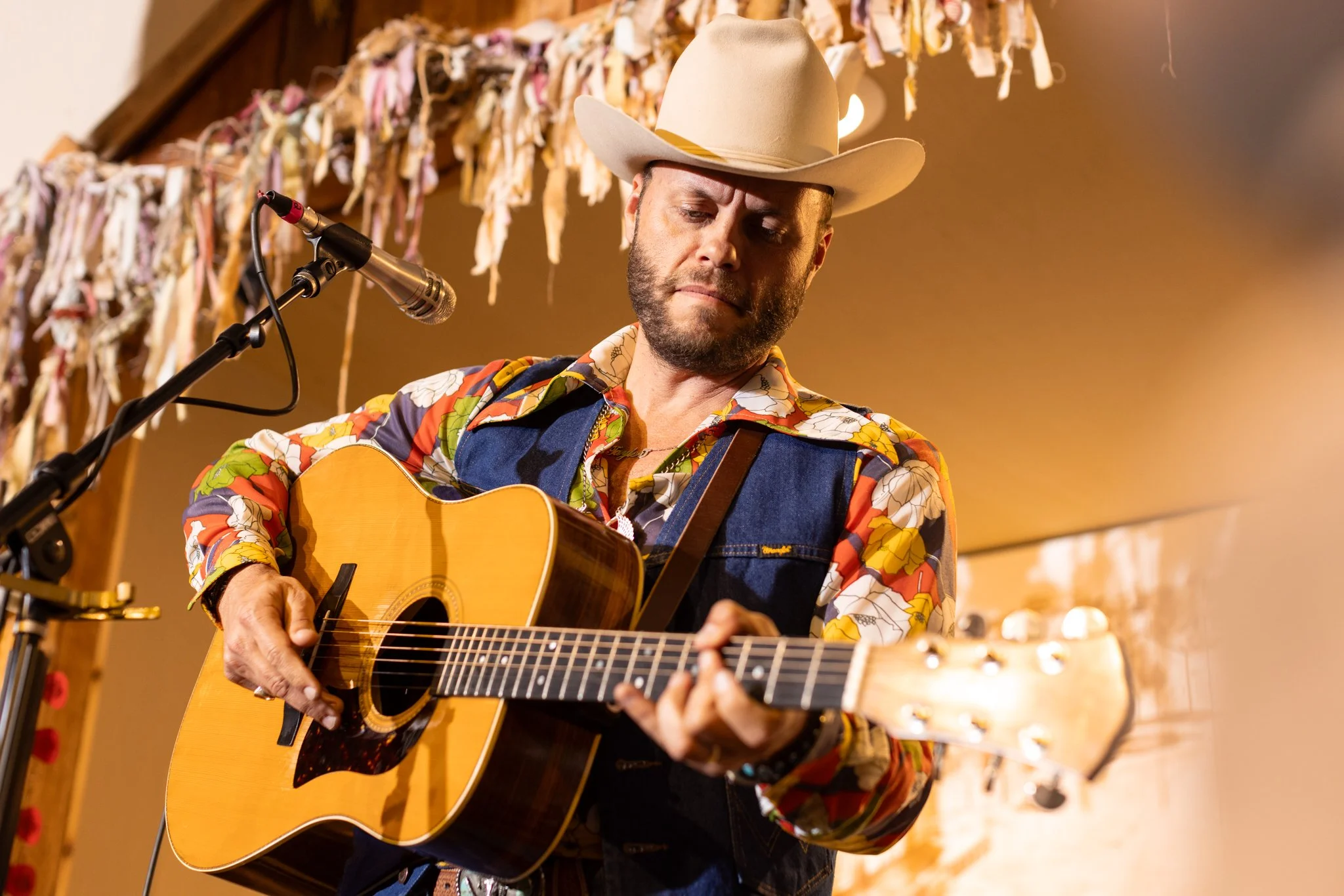
Charley Crockett, Photo courtesy of Marshall Tidrick
So for this year, for the first time, the two new categories appear side by side… along with real definitions to support them. Traditional country, per the Academy, centers on classic song structures, lyrical themes, and instrumentation rooted in the genre’s historical forms. Contemporary country recognizes modern production, crossover influence, and evolving stylistic approaches that still engage with country music’s cultural core.
This year, in the traditional category, you’ll see familiar Luck faces: Willie Nelson, Lukas Nelson, Margo Price, and Charley Crockett, alongside Zach Top. Artists who align easily with a roots-forward understanding of the genre.
In the contemporary field, you’ll find artists you might consider Pop Country names, like Kelsea Ballerini, Eric Church, Miranda Lambert, and Jelly Roll, paired with Tyler Childers. The latter perhaps existing in a category of his own, but folded into contemporary for lack of a better container. Don’t ask us. We’re not the Academy.
This kind of expansion isn’t new. R&B did it first. In 1999, the Academy introduced a traditional R&B category to distinguish classic, vocal-forward records from emerging hybrid sounds. Blues, Jazz, and Latin music followed similar paths. Even pop has a traditional category, believe it or not.
Country is simply the latest to catch up.

Lukas Nelson, Photo courtesy of Ismael Quintanilla III
Country, and country-western aesthetics more broadly, have exploded over the last six or seven years. You can see it everywhere. People who weren’t at all interested before are donning belt buckles they didn’t win. People who are fourth-generation farmers are finding themselves more visible… and, often, a little protective.
The Academy responded to the culture surrounding the music and to the artists making it, acknowledging that when the awards meant to reflect a genre no longer accurately represent its expression, it’s time to expand.
Now there’s also a clear distinction for a sect that prefers to keep it closer to the roots. A space for music that intimately knows exactly where it comes from. For songs built on restraint instead of spectacle and records that value lineage, craft, and storytelling over shine.
No more pissing contests over whose album is country-er. Just distinction.
The squeaky new and the well-worn boots can both play in the same sandbox.

Willie Nelson, Photo courtesy of Alana Swarigen
Over at Luck, there are no grand statements to be made. As the genre evolves, we’ll keep putting the kind that resonates with us on a stage. The outlaws, the drifters, the truth-tellers. We’ll keep celebrating the artists in the Luck family who are being recognized by the Academy.
Everyone’s welcome.
Just don’t be an asshole.