Cameron Neal Is in It for the Love of Music
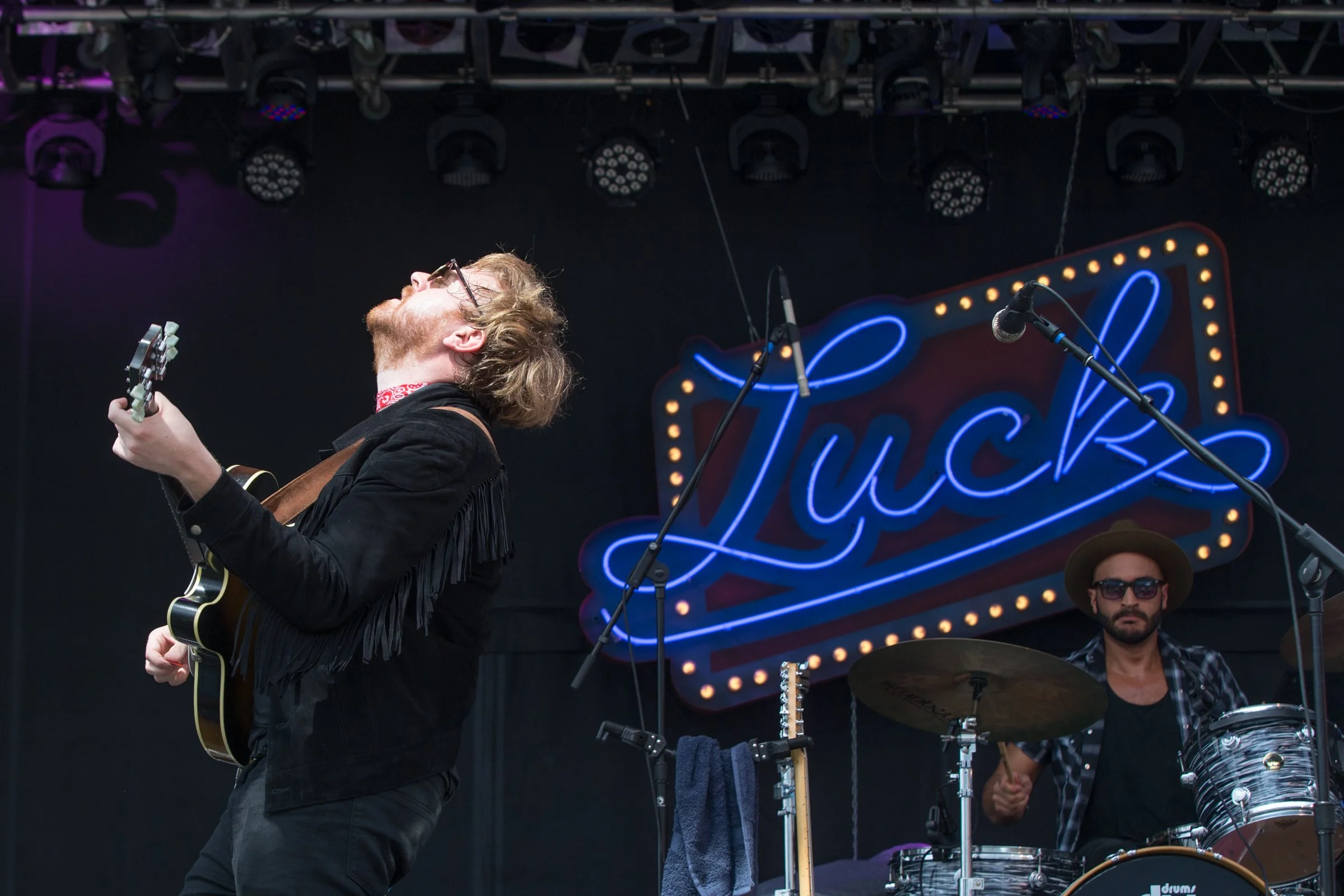
Photo by Suzanne Cordeiro
Cameron Neal was around seven years old, half asleep in his mom’s lap at a Guy Clark show in Texas, when the upright bass player caught his attention.
He leaned toward his mom.
“I wanna learn how to do that,” he said.
By second grade, he had an upright bass of his own. He needed a quarter-size instrument because, as he remembers it, he was “a tiny little guy.” A few years later came guitar and piano. In sixth grade, he was studying a Led Zeppelin songbook, learning how songs were put together, and writing his own. Bands followed soon after. From an early time in middle school, music was already moving toward the center of his life.
Cameron grew up outside Dallas with parents he describes as “secret hippies.” His dad worked a regular nine-to-five job for the American Diabetes Association, but after work, it was all Grateful Dead, Bob Dylan, the Beatles, and Traffic. He remembers his dad watching ESPN on mute with music playing over it. Both of his parents shared their love of music with him, taking him to shows and encouraging him as he started playing songs of his own.
That scene introduced him to Midlake, who would later take his band, Horse Thief, overseas and help bring them to Bella Union’s attention.
Cameron knew what he wanted early on.
“I wanted music to be a career,” he says. “That’s what I’ve wanted since I was sixteen years old.”
In pursuit of that career, Cameron and several friends headed north to Oklahoma City to study music at the Academy of Contemporary Music at UCO. The beginnings of Horse Thief had come with him from Texas, but in Oklahoma, the band took shape. Horse Thief signed with British label Bella Union while he was still in school.
“I don’t know if this is the best path but I’m gonna go do it,” he remembers thinking.
People responded. Horse Thief built a following in Oklahoma City and started traveling farther from home. Their debut full-length record, Fear in Bliss, came out on Bella Union in 2014 after the band had begun touring abroad. Trials & Truths followed in 2017.
The career he had imagined was beginning to take shape, but his measure of success remained simple.
“As long as I feel like I’m moving forward and I can keep doing this and survive, that’s a success to me.”
Horse Thief also brought him to Luck.
His first trip to the ranch came during the early years, before Luck Reunion had taken its current form. Cameron knew it was Willie Nelson’s property, but he wasn’t prepared for the entire Western town sitting out there.
“I didn’t know how much of a full city it was, built in the middle of nowhere,” he says.
What stayed with him most was the hang. Luck brought together artists who might not normally tour together or even share a bill, but it felt like they all belonged in the same place.
People watched one another play, made friends, and built relationships that extended well beyond the ranch. He says many of the people he met through those years remain some of his closest friends.
“It’s very much a family.”
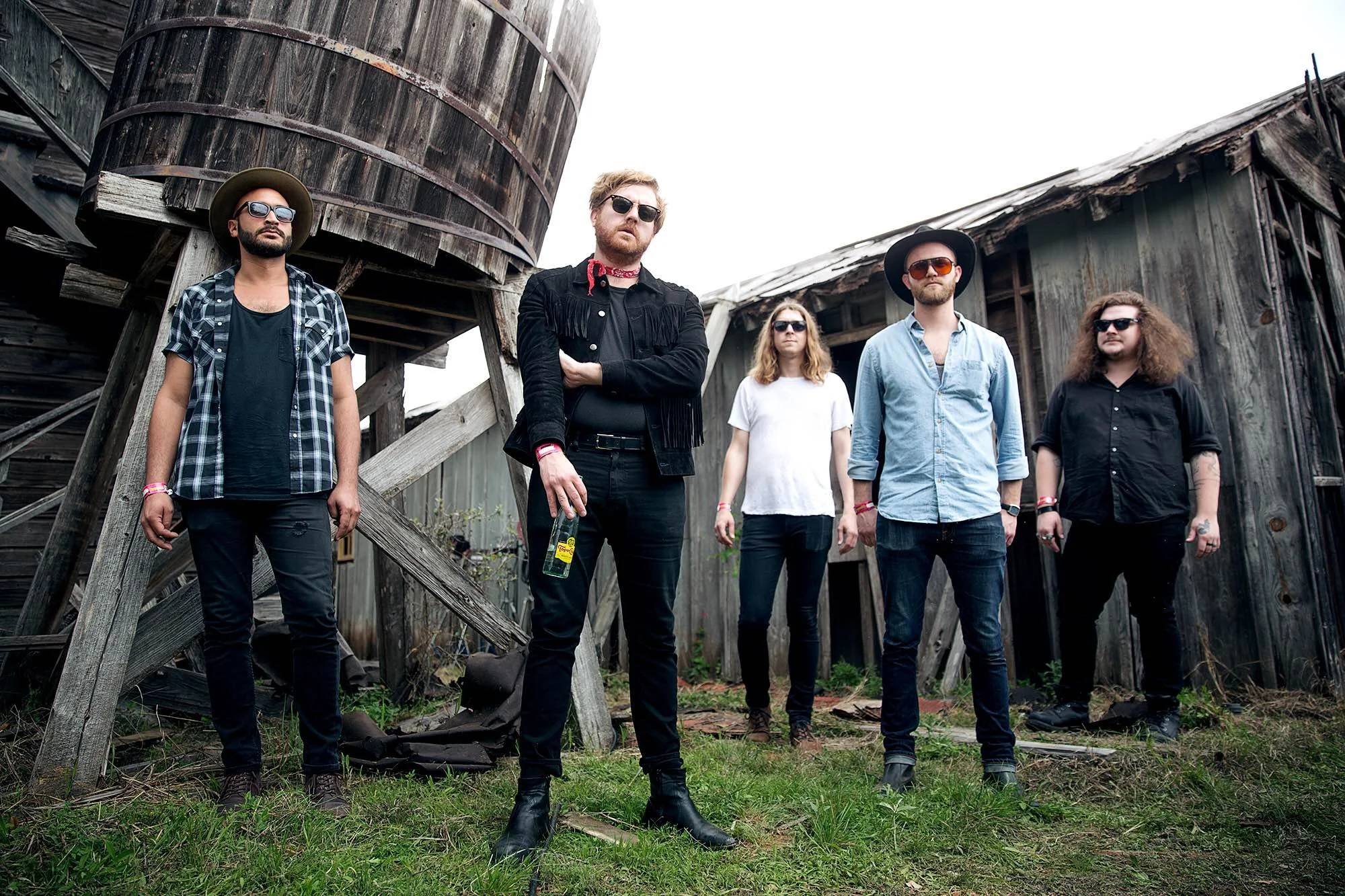
Photo by The Joelsons
He still keeps his Luck ring on the bedside table, and he still has the festival staff jacket he was given year one.
“It’s the coolest jacket,” he says.
One of the relationships that deepened at Luck was his friendship with Elle King.
The two had met in New York before they played Luck together, but the ranch was where they really became friends. Elle saw Horse Thief play and later brought the band on tour, putting them in front of crowds of a couple thousand people a night. A few years later, Cameron and Elle started writing together. He moved from Oklahoma City to Los Angeles and spent three years touring in her band.
He is quick to give people credit for those turns in his career. Midlake. Elle. Shakey Graves. His parents. Teachers who saw something in him early.
“If you love it, you’re gonna do it anyway,” he says, but he knows what it means to have people believe in him along the way.
Cameron now writes and produces in Nashville, working in recent years with artists including Clover County, the Gringos, and CMAT. Many artists he works with are early in their careers, coming up in a music business where a song can reach hundreds of thousands of people before the person who wrote it has spent much time onstage.
He isn’t particularly nostalgic about doing it the old way. The industry changes. It always has. What he carries forward is the support people gave him.
That means telling someone, “You’re really good. You really do have something unique.”
Those collaborations also stretch him creatively. He writes and tours for his own projects, while also producing records and playing on the road with other artists. Each role seems to feed the others.
On someone else’s song, he can move beyond his own sound. The music might be indie rock, folk, country, or pop depending on who is in the room.
“The fact that anybody would even want my opinion in the studio on how their songs should sound is a very huge honor,” he says.
Part of what keeps him excited is that no two songs, or writing rooms, lead to quite the same place.
“Songwriting is the most hopeful part of the process because it can be anything,” he says.
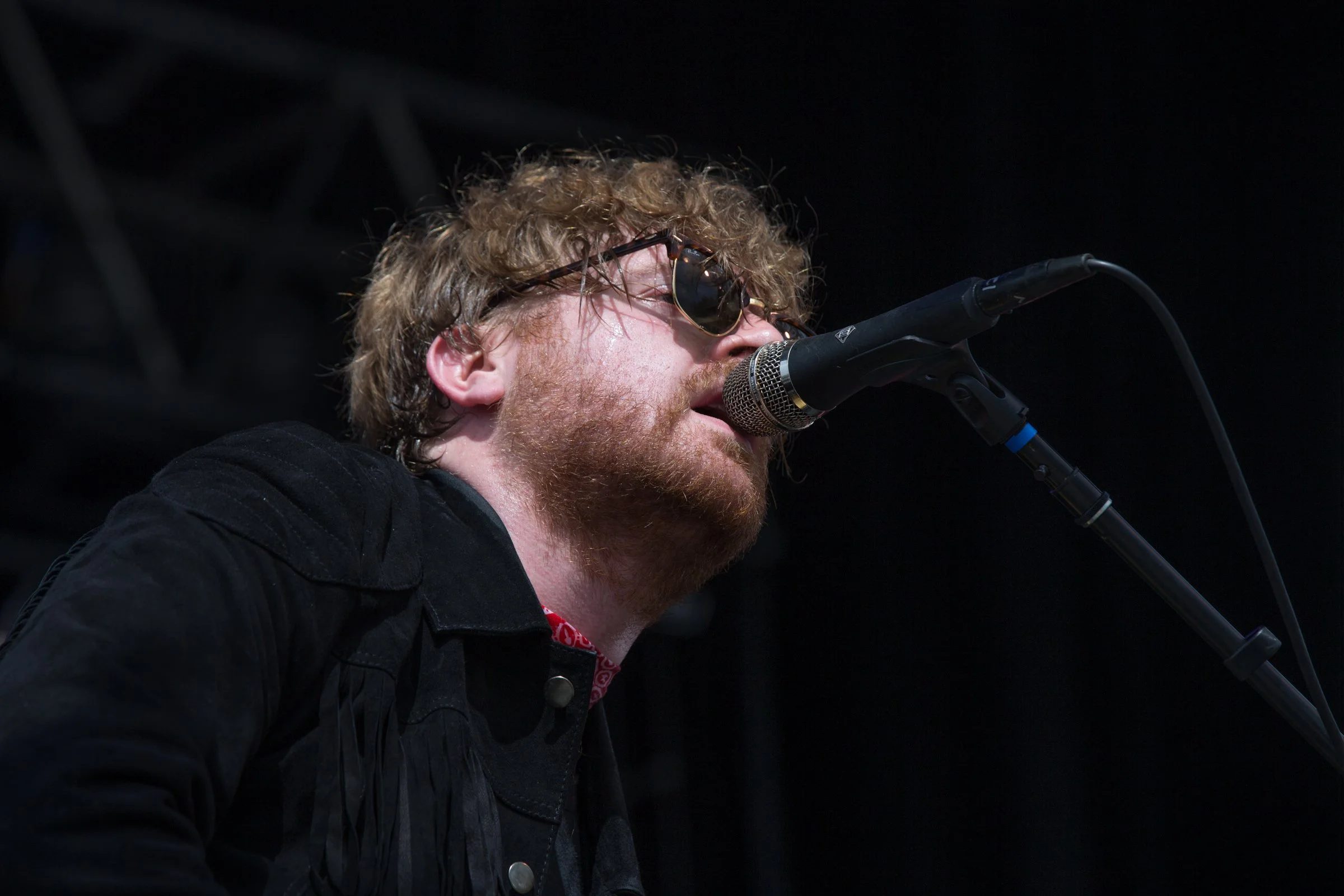
Photo by Suzanne Cordeiro
Cameron’s own songs have kept coming, too.
“I’ll always be writing my own music,” he says. “I’m always writing songs.”
During the pandemic, after stepping away from touring with Elle, he had time to focus on that side of his work again. He started Texino. About six months later, Shakey Graves called.
The invitation was initially to come into the studio, write, and lend a set of ears while Shakey made a record. By the end of the two-week recording session, the musicians in the room had become Shakey’s new touring band. He has been playing with him ever since.
There is a pattern to these relationships. When he gets into a room, people tend to want him back.
“You meet these people in what you do,” he says, “and you’re like, you really see music in the same way that I do.”
Alongside those collaborations, Cameron has kept writing for Texino. He recently finished the project’s first full-length record. In his mind, every song follows a different person from the same small town. He wrote it unusually fast and in chronological order, from the first song through the last.
He began writing the record shortly after learning that he and his wife were going to have a baby. While his son isn’t the subject of the whole record, he is tucked into it. The opening song moves at the tempo of the first heartbeat he and his wife heard at the doctor.
From there, the record gets considerably wider: growing up, hope, addiction, suicide, and what Cameron sees happening in America around him.
“All the good stuff,” he jokes.
When he is home in Nashville, there is also Thursday night at the American Legion. He joins a rotating group of musicians for a weekly residency, sometimes nine of them onstage at once. They play the Kinks, Velvet Underground, Linda Ronstadt, and Dolly Parton. People dance and sing. Musicians come and go.
“It’s a good community hang,” he says.
That might be Cameron at his truest. Surrounded by people, playing music. His own record, another artist’s song, a spot in a touring band, or a Thursday night playing covers with friends. He just wants to keep making music. And nearly two decades in, he’s still as in love with the process as ever.
“I love it,” he says. “I love all of it. And I think if you lose that, then that’s when you should move on.”