Emmanuel Chavez on Growing with Tatemó
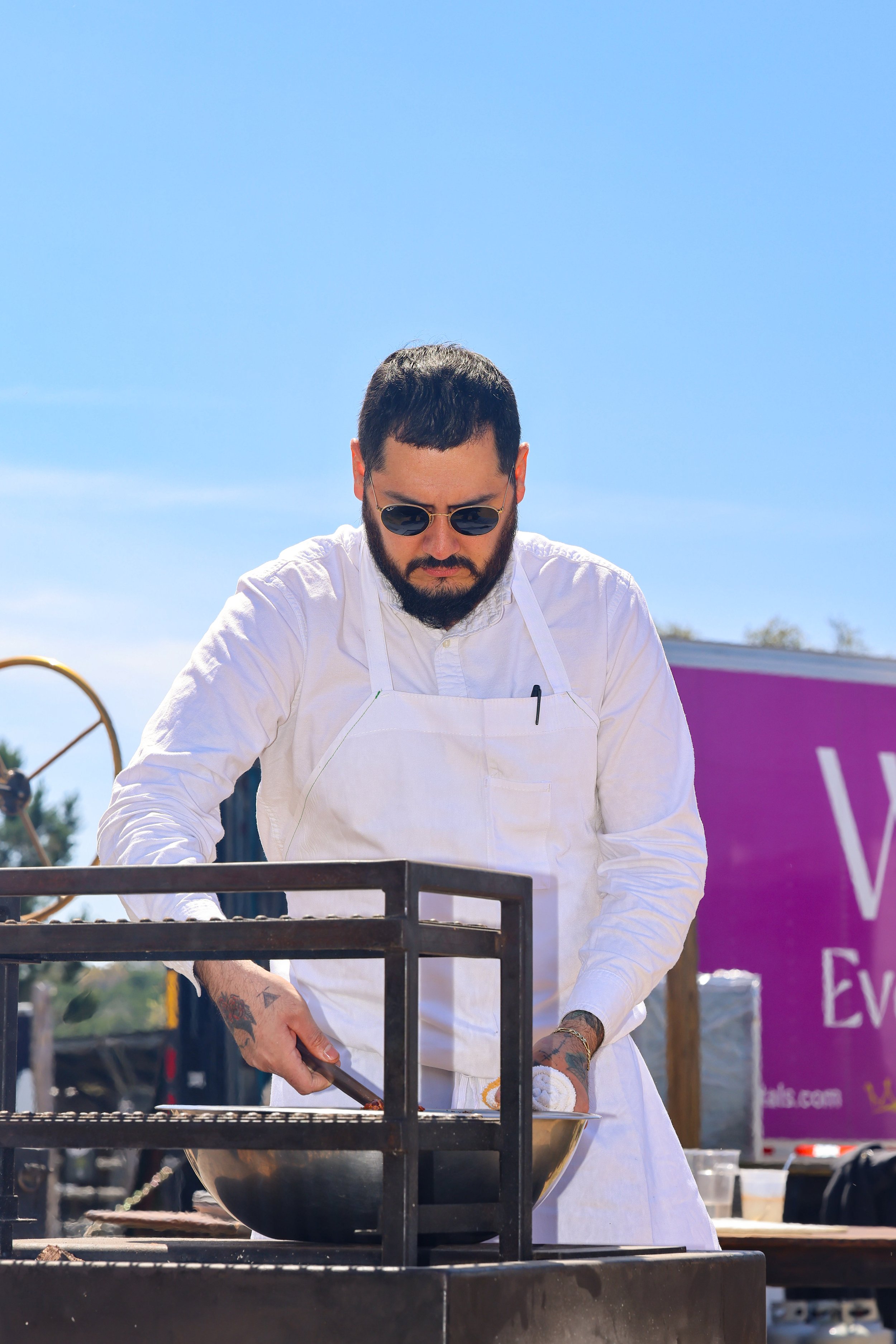
Photo by Taylor Hannan
At Tatemó, everyone washes dishes. Even Emmanuel Chavez.
Chavez is the chef and co-owner of Tatemó, the Michelin-starred Houston restaurant where heirloom maize sits at the center of the menu. As Tatemó has grown, Chavez has stayed close to the restaurant's day-to-day. He still spends around 13 hours a day at Tatemó, rarely misses a service, watches plates as they go out, and jumps in wherever he’s needed, whether that’s on the line or in the dish pit.
As Chavez’s role has expanded, cooking has gotten easier.
“I feel like that’s nowadays the least stressful part of my day-to-day,” Chavez says. “Just cooking.”
There’s also the competitive pleasure of reminding a mostly younger staff that he can still keep up.
“I do like to talk a little bit of shit and let them know that I still move faster than most of them,” he says. “I try to keep it fun and challenging within our little establishment.”
Chavez describes his role now as doing “all and nothing at all at the same time.” He’s learned to step back, delegate, let other people lead; but his eyes are still on the restaurant. Like his father, Chavez started out washing dishes. He believes there’s something to learn from the work that no one is lining up to photograph. When asked what washing dishes taught him, he answers quickly.
“Discipline, for sure. And actual love.”
“It’s easy to love holding a cool knife and plating something nice with tweezers,” he says. There is pleasure in fabricating a piece of beef or putting together a beautiful plate. “That’s the easy part of the industry. The hard part is falling in love with the hard things.”
That lesson started early for Chavez. He spent much of his childhood in restaurants with his parents, and he is quick to push back against the romantic version of that story.
“To be honest, I hated it,” he says.
He was just a kid stuck at work with his parents. As he got older, he understood what those hours meant for his family, why the adults around him took it so seriously. So he found things to do. He rolled silverware. Readied plates and napkins. Seasoned chips and counted bags of sugar. “Just little things here and there,” Chavez says, enough that he no longer felt like he was just waiting for the day to end.
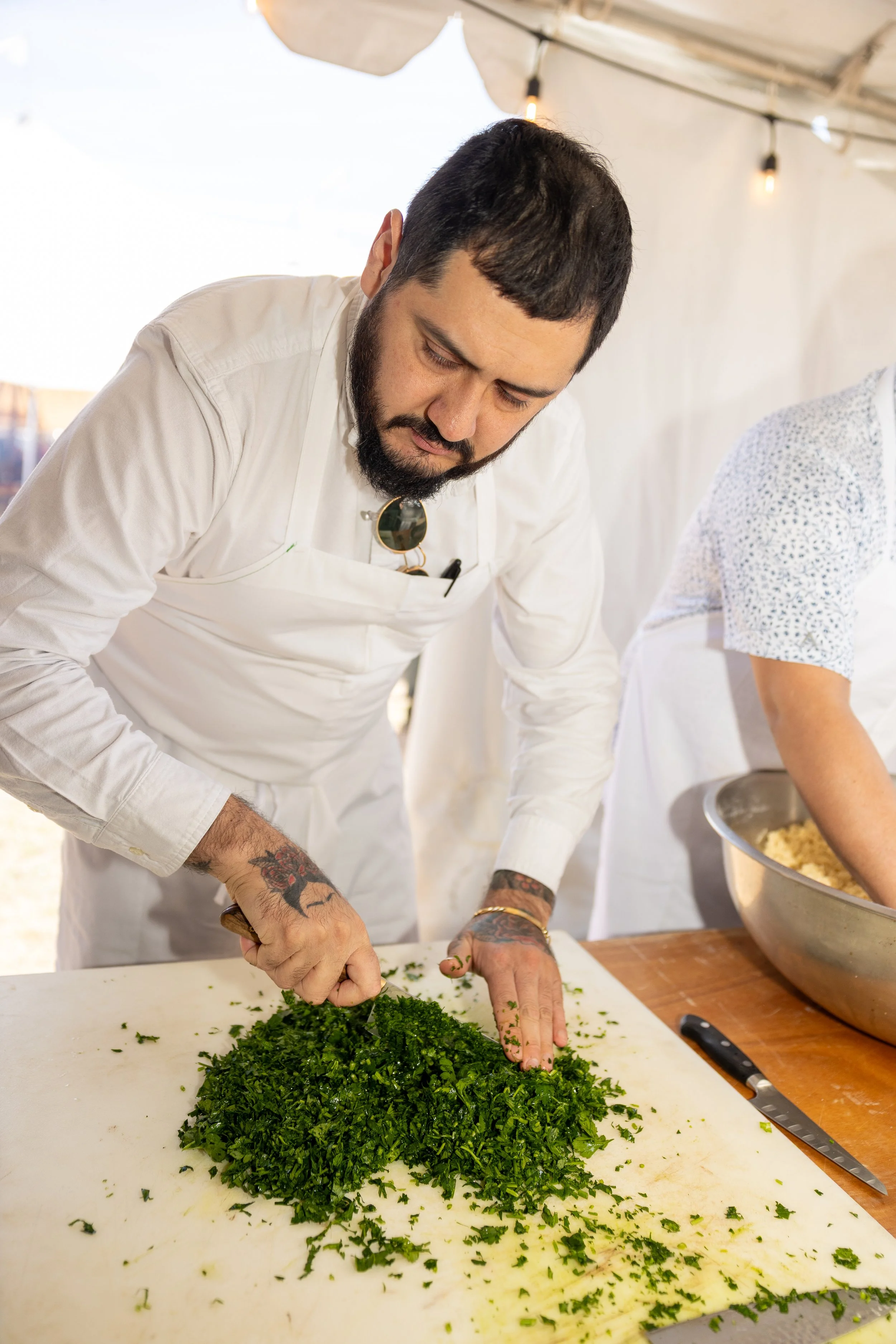
Photo by Brooks Burris
And then there were the cooks, “pirates,” as Chavez remembers. They smoked, drank, cursed over loud music, and moved fast around flames and sharp knives. To ten year old Chavez, they were impossibly cool.
“They’re like your big brothers, right?” Chavez says. “You’re like, I wanna be the cool guy. I wanna do that.”
And, well, he did.
Chavez still loves what first pulled him toward kitchens: the speed, the energy. The feeling that everyone has a part to play and that people are counting on you to play it well. What has changed is his understanding of how to get a team there.
“I had [to do] a lot of reflecting on my delivery,” he says. “I had to understand that just because I enjoy that environment doesn’t necessarily mean that it works for everyone.”
So Chavez listened, let other people take on more, and stepped back when he needed to. The result, he says, is that the restaurant “flourished collectively as a team.”
That evolution tracked with Tatemó’s growth, which Chavez describes in sports terms. Year one, he was the star player. Then the coach. By year three, the general manager. Now, he’s the owner.
“As the restaurant matures, I also need to mature,” he says.
The restaurant Chavez leads now looks very different from the Tatemó he first imagined. Before the pandemic, Chavez was approached about opening a much larger Mexican restaurant in downtown Houston: 120 seats, financing already in place.
“I was feeling on top of the world,” he says.
Then Megan Maul, Chavez’s now business partner, noticed something he hadn’t. The investors wanted all three meal periods: Breakfast, lunch, and dinner.
“That, to me, was a massive no.”
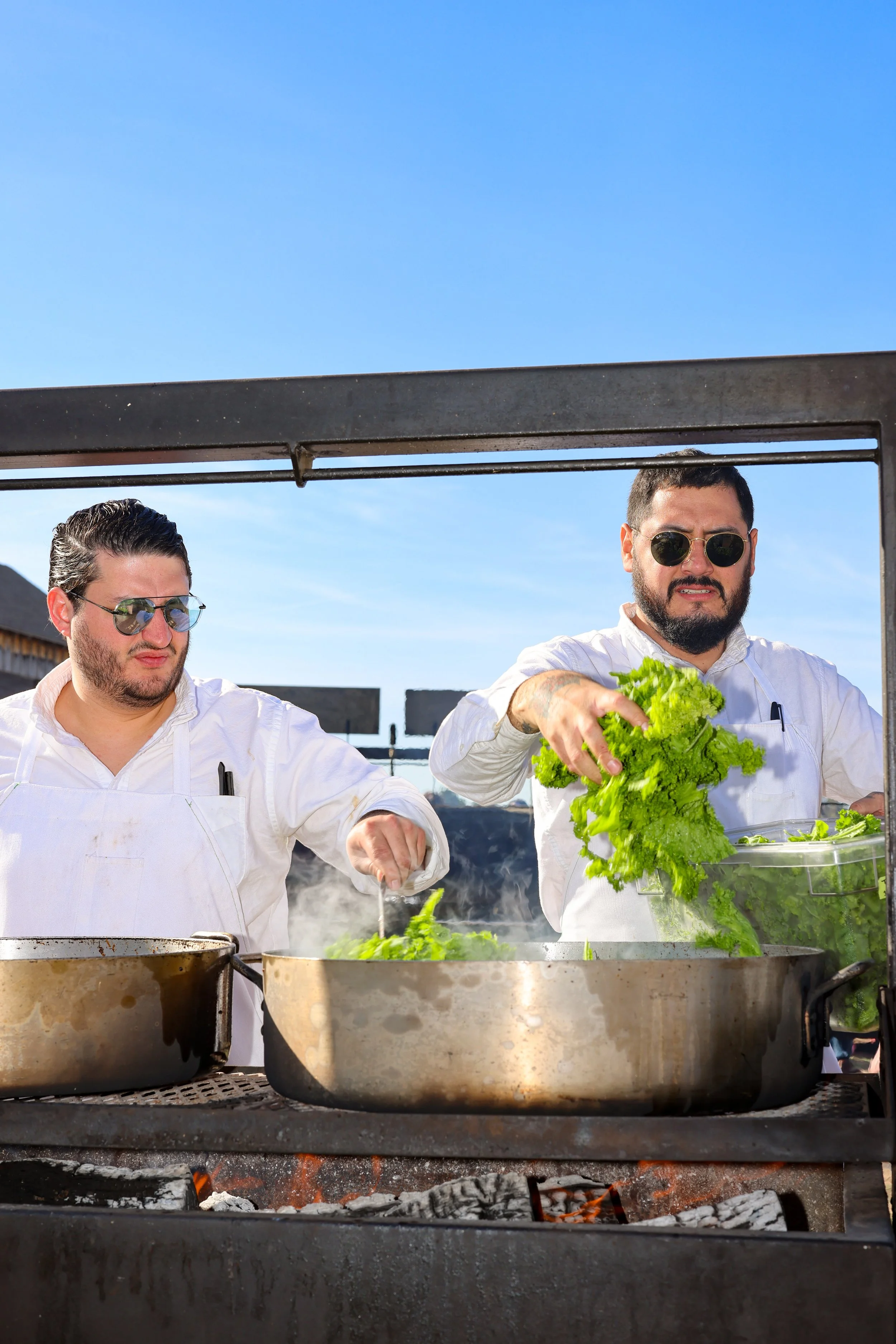
Photo by Taylor Hannan
Chavez wanted time between services. For prep, so his team could go home and decompress. He held off on signing, and then the pandemic hit. Within weeks, the investors pulled out.
“It was a blessing in disguise,” Chavez says. Had the contract been signed, he figures, “we would have gone bankrupt.”
They came out of the failed deal knowing something useful: exactly what their ideal restaurant cost. They just didn’t have the money.
So Chavez and Maul started imagining what they could build without it.
“What is the Tatemó that doesn’t have three blenders, that doesn’t have 120 seats, that [has] chairs from a secondhand shop?” Chavez remembers asking. “What does that look like? What does that cost?”
They crossed things out until the numbers began to look possible.
Chavez remembers thinking, “It might not be the restaurant of our dreams, but it’s a restaurant at its core, right? It’s a restaurant where we can nurture people, teach people, and continue to do what we’ve always wanted to do at a smaller scale.”
They signed the lease in 2021. Tatemó is still in that space today.
The kitchen is only around 400 or 450 square feet, and its limitations have become part of the restaurant’s character. There’s not much room for wasted motion, and changing even one dish can alter the flow of an entire service.
A new course has to taste good. It also has to fit the tasting menu and the kitchen's choreography. Where will the plates go? Which side of the kitchen picks it up? Do we need to buy new plates?
Chavez and his team run the same movements so often that the motions of service settle into the body.
“Your body kinda gets used to the sequences of the service,” he says. “The moment we change the sequence, it’s like people have never cooked before.”
The menu itself has become collaborative too, something that took Chavez a while to accept. For years, he felt that if the burden of rent, payroll, and taxes fell on him, the food should, too.
“This is my food,” he remembers thinking. “It’s my idea. It’s my style.”
But that isn’t how a dish gets made at Tatemó anymore. Chavez brings his ideas to his pastry chef and sous chefs, and everyone takes a crack at it.
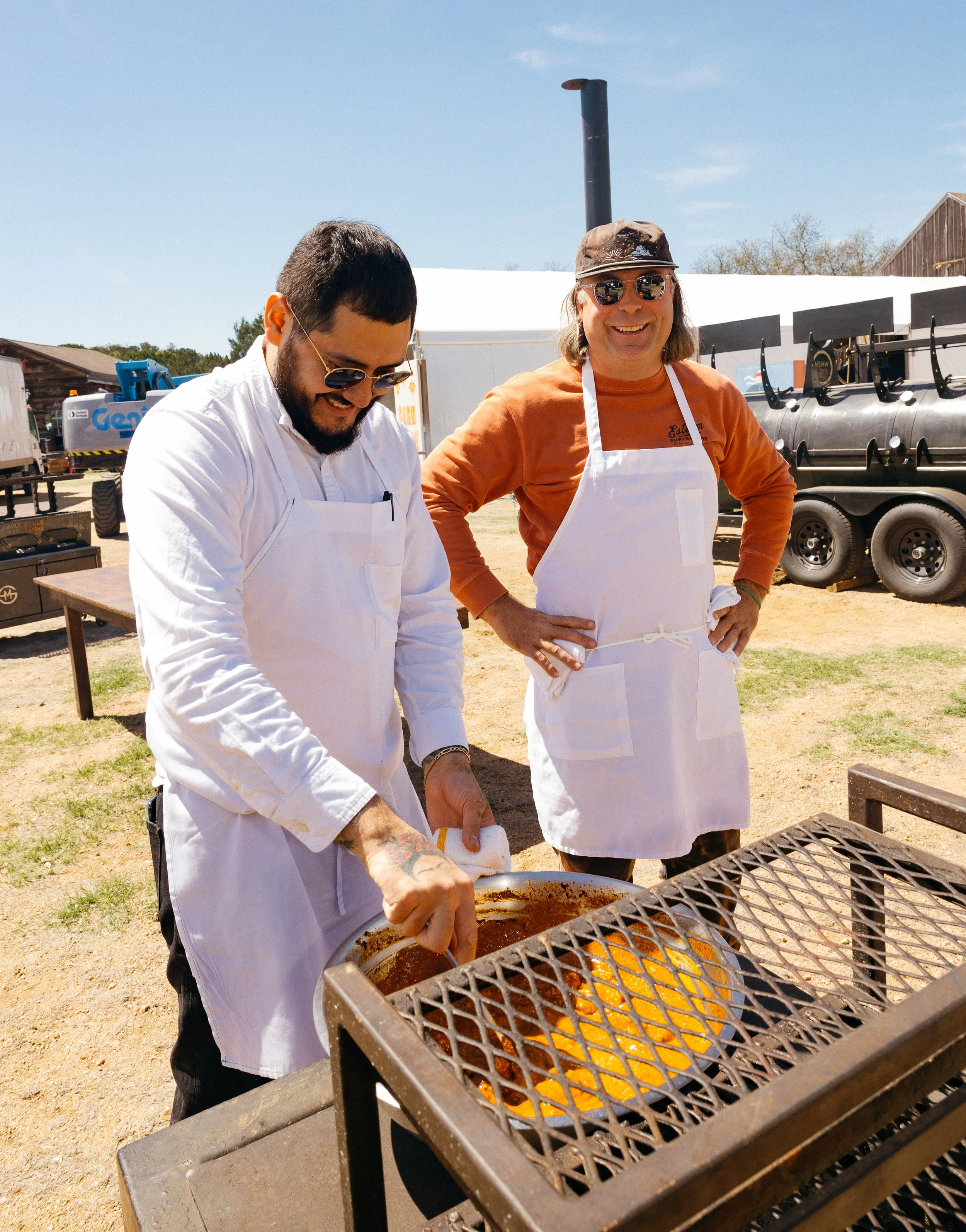
Photo by Brooks Burris
“Let’s do it your way, and then we’ll do it my way,” he says. “Then we compare notes. Which one makes more sense? Which one tastes better? Which one looks better?”
They write the recipe together. Chavez cooks it through the first few services so he knows the answers if something goes wrong; then he hands it off. Sometimes a dish travels far enough through the kitchen that someone asks Chavez about a detail, and he has to reach back for it.
“It’s no longer my dish,” he says. “It’s a collective effort.”
That collaboration extends to deciding how far a dish can go while still feeling rooted in Mexico. Push it too far, and the connection can get lost. Stay too close to tradition, and the restaurant is competing against something harder to beat.
“If we go too creative and it’s too avant-garde, people don’t get it. People don’t say it’s Mexican. And that’s a red flag,” Chavez says. “If we make it too traditional, then we’re competing with people’s memories.”
It’s not as good as my mom’s. It’s not as good as what I had in Mexico.
“We can’t recreate the wheel,” Chavez says.
A chilatole on today’s menu sits right on that line. Tatemó’s version builds on the tortilla-thickened stew with passion fruit, coconut, coriander, anise, butter, sushi rice, vegetables, and a layer of coconut froth. Guests who have never had chilatole go wild for it, but the ones who grew up with it look at the dish differently.
The goal is somewhere in between, in a dish that is surprising but connected.
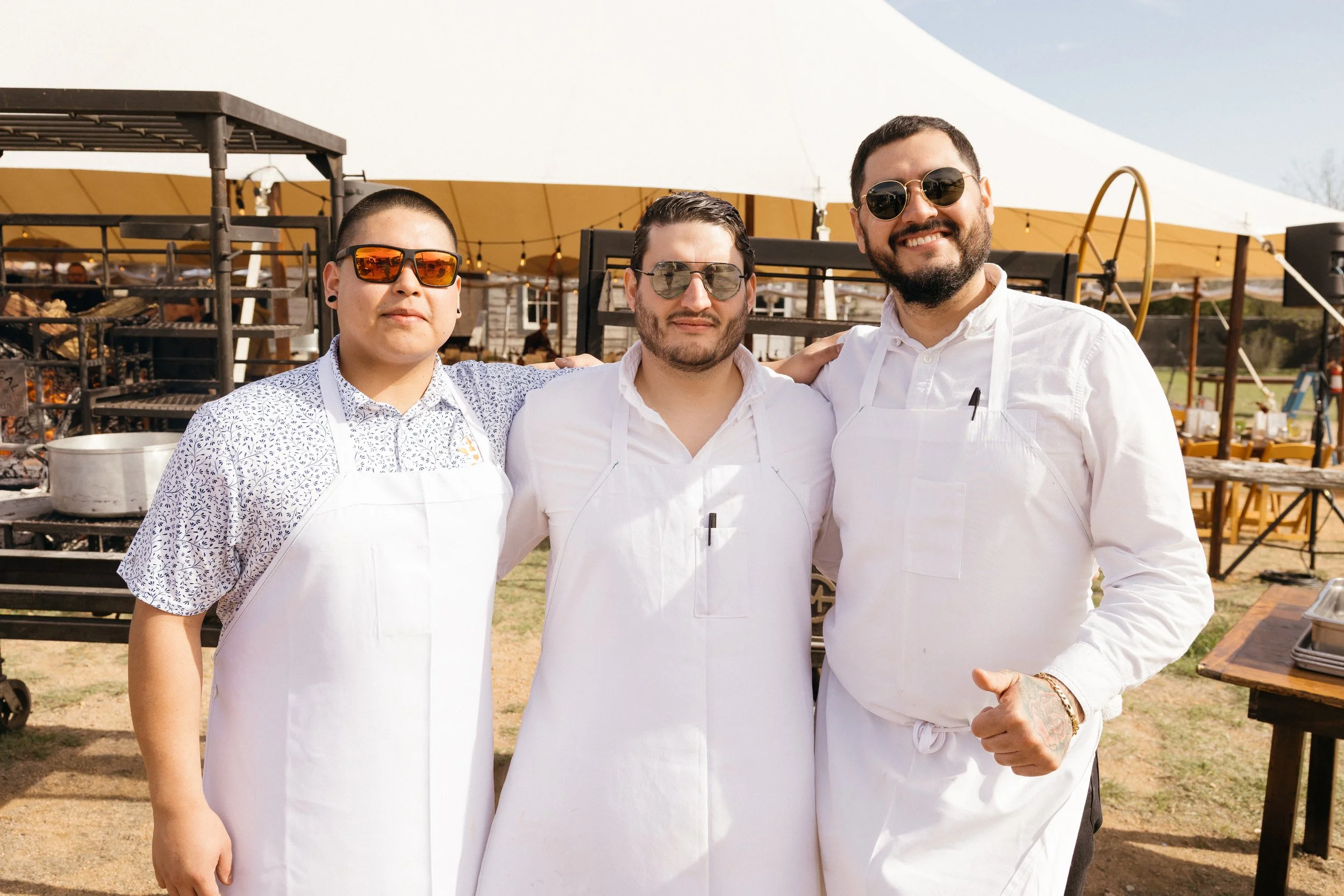
Photo by Brooks Burris
Luck Potluck presented Chavez with a different kind of balancing act this past spring. It was, somewhat improbably, his first time in Austin, and instead of navigating the boundaries of a dish, he was navigating a hot, windy field, shared cooking space, and a crowd of guests. Chavez cooked alongside a group that included Edgar Rico of Nixta Taqueria and Ana Liz Pulido of Ana Liz Taqueria, both friends he had only spent time with outside of kitchens.
“To see them in action and to taste their creations and see how they lead and how they handle delegating things … that was really cool,” he says.
Rico, in particular, seemed built for it.
“He starts one conversation with someone, and next thing you know, he’s like three conversations down with four of the new people,” Chavez says. “You’re just like, where did this guy get the energy?”
Once service picked up, Chavez was in his element.
“The most exciting part of that evening was the adrenaline,” he says. “How can we execute our menu with what we have and try to coexist and not overlap each other?”
Soon it was “five out, three out, go.”
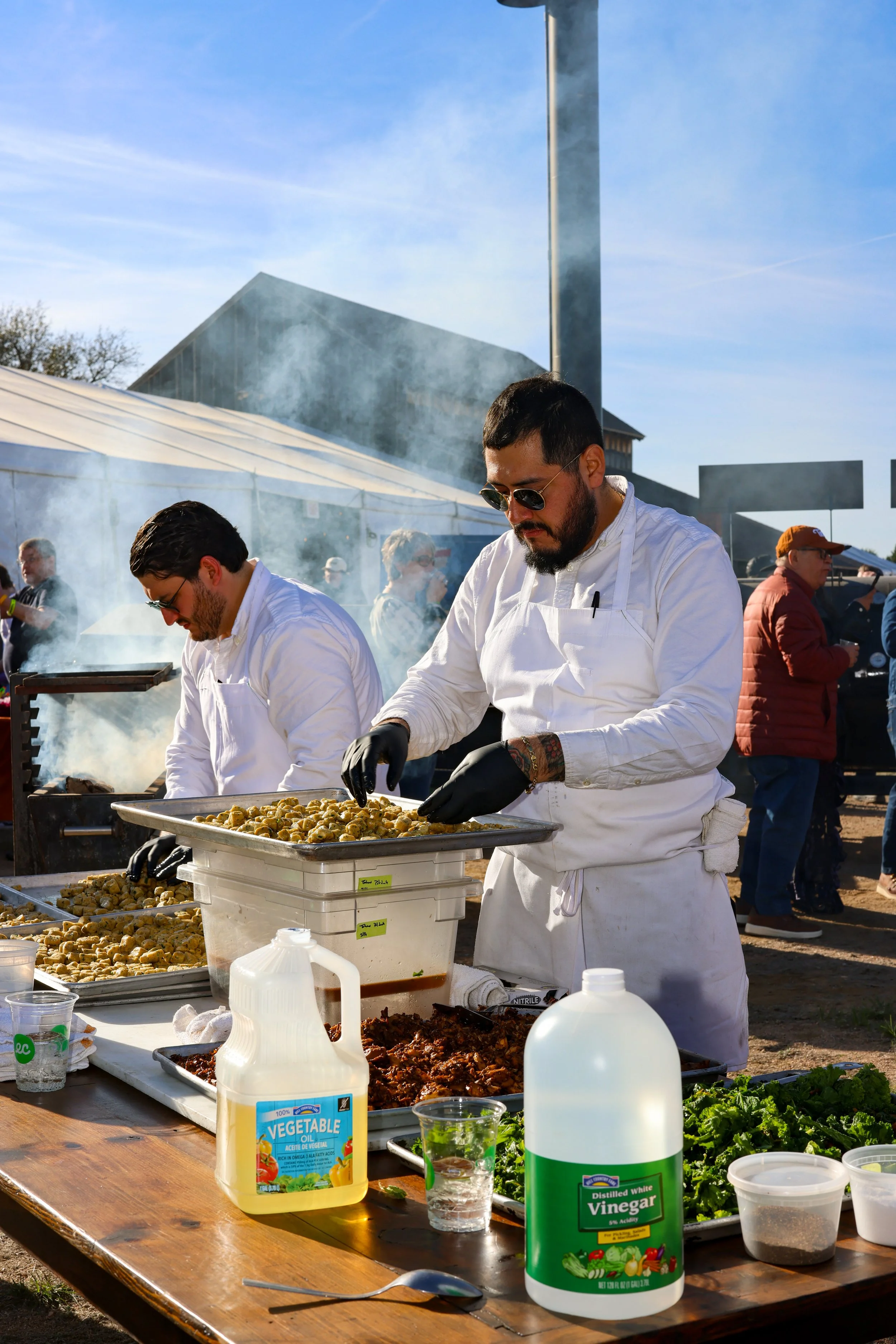
Photo by Taylor Hannan
That rhythm he knows and loves. Back in Houston, that nonstop pacehas earned Tatemó a Michelin star.
When asked how he felt receiving that star, Chavez says he felt at peace.
For years, he had asked the restaurant to operate at a Michelin level.Sometimes he wondered whether the standards he was holding himself and the team to made sense outside of his own head.
“I was almost second guessing myself,” he says. Once the star came, there was validation. Relief. “There was a reason behind all of it, and it feels good.”
He gave the team three days.
“Enjoy it, soak it in, cry, take pictures, send it to your family. Have your family come, take pictures,” he remembers telling them. “But in three days, this doesn’t exist. It’s in the past.”
Chavez treats the bad moments the same way.
“All the highs that we’ve had, they come, we cheer, and then they go on the back burner,” he says. “All the lows that we’ve had, the same thing. We soak it in, we cry, and then we continue to work and get better.”
There is always something else to work toward. For Chavez, one of those things is another star.
“I want two stars,” he says. “I would love to be at that caliber.”
He’s not sure if the current Tatemó space can quite take them there, and he and Maul are approaching the final years of the lease. What comes next is openended. Back before the pandemic, they were crossing things off a business plan until they found a restaurant they could afford. Now, Chavez says, “we have more resources than ever.” The possibilities feel, in his words, “a little more manageable and doable nowadays.”
In the meantime, there is family meal.
It can be a pretty good deal at a Michelin-starred restaurant. Unsold A5 wagyu are turned into steak tacos. Imperfect batches of rice cooked during training turn into fried rice. One of Chavez’s sous chefs wants to open a burrito pop-up, and scraps from the week become staff burritos.
“We like to have fun with it,” Chavez says.
At the end of the week, after Saturday service, the team heads to a taco truck about five minutes away.
“We just pig out,” Chavez says.
They pull out folding chairs and a table and settle into the parking lot. Sometimes former Tatemó employees show up and join them. What started as a place for a late night taco after a twelve-hour shift has become enough of a ritual that people come back for it. They stay three hours, sometimes four.
For a kitchen where nearly every movement is timed, Saturday night gets to take as long as it takes.