Feeding the Human Element: A Q&A with Noshly’s Wesley Osburn
Waging a quiet revolution for culinary freedom and real-world connection.
Behind every unforgettable meal is a visionary breaking the rules of traditional hospitality to bring people together. In a hyper digital world where we are constantly overwhelmed by screen based connections, a profound craving has emerged for things that are real, tangible, and deeply felt. In the fast evolving realm of pop-ups and alternative dining, few people are responding to this cultural hunger more thoughtfully than Wesley Osburn. As the founder of Noshly, a platform dedicated to connecting independent chefs with diners seeking unique culinary experiences, Osburn is building a high trust movement centered around storytelling, transient spaces, and connection over permanence.
His own journey - from serving as a chef in the Coast Guard to navigating the high-pressure line at Travis Lett’s MTN in Los Angeles, to eventually settling in the Texas Hill Country - was driven by a deep respect for the sweat equity of kitchen life and a bold desire to help chefs escape the traditional restaurant hamster wheel. We sat down with Wesley to talk about the cultural craving for “in real life” experiences, why alternative dining is a hotbed for genuine community, and how food acts as our best reminder that we aren't strangers.
Luck: Tell us a bit about your roots in the culinary scene and how your journey eventually brought you out here to the Texas Hill Country.
Wesley: I actually got my start when I left Houston back around 2014 for the Coast Guard, where I trained and became a military chef. That was my baseline, but cooking in the military is a completely different pace of life than cooking an à la minute lunch service. When I got out, it was a total coin toss between moving to Denver or Los Angeles. My gut told me LA, so I drove out there and started backdoor knocking on restaurants. Suzanne Goin and her staff gave me my very first real kitchen job at Tavern. Later on, working at MTN for Travis Lett fundamentally changed the way I think about hospitality and how I show up in the community.
After LA, I did private client gigs for a couple of years, moved back to Houston briefly, and then finally found our spot to put down roots in New Braunfels. Texas is fascinating because the major cities are completely different culturally, even though they're only a couple of hours apart. Coming back to Houston, the food scene was unrecognizable from when I left- you had patron saints of the city like Chris Shepherd lifting up unheard talents, and international heavyweights like Jordy Roca opening up shops.
But the lifestyle in the Hill Country is incredibly beautiful. New Braunfels feels like it’s locked into the best part of the 90s - a slower-paced, two-river town where kids ride their bikes down to the river to slide down the tube chute all summer long. For Noshly’s sake, it’s an ideal home base because it sits right between two totally distinct, badass food cities - Austin and San Antonio.
Luck: Fill us in on the origin of Noshly.
Wesley: During COVID, when I was doing private dining gigs, I finally had the space to take the blinders off, zoom out, and realize how many lucrative opportunities chefs miss because they're stuck on the daily restaurant hamster wheel. I started sketching in a notebook: mobile app for chefs, pop-ups, drops. I wanted to consolidate everything into one place, so chefs didn't have to jump across three different user logins just to make work happen.
Luck: It’s not just a reservation platform, but an incubator. What does that mean for the chefs using it?
Wesley: Look at the failure rate of traditional restaurants - it's insane. You see brilliant, badass chefs with massive followings, but one piece of the traditional business equation fails, and the restaurant shutters. What Noshly is underneath the skin is an incubator for culinary concepts, almost like a Y Combinator for chefs.
If a chef has three different culinary concepts they want to test out, they can use Noshly to run a study on them. They can build a following, handle the commerce, execute the menus, and figure out their real food costs without needing a massive brick-and-mortar location. We don’t really need the traditional triple net lease anymore. In places like LA, those leases can anchor you for five to eight years. Our generation is highly non-committal; we don’t want to be anchored to a multi-year lease if we decide we want to pivot our concept or change our menu next month.
Noshly allows chefs to test their concepts in real time, mitigate their risks, and establish a confident foothold before they ever consider a bank loan or a permanent space. We want to give that lifestyle decision back to the chefs. Take Foodie and Tina in Austin as an example - my wife found them on Reddit back when they were doing a killer backyard farmers' omakase out of a little cottage house. They built their proof of concept, scaled on their own terms, and eventually opened a brick-and-mortar when they were ready. That’s the dream I want for our entire network.
Luck: This idea of "alternative dining" is moving fast. How is the industry changing at a macro level, and how are consumers and cities responding to it?
Wesley: It’s moving incredibly fast, and it’s not just the chef community that recognizes it. Even the economic agencies track these consumer behaviors through categories like "food away from home," and they’ve actually started tracking these transient culinary concepts. Cities are realizing that this is a major economic engine, and they're building guardrails so people can continue to make real money.
Look at Los Angeles County passing the Microenterprise Home Kitchen Operations (MEHKO) governance. It allows chefs to turn their apartments into legitimate, legal micro restaurants and clear up to six figures gross. The applications sold out within hours. You have elite talent like my buddy June, a killer chef who came out of two Michelin-starred kitchens - doing six-seat pasta tasting menus right out of his apartment. Minnesota has transient food service permits now, too.
The baseline consumer data is incredible. Experiential dining is growing at an absolute minimum of 8% to 9% annually, and that’s a conservative, national estimate. In certain progressive zip codes, it's tracking at over 20% year over year. People don't want a static pop-up ad on their phone; they are actively lining up to touch, feel, taste, and participate in the evolution of how we eat.
Luck: At its core, this trend seems driven by a deep cultural craving for “in real life” connection. What happens to the dynamic of a room when people step away from their screens for a meal like this?
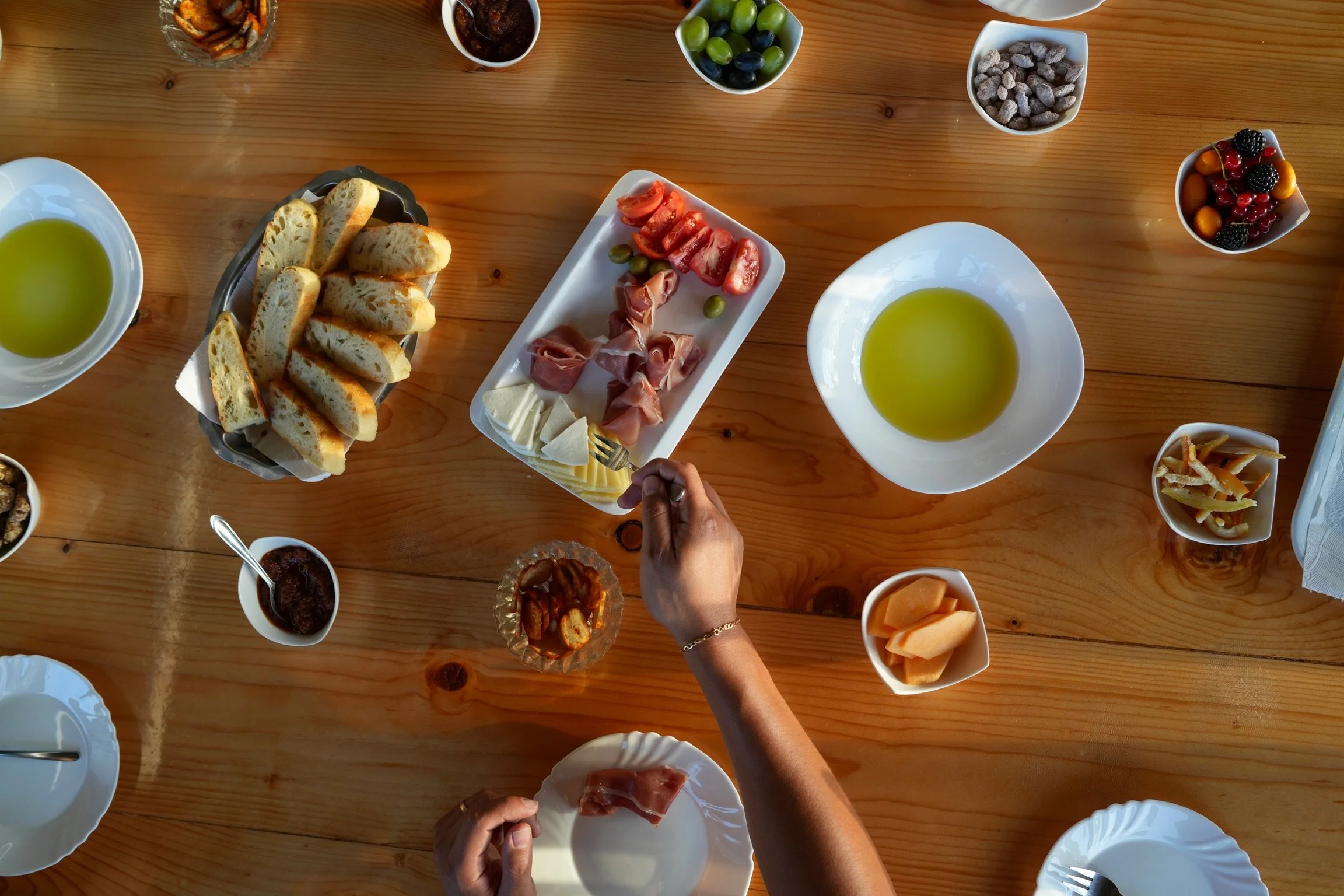
Wesley: We live in a world where everyone is completely saturated by algorithms and digital noise. Because of that, people are starving for tactile, physical, shared experiences. It’s the exact reason people are so fiercely loyal to something like Luck Reunion - it can’t be replicated through a screen. It’s an immersive, deeply felt reality. When you sit down at an alternative dining event, a fascinating psychological shift happens on the guest side. Everyone at that table has collectively said yes to an unconventional adventure. You aren't just sitting in a corporate booth ordering off a laminated menu; you've actively stepped outside the norm. That shared vulnerability breaks down the typical walls of modern isolation and creates an instant, high-trust community before the first course is even served.
On the kitchen side, it frees the chef to redefine what "quality" means to them. In the traditional, infinite-scale restaurant model, the human element is usually what becomes expendable. The labor and exhaustion eventually break the people behind the food. Alternative dining scales down the physical volume so chefs can feed a room much more deeply. It keeps the passion human-sized.
Luck: Speaking of creating a unique world, how do you view the concept of "exclusivity" when it comes to these limited, hard-to-get dining spots?
Wesley: I’ve played with that word a lot during branding exercises, and I actually try to use it seldom because people often equate it with financial elitism - the "haves" and the "have-nots." I never want anyone to look at Noshly and feel like our brand isn't for them. Sometimes, yes, a high-dollar tasting menu warrants a $ 175-plus ticket because a chef is flying in rare ingredients from around the world. That might be financially exclusive, but is it any more exclusive than a local legend like Grandpa Glizzy’s in Austin?
He does the coolest, most creative riffs on hot dogs - not just throwing caviar on things, but taking a genuinely high-quality, inventive approach. He did a walking hot dog crawl through Austin with another vendor, and the line wrapped entirely around the block with a two-hour wait. That isn't financial elitism; that’s time exclusivity and availability exclusivity. That’s the kind of exclusivity people actually love - the excitement of a fleeting moment, knowing you had to be there in person to experience it.
Luck: You recently brought this exact ethos of tactile, real-life connection to Luck Reunion, taking over the VIP culinary activation. How did that partnership come together?
Wesley: It all started through food and a total coincidence. I was driving home from a concert late one night in New Braunfels and noticed lights on inside this dilapidated, junked-out old gas station across from Schlitterbahn. I was curious, so I whipped the car in, popped the front door open, and there was Matt and Abby and their team. Matt was screwing together picnic tables out of straw, sticks, and a few thousand bucks. Out of the gate, Abby poured us a glass of wine - just pure, awesome hospitality.
Matt and I became fast friends just jazzing on the food scene and sharing our backgrounds. Last year, he approached me and said, "Hey, Noshly is pretty dope. Do you want to get some chefs together and help us completely step up the VIP food experience at Luck Reunion?" It’s massively important to Matt that every facet of Luck stands on its own artistic merits. The music is the foundation, but the food has to meet the exact same level of experience.
I told him, "Duh, let me make some calls." But my main condition was that I didn't want it to feel like a grind for the chefs. I wanted them to be taken care of, to have a massage guy and a haircut guy in the back, and to actually get to disconnect and watch their favorite bands play.
Luck: How did the execution pan out, and what did that mean for the community you’re building?
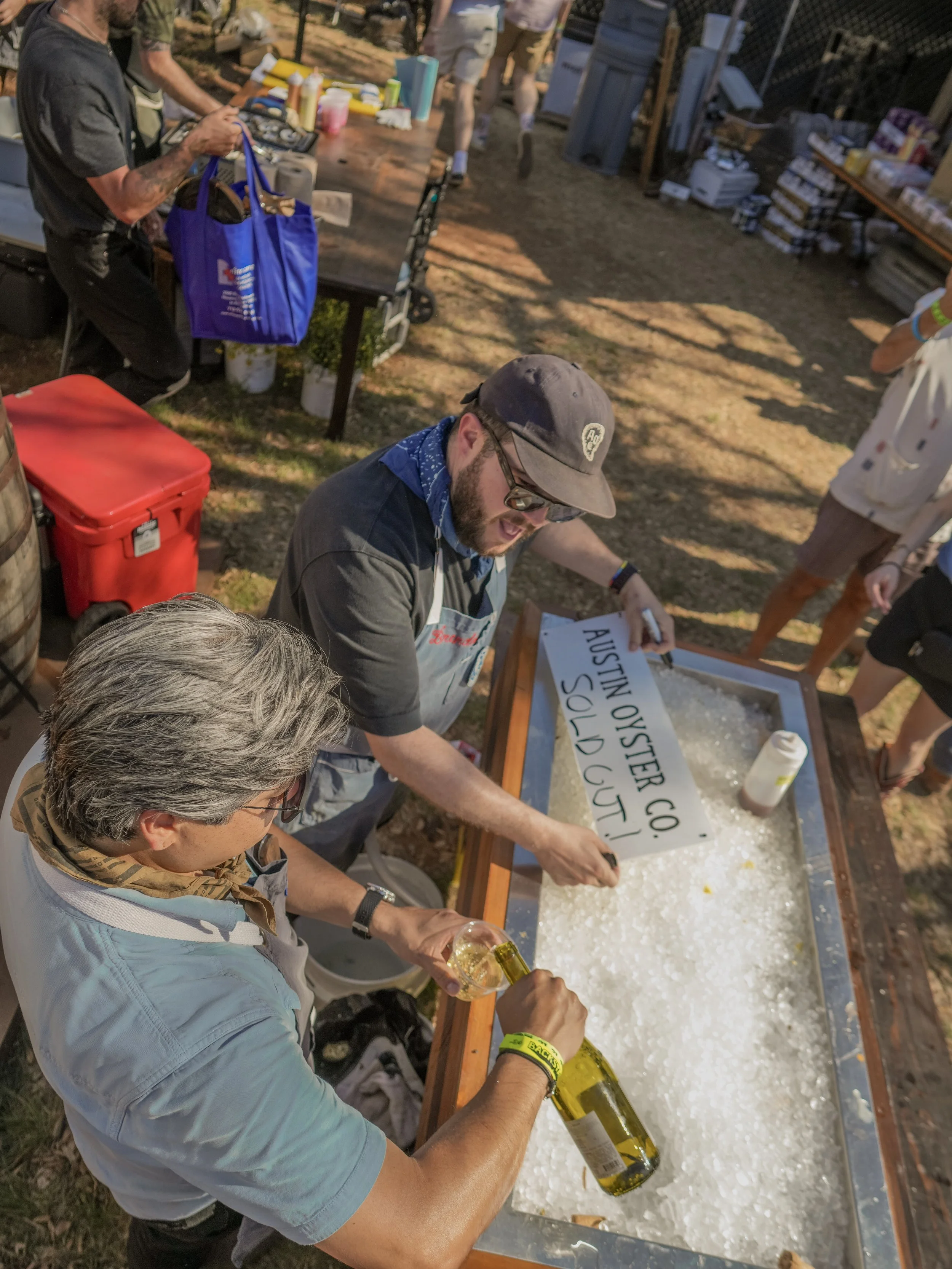
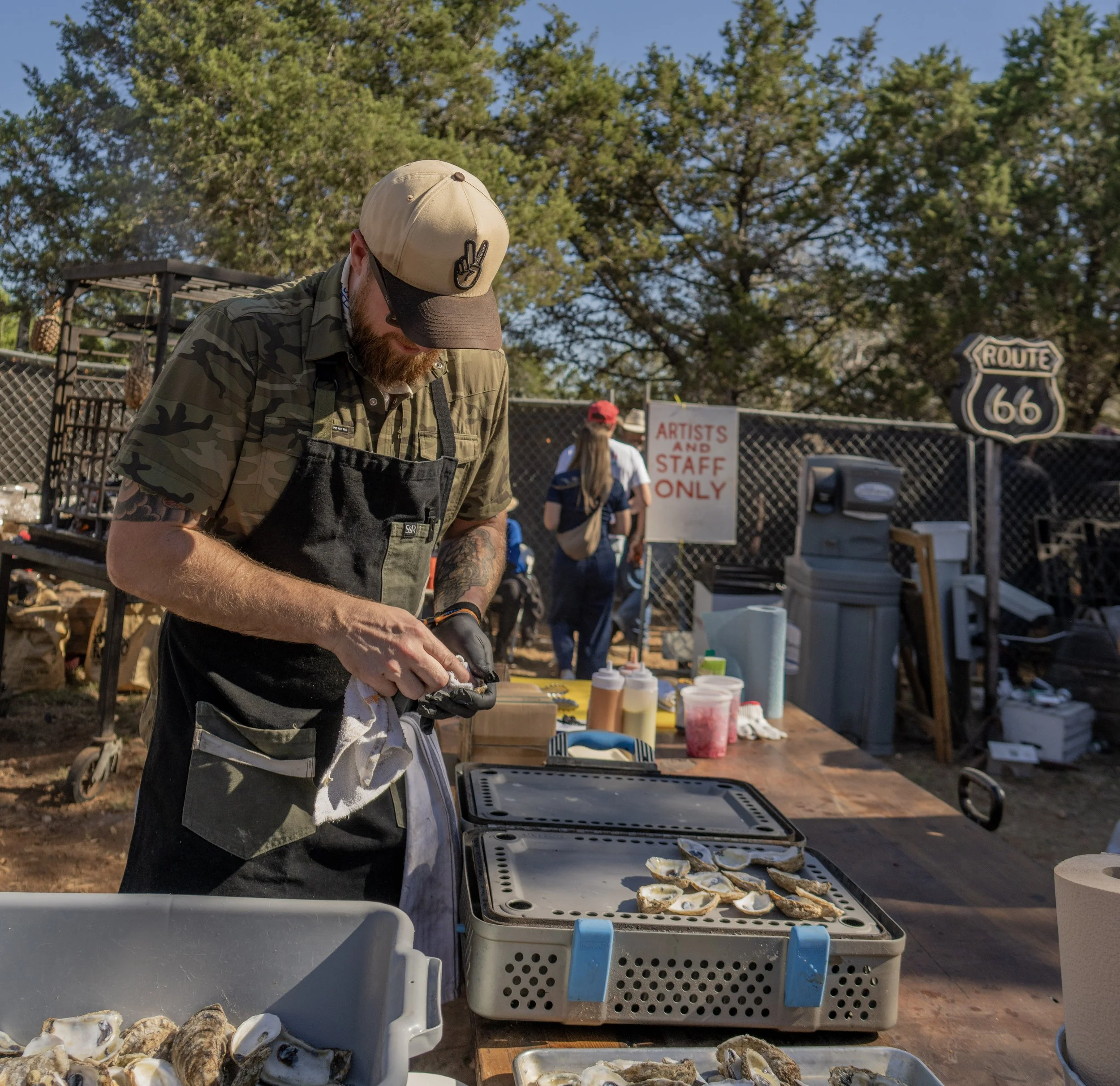
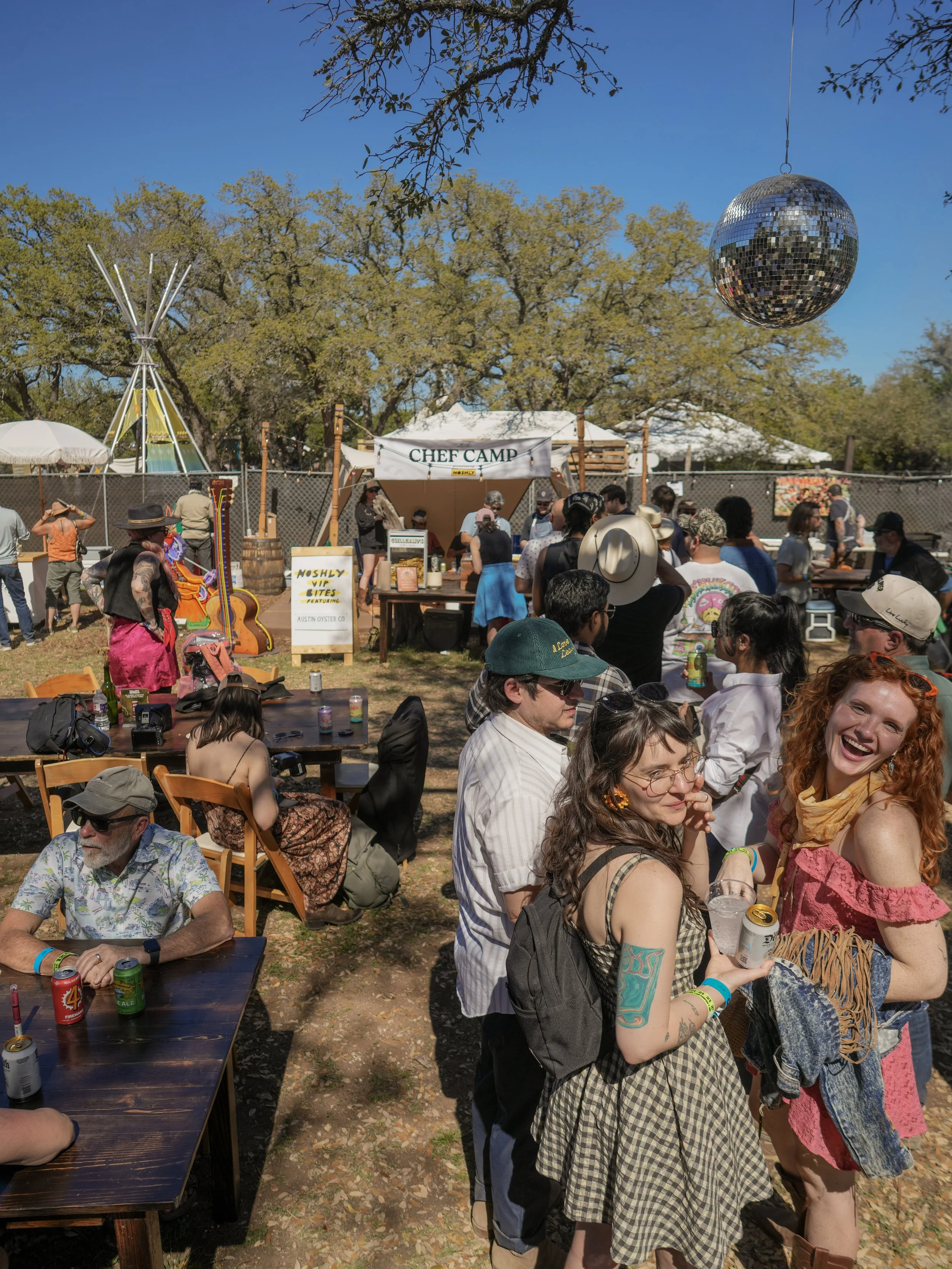
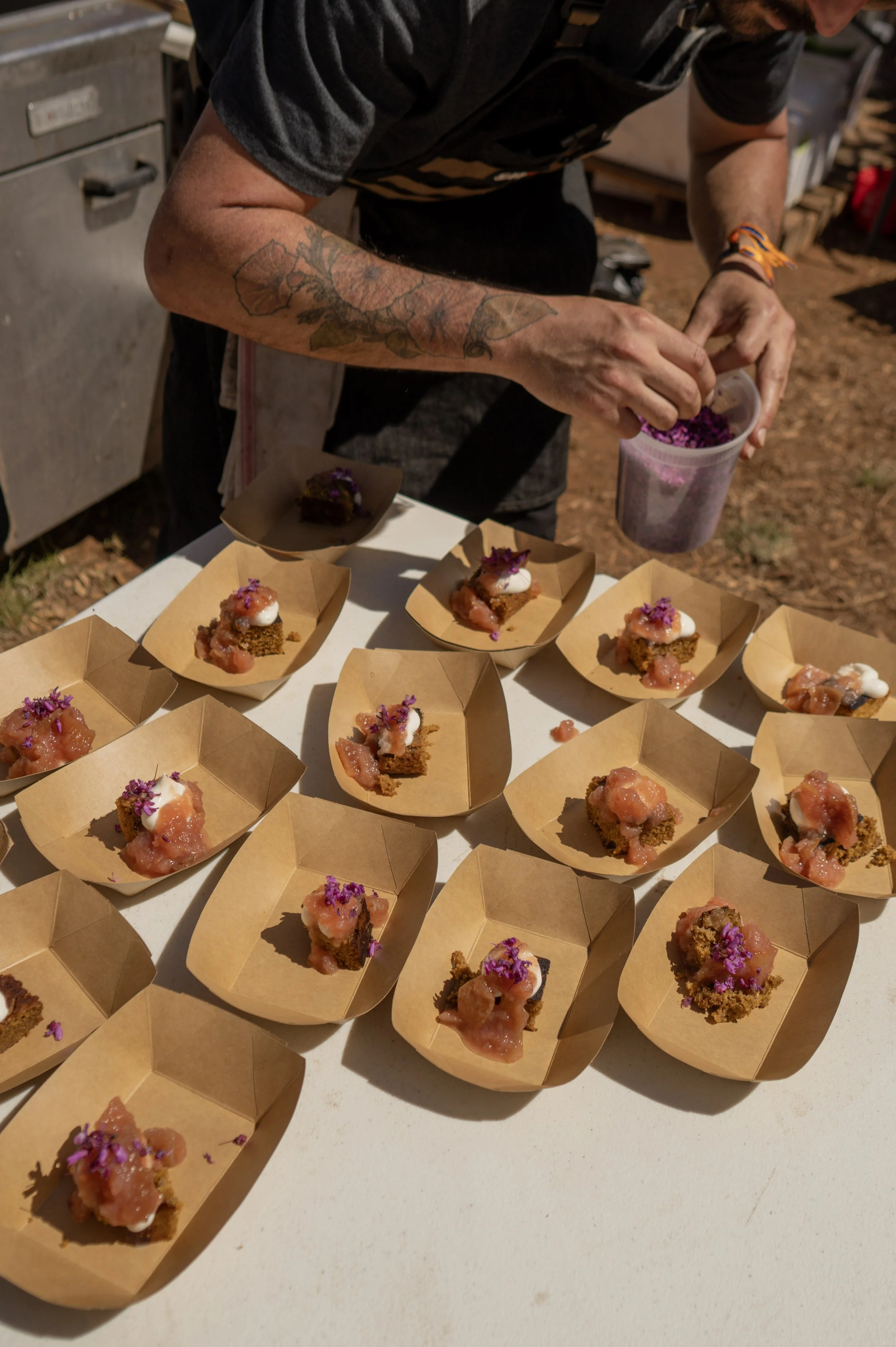
Wesley: We brought out heavyweights like Y Comida, Tipos Sandwich, Birthright Foraging, Ronan, and Austin Oyster Company, and they just absolutely banged it out. The line for oysters alone was 40 people deep for two hours straight - we literally could not pour champagne or shuck oysters fast enough.
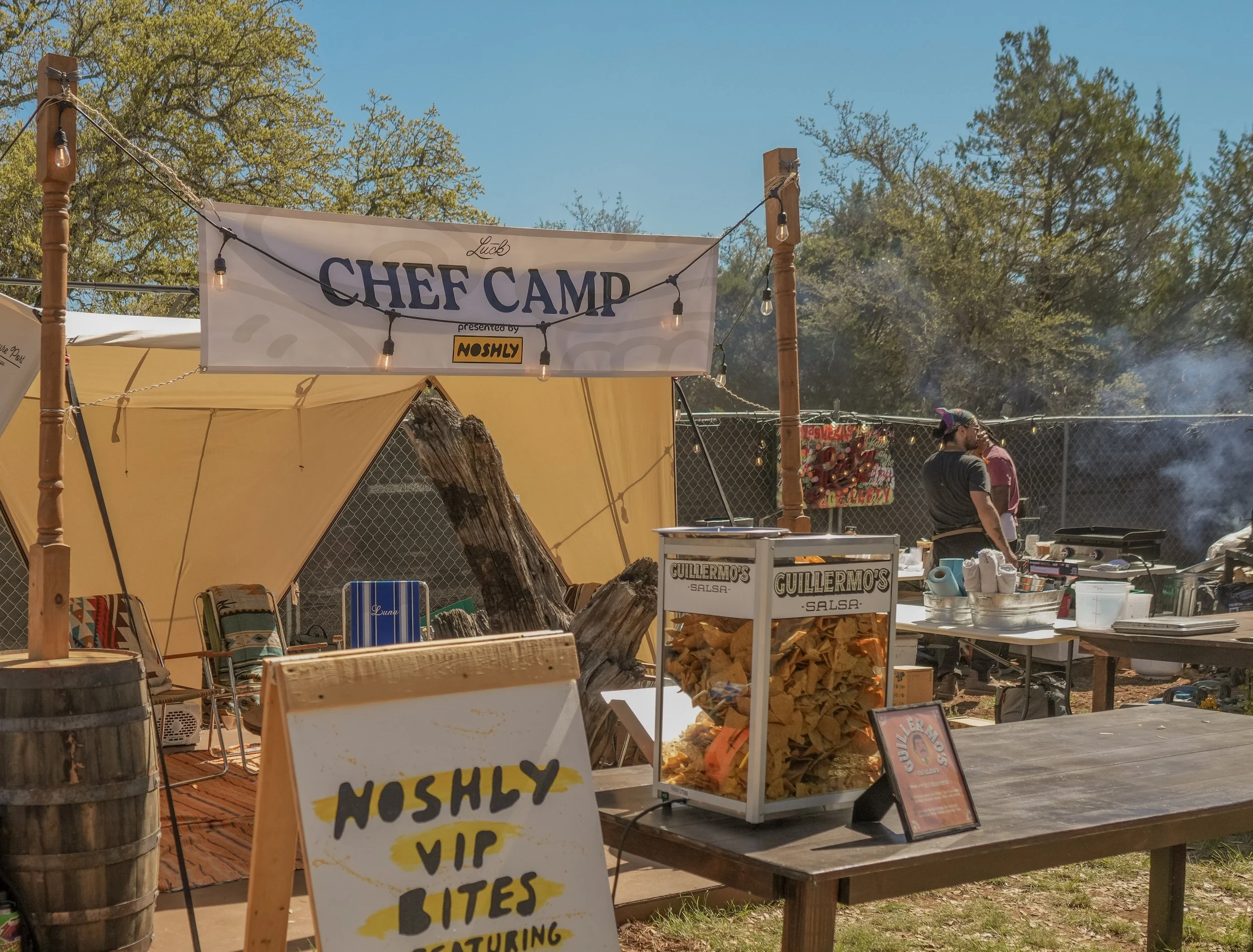
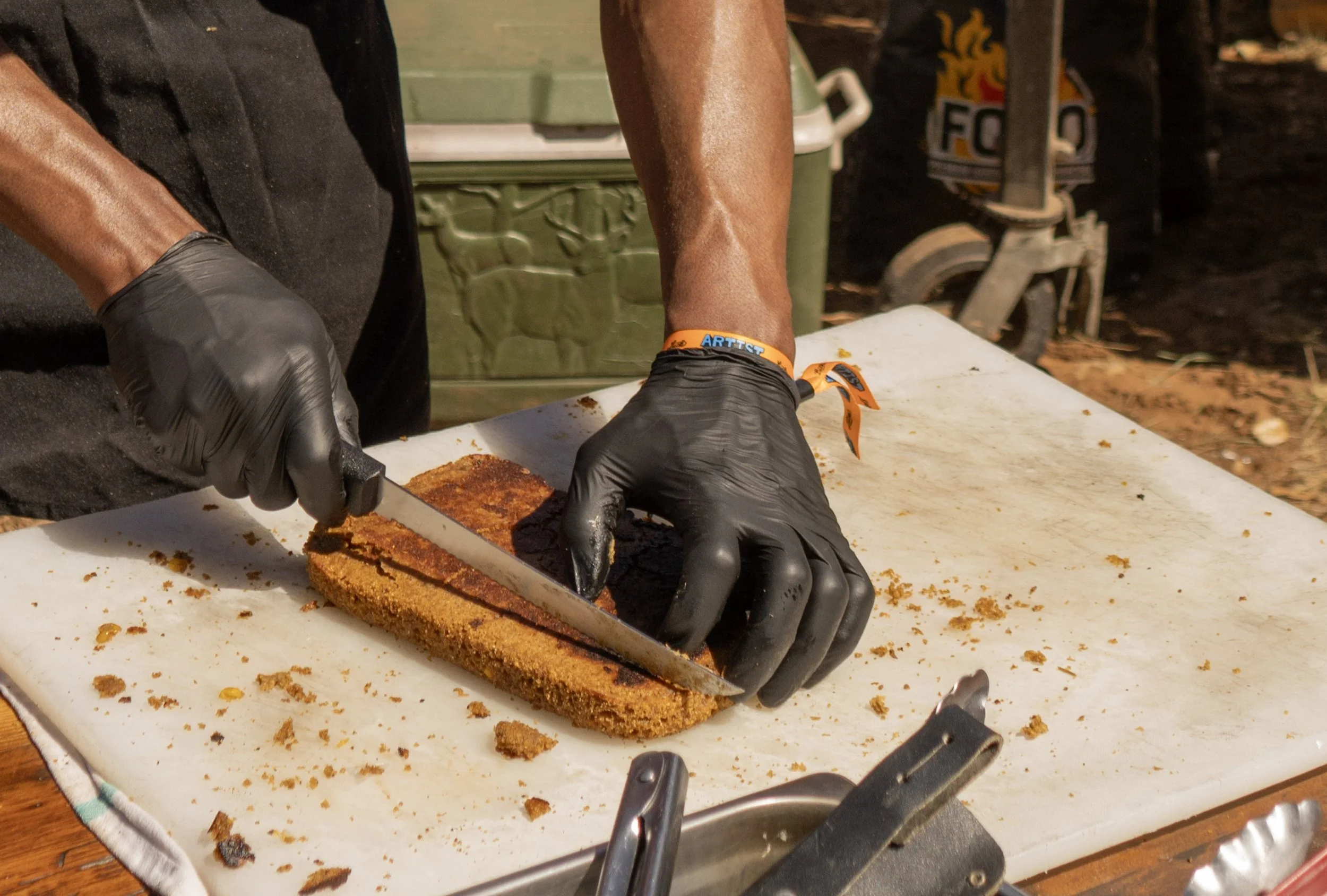
We had so much fun with the design, too. My homie Pace from Barebones Tents sent us out these killer canvas tents. I didn’t want it to look like a sterile, corporate festival tent. I wanted it to feel like you were camping out in a national park and accidentally stumbled across a hidden tribe of elite chefs who happened to be fired up on cooking over open flames. We had the Nomad Grills going with Texas oysters and Snake River Farms beef, and Guillermo threw us a mountain of chips and salsa to keep people fed.
Diners who have been going to Luck VIP for ten years were coming up to us saying it was the best food they had ever experienced at the festival. But the real win was the next day, getting texts from the chefs saying, "Dude, I had the absolute best time last night. I got to eat great food, hang out, and watch Ghostland Observatory and Willie Nelson up on stage."
Going back to my days as a backdoor-knocking line cook, that’s where my heart is. I’m a BC-tier cook - I’m okay, but my real superpower is supporting the people who make the kitchen run. When I was on the line, if the oven went down or the sauté station got slammed because of a mechanical issue, I was the guy who would hop underneath the burners to fix it mid-service because I knew someone was getting bogged down.
Bringing that exact philosophy to Luck Reunion, and seeing both sides of the Noshly concept play out seamlessly in real life - where the guests get an unforgettable experience, and the chefs feel entirely supported and loved on - that’s exactly what this movement is about. It’s an island of real community within a bigger island of Austin.