How Trigger Rewired Music History
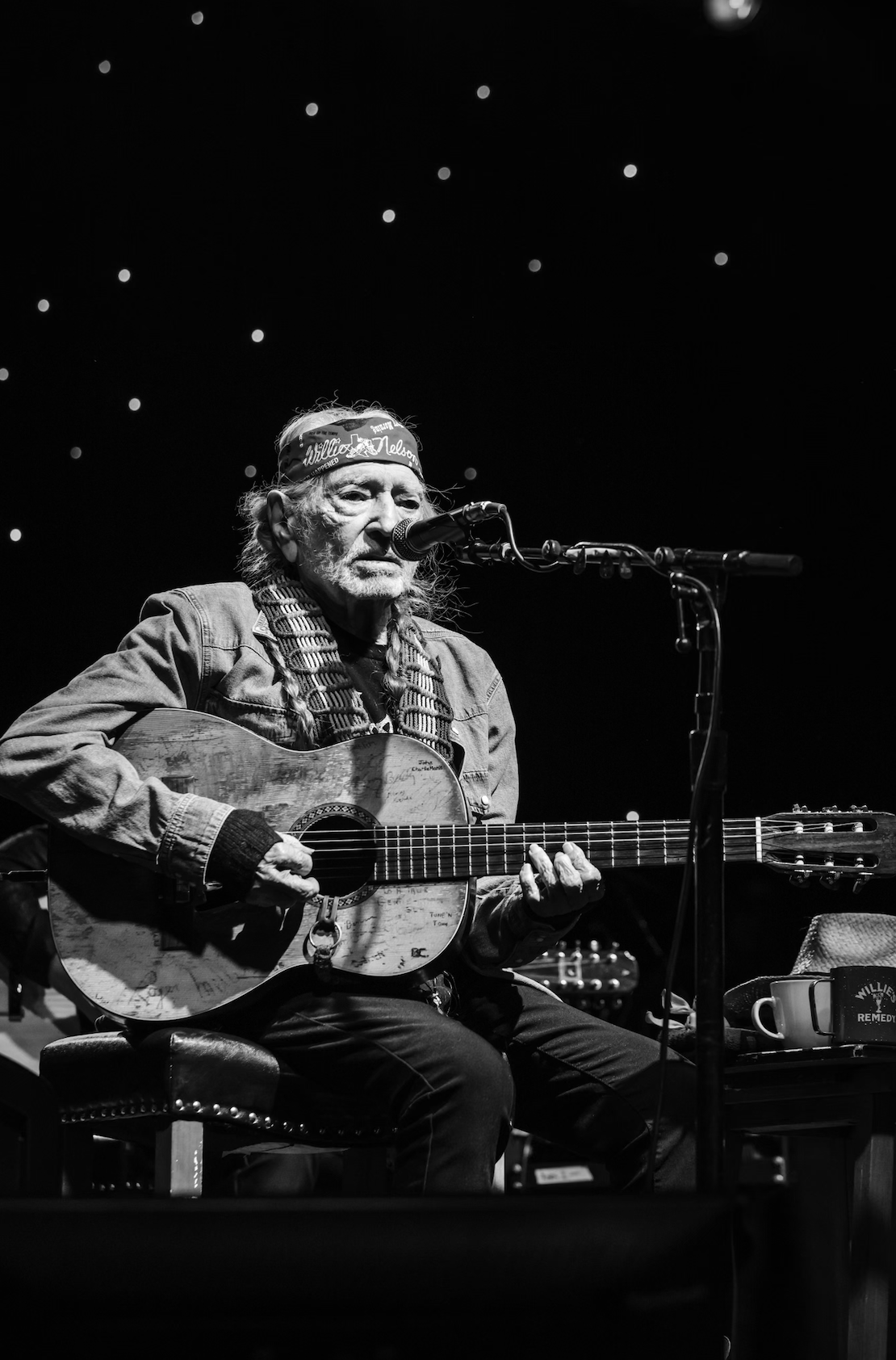
Photo by Justin Cook
In the late 1960s, country rhythm guitar followed a familiar script: steel strings, pristine clarity, an unobtrusive pulse. Willie Nelson was after something entirely different. Inspired by the sprawling, expressive solos of his idol, gypsy jazz pioneer Django Reinhardt, Willie imagined a lead acoustic voice that could dance across the beat. Taking a quiet classical guitar out of the concert hall and into a loud, rowdy touring band was a technical hurdle traditional acoustic setups couldn’t solve.
When luthier Shot Jackson pried the Baldwin Prismatone pickup out of Willie's crushed guitar and wired it into a brand new Martin N-20, he created an acoustic Frankenstein; an unnatural union of classical elegance and raw electric circuitry, married together on a workbench in a Broadway repair shop (today known as Robert’s Western World). Classical guitars rely on soft, round, natural resonance. The Baldwin pickup utilized individual piezo electric sensors under each string to capture raw, sensitive mechanical vibrations.
Plugged into a cranked Baldwin amplifier - or later, a Fender Twin Reverb - the result was pure sonic alchemy. It wasn't acoustic. It wasn't electric. It had the woody, percussive thud of nylon strings, but with a sharp, biting sustain, a slightly overdriven midrange, and an aggressive attack that could slice through a full band.
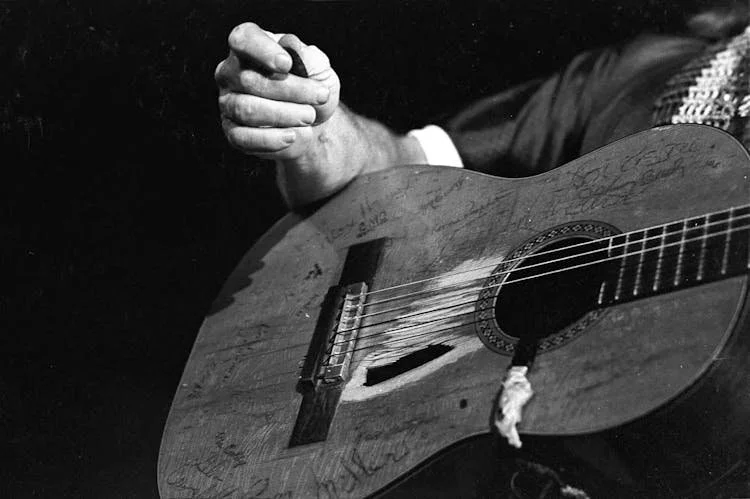
At that time, the "Nashville Sound" was defined by smooth string arrangements, lush background vocals, and polished production designed for pop radio crossover. Acoustic guitars were treated as rhythm wallpaper, buried low in the mix-“felt more than heard” - while Telecasters, pedal steels, and fiddles handled the solo work. An acoustic guitar as the primary, aggressive lead instrument ran counter to everything country radio demanded.
Trigger shattered that formula. When Willie Nelson delivered the master tapes for Red Headed Stranger in 1975, Columbia Records executives were reportedly horrified, dismissing the album as a cheap, unfinished demo and debating if it was releasable at all. But the album’s genius lay precisely in its stark, minimalist space, anchored almost entirely by Willie's voice and Trigger’s woody snap. Instead of wall-to- wall studio musicians, Willie used Trigger as an active dialogue partner - attacking the nylon with a flatpick to produce a hollow edge that carried the narrative weight of the entire record. When "Blue Eyes Crying in the Rain" unexpectedly blew past polished pop-country hits to top the charts, it proved that a raw, scarred acoustic guitar could hold an audience spellbound all by itself, forever shifting what a country record could sound like.
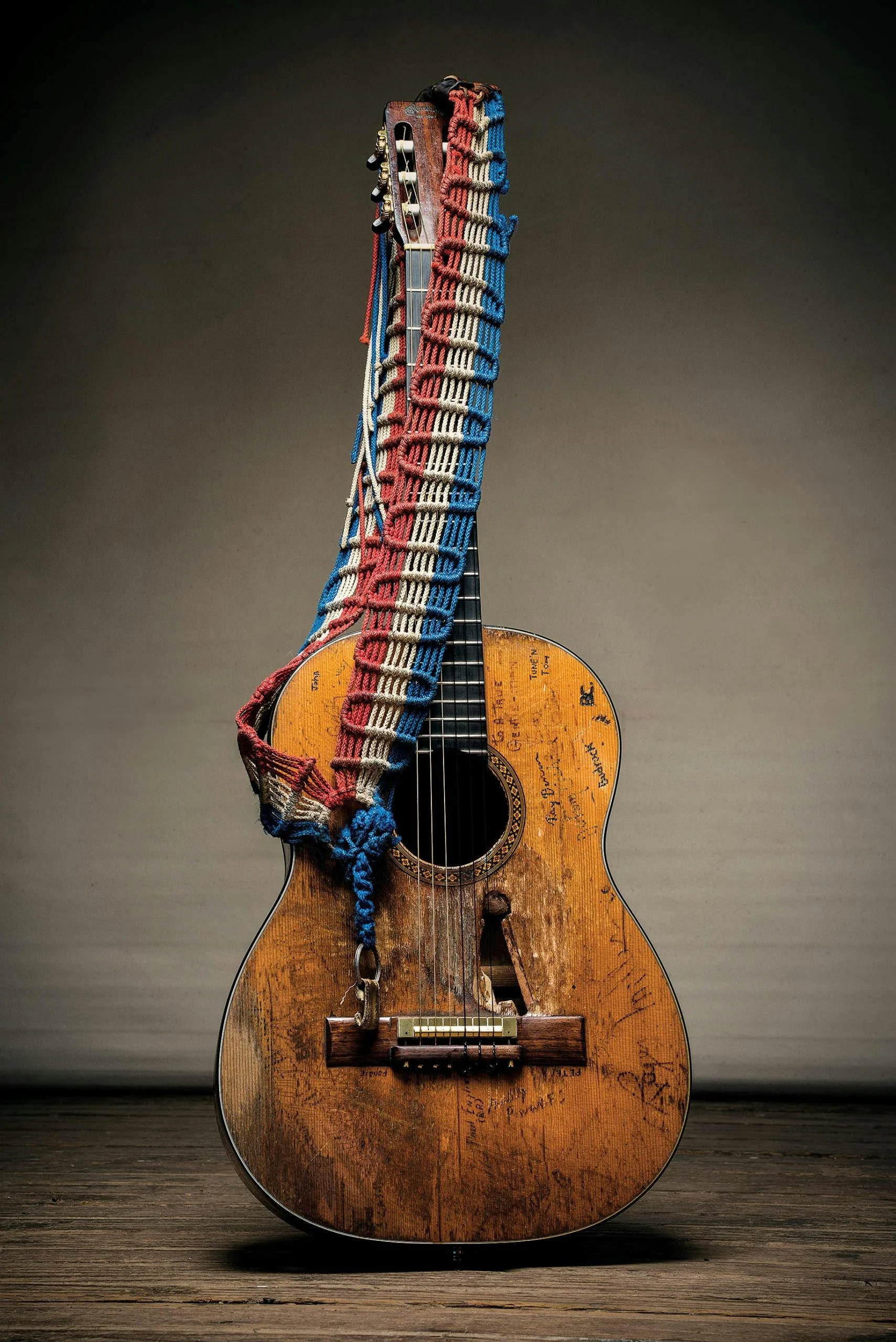
Instead of hiding behind orchestral arrangements, Willie used Trigger as a lead dialogue voice alongside his vocal. He intentionally plucked hard, using a technique classical luthiers considered sacrilege. That tension between the delicate spruce top and a punishing flatpick created a signature distortion and carved the literal second soundhole into the guitar over time. It proved that country music didn't need glossy production - it just needed raw, unvarnished expression.
What made Trigger’s sound revolutionary was that it refused to stay inside the country genre box. Because nylon strings allow for expressive bending, Willie played Trigger more like a jazz horn or a blues guitar than a traditional country rhythm instrument. He played behind the beat, sliding into notes with jazzy chromatics while running the signal through an amp with subtle spring reverb. By bringing jazz phrasing into country storytelling, Trigger built a bridge between seemingly opposing genres.
The nylon string tone brought bossa-nova and Latin style fingerpicking into mainstream American roots music. The overdriven midrange allowed Willie to play blues bends that resonated with rock audiences, earning him fans among jam bands, southern rockers, and blues purists. It demonstrated that an acoustic guitar could be the loudest, most aggressive instrument on stage without losing its intimacy welcoming folk and roots.
If Trigger had never been created, the trajectory of modern American roots music would look vastly different. Trigger proved that the instrument itself could be an extension of an artist's vocal identity - imperfect, scarred, and instantly recognizable within a single bar of music.
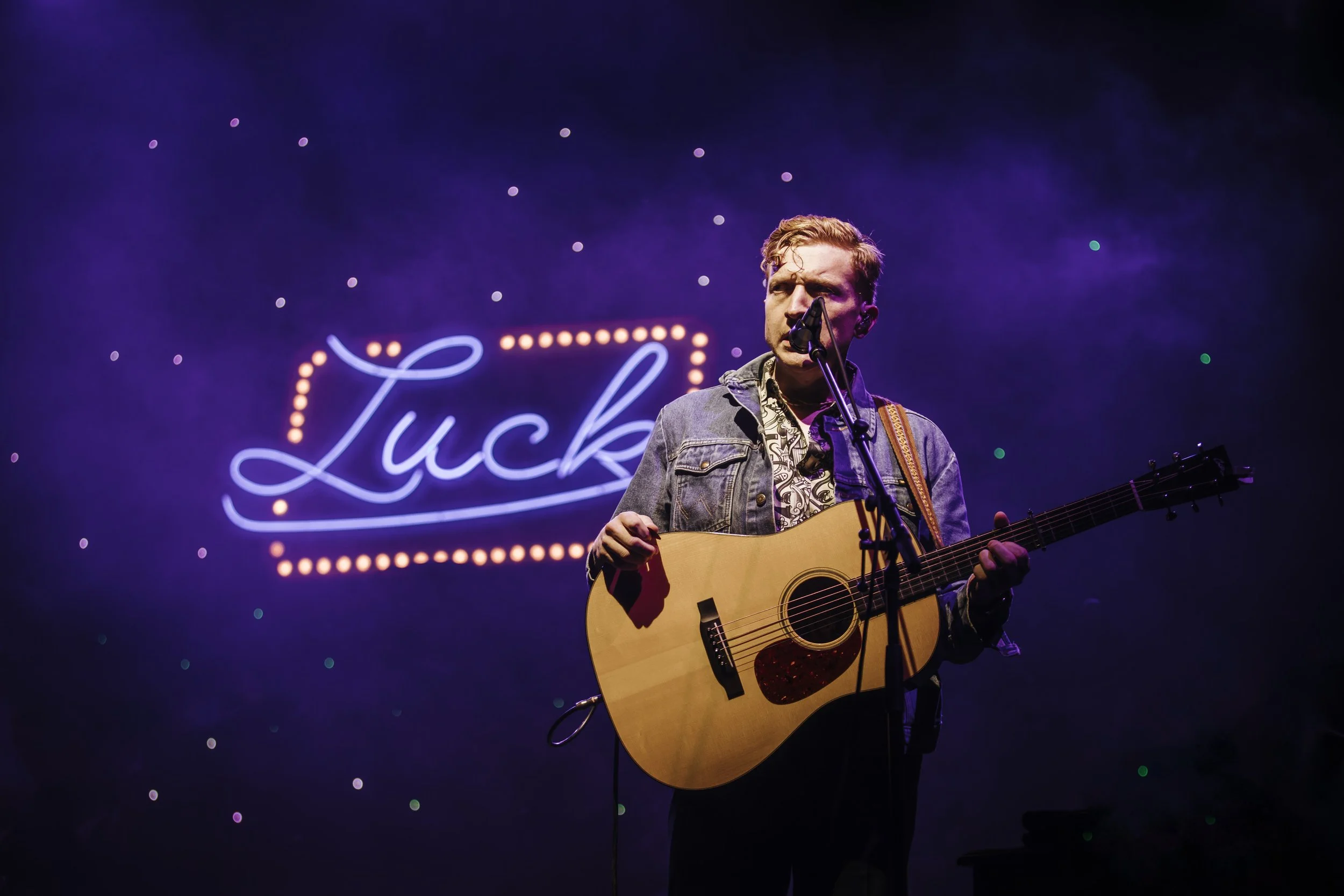
Tyler Childers at Luck Reunion, 2024.
Photo by Alana Swaringen
Without Trigger's defiance, we wouldn't have the genre blurring freedom of modern Americana. Artists like Sturgill Simpson, Tyler Childers, Jason Isbell, and Kacey Musgraves thrive in an ecosystem where acoustic instruments are pushed into overdriven, experimental territories. Indie folk acts routinely run classical and acoustic guitars through pedalboards and tube amps - a direct lineage to Shot Jackson wiring a Baldwin pickup into a Martin classical guitar.
In the end, Trigger was more than a custom instrument - it was a manifesto for radical authenticity. It didn't just give Willie Nelson his signature voice; it gave generations of musicians permission to tear up the rulebook, mix incompatible gear, and chase a sound that belongs entirely to them.
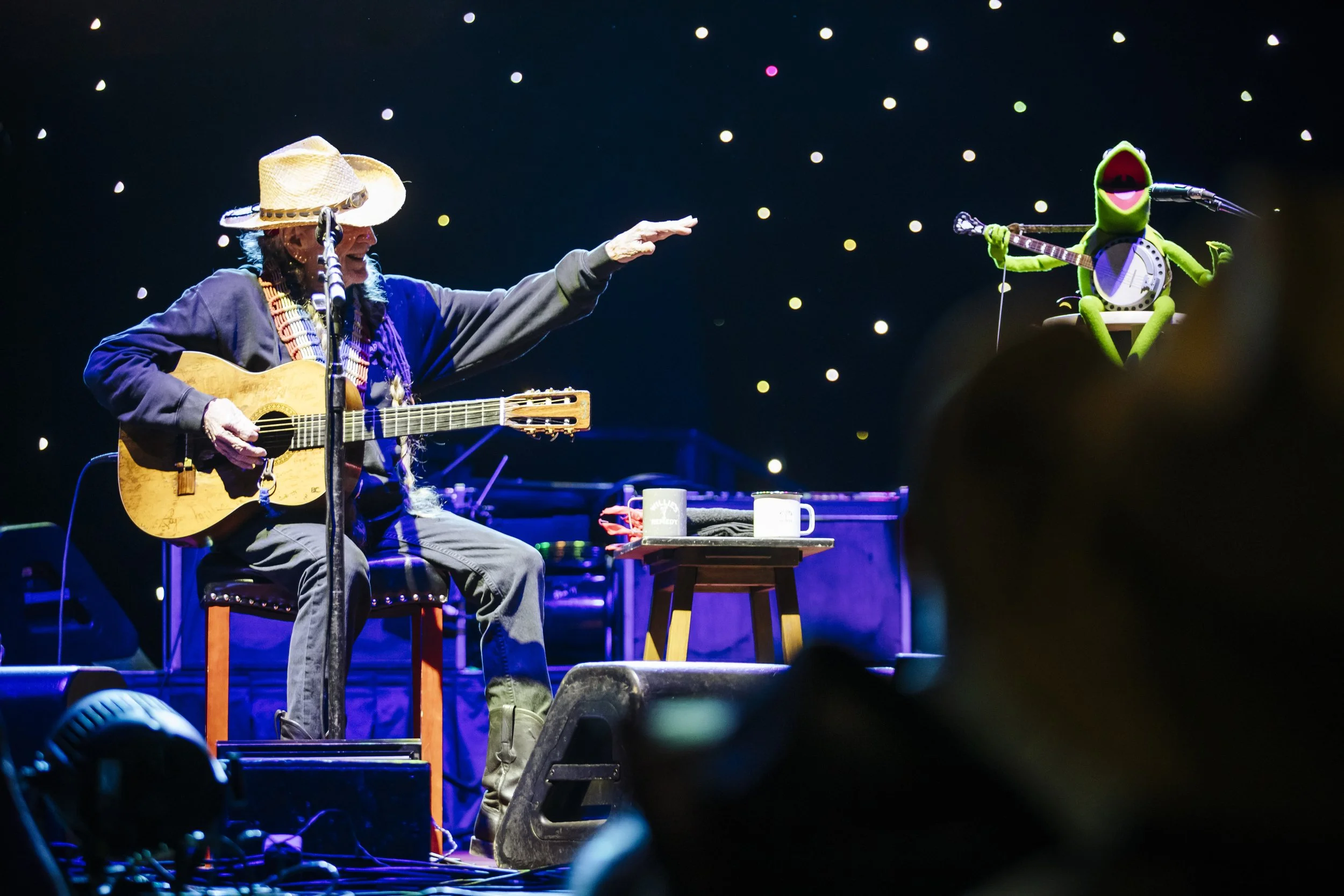
Willie Nelson and Kermit, Luck Reunion 2024.
Photo by Alana Swaringen