Joshua Ray Walker On Learning to Leave Room
When Luck caught up with Joshua Ray Walker, he had been home from Europe for about a week. Five weeks of shows were behind him, another long run through the western United States and Southeast was ahead, and the next morning he was getting on a plane again. This time, not for a show, but for the Los Angeles premiere of Thank You for Listening, a documentary about his life.

Photo by Brittany No Fomo
The pace is familiar. Walker has spent most of his adult life touring, but getting back on the road this time meant something different. During treatment for colon cancer, he had set himself a goal. Get well enough to play a big run of shows again.
“It feels good to be out playing music for people again,” he says.
He’s touring behind Ain’t Dead Yet, a record that took three years and three attempts to finish. Walker started the record before his diagnosis, shelved it, returned to it, changed it, and shelved it again. Somewhere along the way, he and longtime collaborator John Pedigo wrote around 50 songs, made three records, and scored a documentary.
Walker had always wanted to write music for movies, and he and Pedigo took on some of the sound design for Thank You for Listening themselves.
They spent some of that time walking a pair of work boots across a coffee table.
“I’m a big nerd for Foley work,” Walker says. “It’s very playful and fun,” he says. “I had a really good time doing it.”
Working on the film gave Walker a different kind of creative outlet, but it also asked him to spend a lot of time looking backward. Originally conceived as a mix of documentary interviews and fictional scenes, the project changed when Walker’s cancer progressed, and he worried he might have less time than he thought. The fictional portion was dropped, but one piece of the imagined world remained: a workshop built from Walker’s memories of his grandfather.
Walker grew up in a duplex next door to his grandparents in Dallas. Behind their house was his grandfather’s workshop, where Walker spent much of his childhood. Filmmaker and art director Bob Ray recreated a version of it for the documentary. Not an exact replica of the room so much as the room that lived on in Walker’s memory.
“Old things have a particular smell and feeling,” Walker says.

Photo by Brooks Burris
He spent hours being interviewed inside that set. He talked about family. Mortality. He thought about the kind of things that become difficult to ignore when you are forced to consider how much time you might have left.
“Why are we all here? Does legacy matter?” Walker says. “All that sort of stuff.”
When faced with these questions, Walker often returns to his grandfather.
His grandfather had ended up in New York after the Navy, where a birthday dance lesson in Tennessee unexpectedly turned into a job teaching at Arthur Murray in New York City. Walker’s grandmother came into the studio looking for receptionist work, and, before long, he was teaching her to dance. They became partners in life and dance. After competing together, even traveling to Europe for a competition, Walker’s grandparents moved to Texas.
The years that followed looked less glamorous. His grandfather worked a string of hard, blue-collar jobs, and eventually ended up in hospital maintenance, but he never stopped dancing.
Walker remembers music blasting from the workshop while his grandfather fixed VCRs or tinkered with something he’d pulled from an estate sale. It could be anything, from salsa music to old-school country. Every so often, Walker would look outside and catch him dancing alone.
He got to see his grandparents dance together, too.
“They might be the only example I’ve had of a truly romantic relationship that I’ve been around,” Walker says.
They teased each other. His grandfather would come in from the workshop and pester his grandmother until she sent him back out, laughing. But what Walker appreciates most as an adult is the balance and equality between them. His grandfather was, in Walker’s words, “the toughest dude I’ve ever met,” but also loving, accepting, and unafraid to be tender.
“That made a big impact on me and my idea of how relationships should work,” Walker says.
His grandparents influenced his music in quieter ways, too.
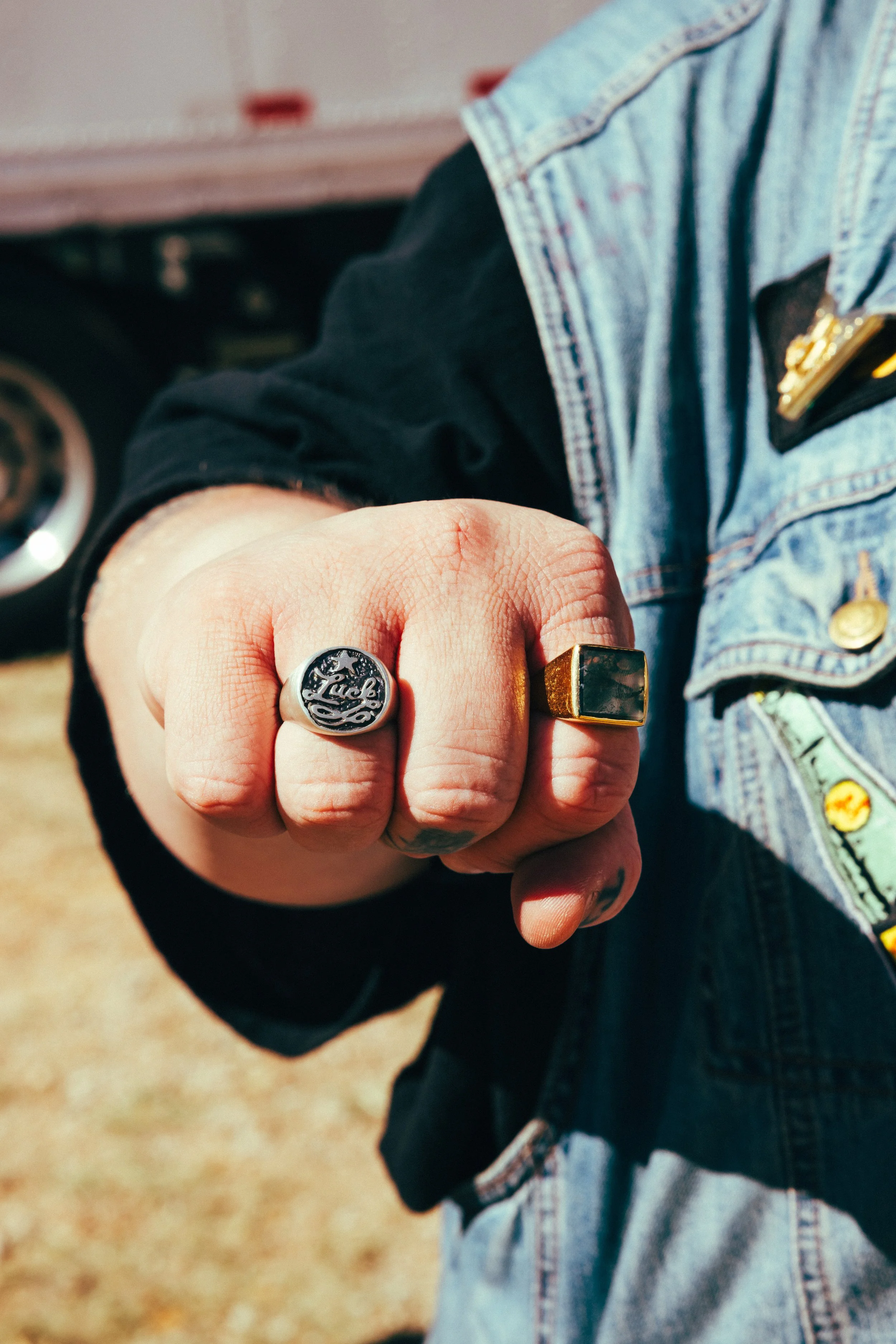
Photo by Justin Cook
Walker’s album Stuff is written from the perspectives of inanimate objects: a brick, a cooking spoon, garden shears, a telephone, a bottle of perfume. The idea began with the old objects in Walker’s 1951 Dallas home and the people who made them. During treatment, though, he started seeing those objects differently Not as pieces of a house, but as the belongings someone had left behind. The album slowly became an estate sale, a world Walker knew well from tagging along with his grandparents.
One song is told by a half-used bottle of perfume. Walker’s grandmother wore Chanel every day, but bought used bottles at estate sales. She might keep six or seven around at once, each aged a little differently by heat or time. She could tell the difference between them, but that never seemed to make one less worth wearing.
“I think that’s kind of what the album ended up being about,” Walker says. “Writing about things that would maybe be thrown away. My grandparents really showed me that everything has a purpose in some way.”
For much of his songwriting life, Walker approached his own experiences sideways, through characters and imagined perspectives. He didn’t set out to write that way. Friends noticed the pattern before he did. Over time, Walker began to understand what those characters gave him.
“If you want to drop little things about yourself into a character, you can examine parts of your own character or your personality or your experiences without having to be as vulnerable,” he says. “You don’t have to own it as much if you can put those things off on a fictional character.”
Once he recognized that, the trick got harder to perform unconsciously. The idea pushed the trick almost to the point of a dare. If listeners could care about an invented person, could he make them care about a spoon?
While a book, an old house, or a conversation over lunch might inspire new music for Walker, his inspiration rarely comes from other records.
“There’s so much more that comes out of me creatively when I just go experience life and have time to think,” Walker says. “Music that I listen to almost never influences the music I’m making. I had that whole idea about the Stuff album because I was thinking about a brick at lunch.”
Time to think has not always been easy to come by. Walker started making his living on the road as a teenager and has spent most of his adult life moving from one thing to the next. There has always been another show to play, another record to finish, another opportunity that felt dangerous to turn down.
Even the rhythm of touring has started to feel overly familiar. Walker jokes that everyone knows how a concert works now. You watch a couple songs from the opener, get a drink, go outside, come back for the headliner, and wait for the forced encore.
“That’s boring,” he says.
So when the current tour finishes in Texas, he wants to mess with the formula.
Instead of starting the run at home, as he often has before, he’ll finish with shows in Houston, Austin, and Dallas, after listeners have had months to sit with Ain’t Dead Yet. He plans to bring the full studio band and screen the documentary beforehand.
And there may be even more than music at these Texas shows. There may be puppets. There may be magicians.
“I just wanna bring a little bit of surprise to these shows,” Walker says.
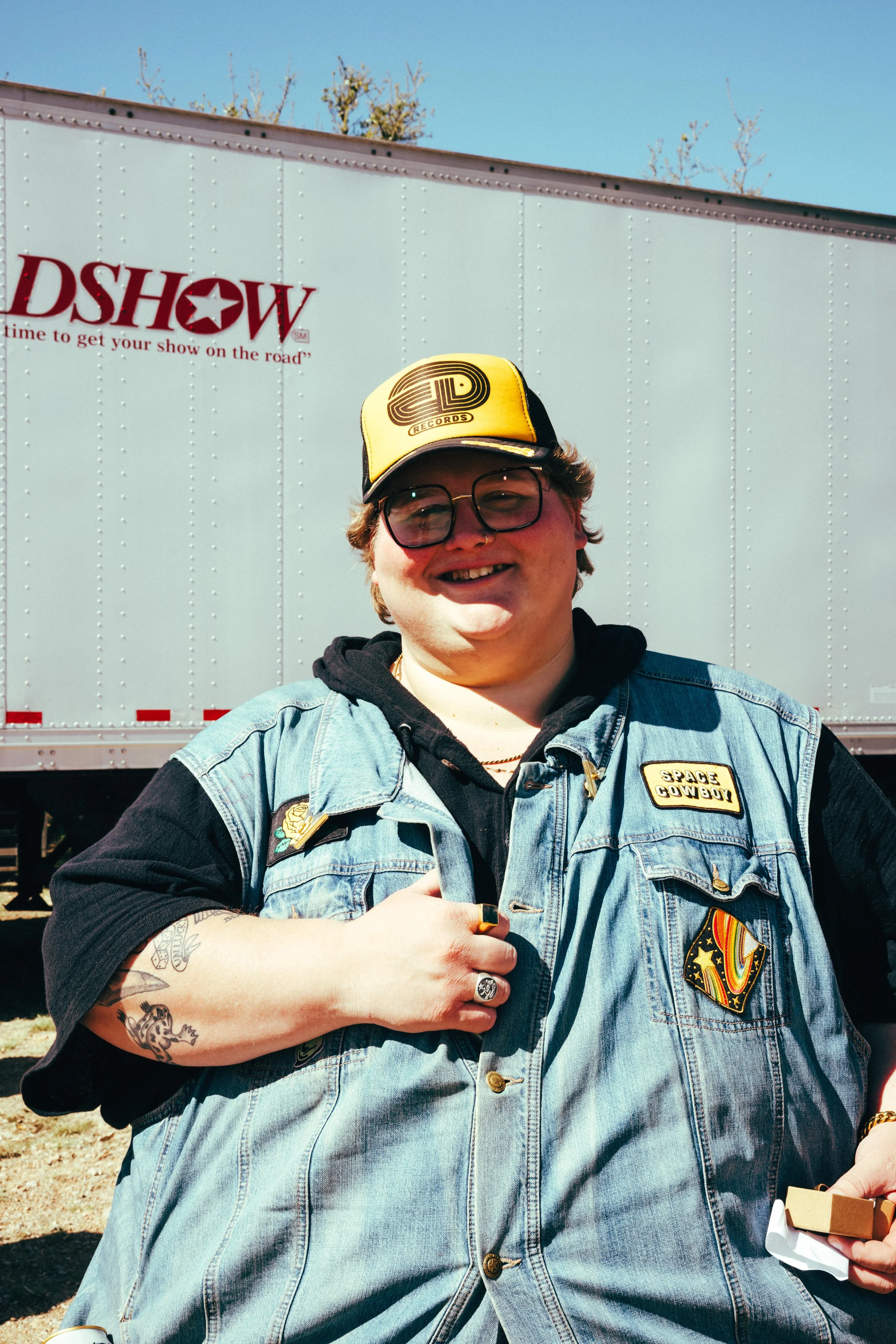
Photo by Justin Cook
After years of calculating whether a tour could afford another musician or whether the numbers worked, there is something freeing in creating a show just because it sounds fun.
That doesn’t mean Walker has stopped thinking about ambition, but he has started questioning what he wants it to cost him.
The same grandfather who helped shape Walker’s ideas of love and relationships also taught him one of his earliest lessons in ambition.
When he was a kid, he once asked his grandfather what infinity meant. His grandfather tried to explain the size of one human life against an infinite universe. Whatever one person accomplished, he told him, was something like a grain of sand.
The idea was supposed to be comforting. You are small. You don’t have to carry the universe around.
Walker heard something else entirely, and he laughs as he recalls it.
“I have to be the biggest grain of sand,” he remembers thinking. “Or it’s not gonna matter.”
Walker managed to reverse some of his grandfather’s other advice, too. “Never do anything you’re not happy doing” sounded to a young Walker like permission to avoid anything unpleasant. Years later, he understands it differently. Life is full of things you won’t want to do. Find some joy where you can.
For much of his 20s and early 30s, being the biggest grain of sand made sense. Walker wanted his career to grow. He wanted to make something important enough to stick around. And, like plenty of musicians building a career one opportunity at a time, he got very good at saying yes.
But cancer changed the stakes, and so did the people in his life. Walker says there was a time when he didn’t feel like he “owed anyone anything.” Now he has a long-term partner and has a close relationship with his mother.
“I definitely feel like I have a responsibility to the people I love to take care of myself,” he says.
At one point, his partner asked him to make a few lists. What had he accomplished? What did he still want? If he could change his life over the next two years, what would he change?
Walker expected the exercise to show him everything he still lacked. Instead, he realized that he had so much of what he wanted already. The changes he wanted were remarkably ordinary. More time doing things he loves. More time with people he loves.
“That is such a simple thing, but for some reason it is very hard to do every day,” he says. “I feel like every day I wake up and it’s like, if I just keep doing this stuff that I don’t want to do, eventually I’ll have all the time to do the things that I do want to do. And that’s just not how things work.”
Walker has reached enough of the once impossible milestones to know that achievement isn’t everything. He has played the Opry multiple times. He has played Luck. He has done late-night television on both coasts and performed in nearly every room he once dreamed about. And, while he’s still holding out for that invite to play Red Rocks, Walker has started thinking about the idea of legacy differently.
“I really don’t care what I leave behind as long as I’m making stuff that I love to make,” he says. “I just wanna create as much as I can with people that I love creating with, and I wanna spend as much time with people I love.”

Photo by Brittany No Fomo
There is no shortage of things he’d like to create. He wants to host a radio show. Produce other people’s records. Paint. Make ink drawings. Take more photographs. He’s writing a fictional film, and he wants to spend more time with the North Texas songwriting community he came up in. There are already ideas for four more records.
At the same time, Walker talks about taking some downtime after the tour, an idea that still gets a funny response from people around him.
“People are kinda like, ‘Hmm,’” he laughs.
Maybe that reaction makes sense in an industry where ambition can be measured by staying busy, but Walker is still in the middle of it all. There are shows left to play, records to shape, a movie premiering, and plenty of life outside of music that Walker wants to experience. The point isn’t to do less. It’s to be more deliberate about what fills his time.
“I feel like I’ve pushed as hard as I can push,” Walker says. “All I can really do is make records I’m proud of and go play shows that I think are compelling.”
Later in the conversation, Walker lands on a word for it.
“I feel content,” he says. “I think that’s the first time I’ve said that.”