On The Road with Deloyd Elze
Every touring musician eventually learns that the miles become part of the music. For some, that’s exactly the place where their best work is realized. For others, the highway is a place to collect the pieces, pocketed for later. For songwriter Jacob Henry Allen - who records under the moniker Deloyd Elze, this intake of inspiration is about to happen across thousands of miles of American asphalt. This July, Deloyd is packing a van and heading west for a sweeping run through the American West.
Right before the gear was loaded, we hopped on a call with Jacob to trace his path from the streets of East Hollywood to the studio floor of Owen Bradley’s Barn, mapping out how a lifetime of crate digging, roadside diner stops, and a shared love for the legendary Fred Eaglesmith set the stage for his first proper tour as an artist.
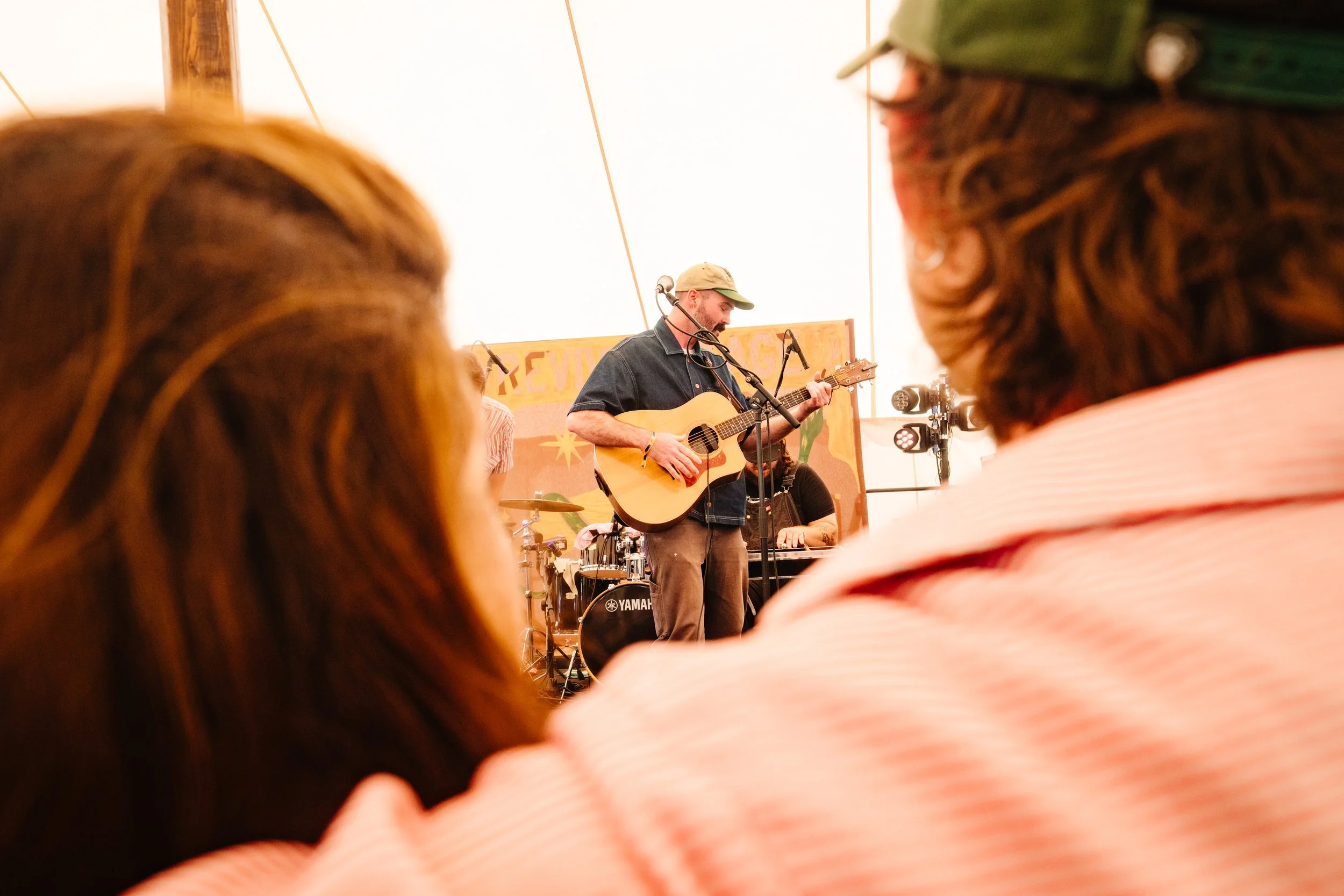
Photo by Roger Ho
Luck: This interview is officially launching our On The Road feature for the summer, highlighting artists right as they load up the van. You’re embarking on a major western sweep. What does the itinerary look like, and how are you feeling about the route?
Deloyd: We play a kickoff show on July 7th and hit the literal highway on July 8th. From there, we’re out straight until August 1st, cutting through Colorado, Arizona, California, Oregon, Washington, Wyoming, and Montana. I’m stoked because hitting places like Wyoming and Montana in the middle of July is the absolute perfect time to be up there. You get to escape the absolute sweltering heat that locks down the middle of the country during the summer. It's beautiful country, and it’s exactly where you want to be living out of a van.
Luck: We are shipping a batch of disposable cameras to your door so we can do a behind-the-scenes recap of the spaces and faces you find on the road. How do you usually approach capturing life on tour?
Deloyd: I love the disposable camera idea. We’re going to have a lot of fun with it. I actually already planned on bringing an old automatic film camera on this run. It isn’t my grandma's exact camera, but it’s the same model she used to have. A lot of the visual assets and artwork we’ve used for this project over the last few years have actually been old photos that she took. Bringing that specific model on the road is my way of keeping that creative throughline.
But disposables are even easier to pass around. On a previous Southeast run, my buddy Aaron, who plays in the band with me, took a camera up on stage mid-set. We snapped photos of each other from the stage, where you can see the crowd lit up and the whole room blurred out in the background. It was just a really fun way to capture the vibe. For this project, I’m planning to document everything - our gear setups, the venues… definitely the food. My bass player, Cole, is basically the unofficial mayor of Los Angeles; he’s got a Google Map pinned with hundreds of legendary local food spots and diners across the country. Twist my arm, but we’re going to turn this into a full diners, drive-ins, and dives tour and snap photos of our plates and the neon signs at every single stop so we can share the map with you guys for the social recap.
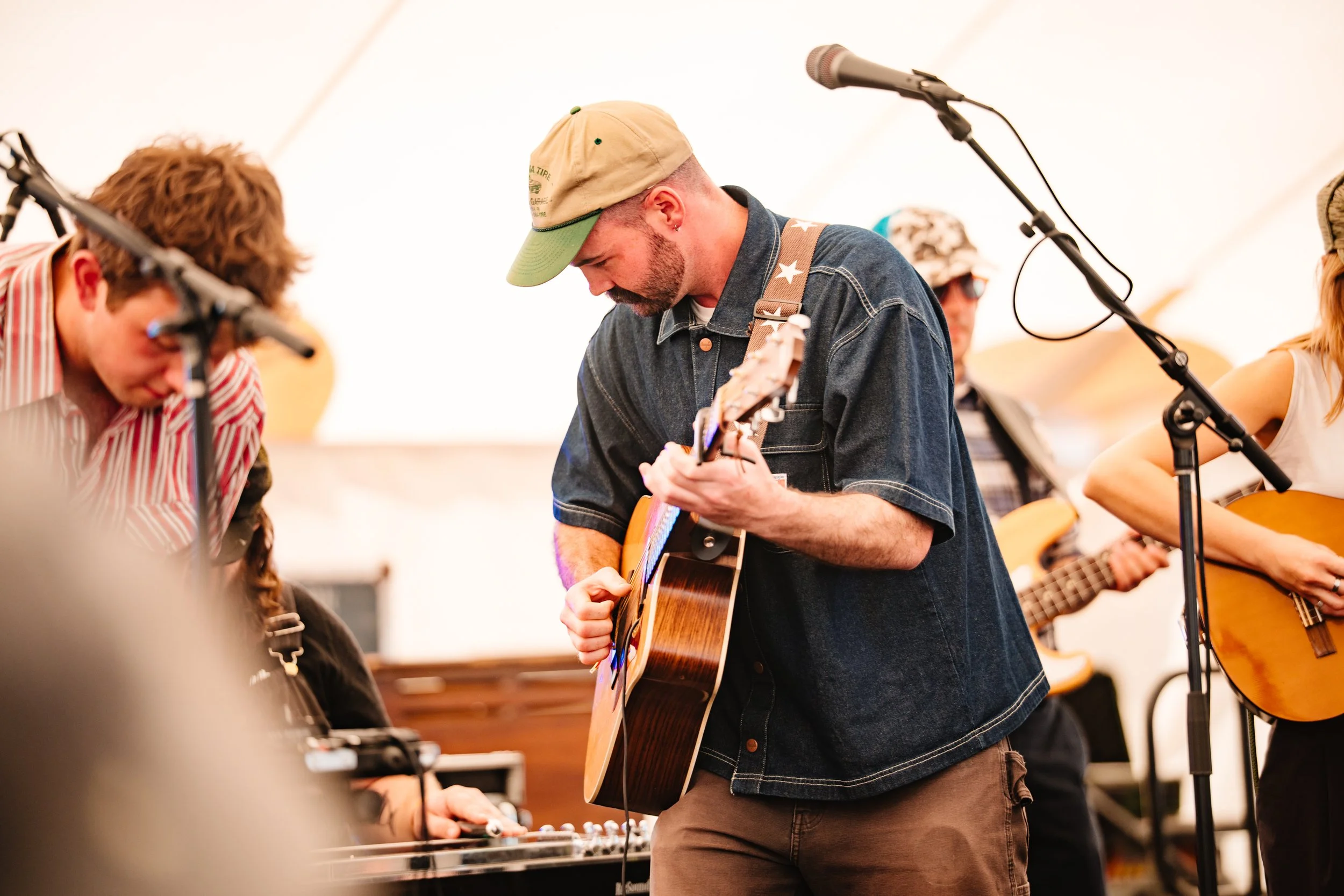
Photo by Roger Ho
Luck: You've built a very distinct sonic environment around this project - something you've previously described as "digital twang." Where does that sound come from operationally?
Deloyd: The sound was born out of a total transitional survival mode around 2022. I had been in a band called Cave Diver when I first arrived in California, but everyone eventually drifted into different lives - one guy got into film scoring, another got married. I ended up moving down to Long Beach, working a deckhand job on a boat. It was a good job, but I was miserable because I wasn't making my own music. I quit cold turkey and took a job through a friend selling goat cheese at a local farmer's market just to stay afloat.
The warehouse where I picked up our cheese stock happened to be located directly next door to a local DIY venue. Around that same time, my buddy Aaron started teaching me how to use Ableton. I had this massive backlog of songs I had written after a rough breakup, and suddenly, the intersection of traditional country songwriting and electronic production clicked into a perfect 50/50 balance. It felt like a house of cards - one element couldn't outweigh the other, or the expression wouldn't work. Right as we finished the first EP, a metal band made up of high-profile indie musicians showed up in LA using the exact name Cave Diver. I knew I couldn't compete with their traction, so I took it as a sign, changed the project name to Deloyd Elze - which was my great-grandpa’s name - and teamed up with my managers, Geoff and Tim, whom I met purely by being next door to that DIY venue. We came up with the moniker "digital twang" over a plate of burritos at a spot called Los Cincos Puntos because if you tell traditional folks you make "experimental country," they panic. If you say digital twang, they lean in.
Luck: Things moved incredibly fast from that point. You went from a DIY venue warehouse to showcasing at South by Southwest and signing with Concord Records within a two-year window.
Deloyd: It was a complete whirlwind. Geoff and Tim booked us for South by Southwest as a raw three-piece with Aaron and our friend Laney. On our very last day, we were handed a brutal 2 PM slot. It was 90 degrees out, and everyone in the crowd was sweating, grumpy, and exhausted. We just went out and muscled through a 30-minute live set. Afterward, a guy came up to the merch table and said a friend in LA had told him to catch us, and he was blown away. He worked for Concord. Within a week, we were sitting in a meeting with the label president, Mark Williams. He asked me what my plan was, and I told him my dream was to record our album in my great-grandfather Deloyd’s old house out in Cairo, Georgia. Mark laughed and said, "I grew up in Atlanta, I know exactly where Cairo is 0 there is absolutely nothing out there." I told him that was the whole point. He signed us on the spot, and a year later, we were playing Luck Reunion.
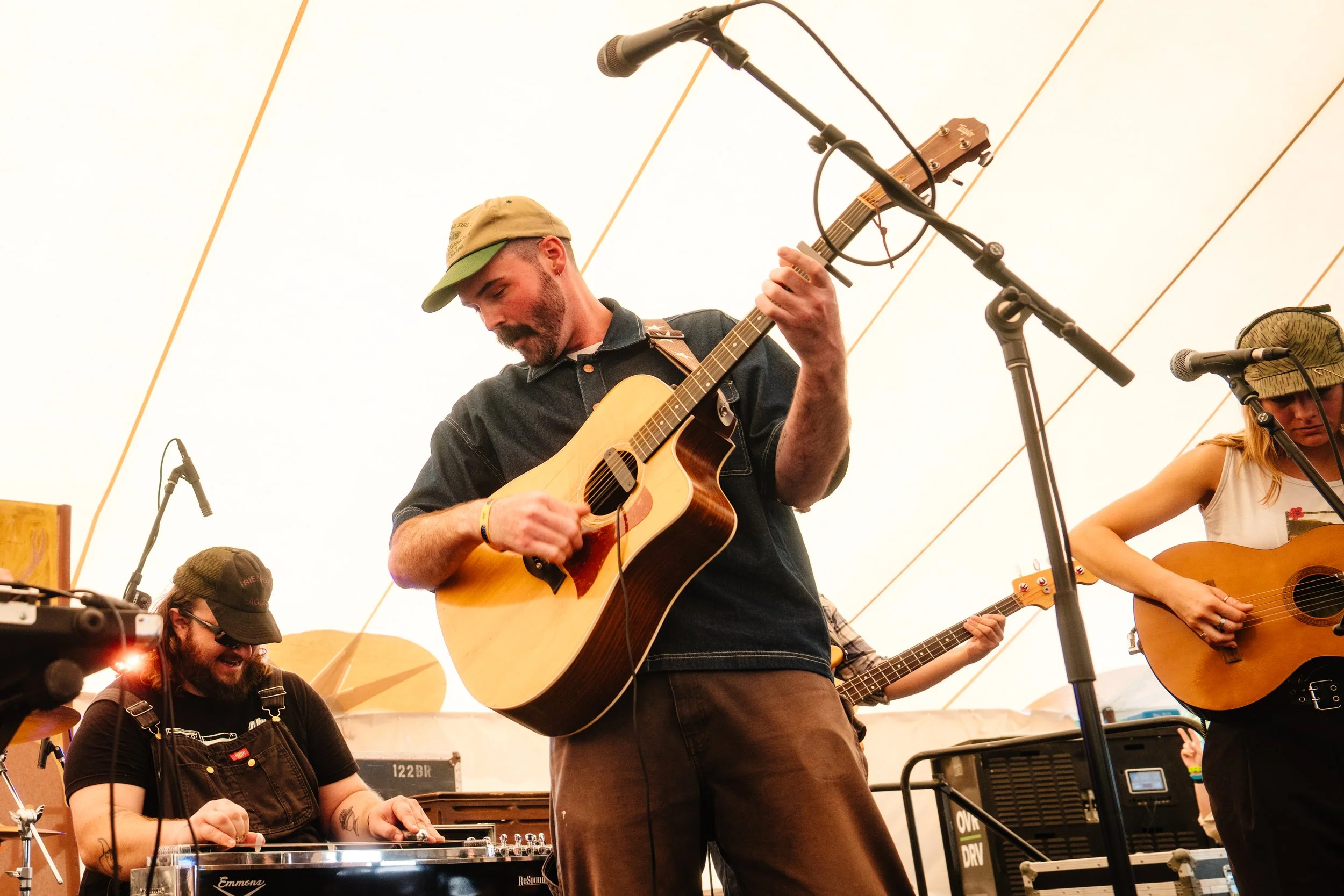
Photo by Roger Ho
Luck: Speaking of Luck, the story of how you actually got booked for the festival has become a bit of local lore. It all goes back to a recording session at Owen Bradley’s Barn in Nashville, right?
Deloyd: Man, that session was a dream. Luck had approached us during Americana Fest to come down to Bradley's Barn - the historic studio where JJ Cale, George Jones, Dolly Parton, and Loretta Lynn cut records - to record a couple of covers for a Red Headed Stranger compilation album. We tracked our versions of Denver and O'er the Waves.
When Aaron and I record, we don't like to overthink the process. I believe all my favorite records were done live in the room. If it feels good, it’s good. We knocked out both compilation tracks in just two or three takes, which left us with an hour and forty-five minutes of completely unused studio time. The engineers asked if we wanted to cut anything else, so Aaron and I immediately started playing Trucker Speed by Fred Eaglesmith. I've had his album 6 Volts on absolute repeat for years. Right as the final note faded, Matt from Luck walked into the live room and asked, "How on earth do you know that song?" I told him I was a massive fan, and he told me he used to travel down to Fred Fest in New Braunfels back when he was in college. Then he dropped the bomb: "You're not going to believe this, but Fred Eaglesmith is playing Luck Reunion next year. Do you want to play too?" It was just this beautiful, serendipitous moment.
Luck: Did you actually get to meet Fred when you got to the festival?
Deloyd: I did, and he was even cooler and nicer than I imagined. He played an incredible live set with his wife, his son, a bass player, and a drummer. I was so curious about the technical blueprint of his 6 Volts record because it sounds so fundamentally different from anything else out there. I approached him after his set and asked how he engineered it. He told me they tracked the entire album using literally one microphone running into a preamp, a compressor, and a tape machine. There were no digital edits, no modern track splicing, and no safety nets. For every single song, the band did about 60 live takes front-to-back until it was flawless. He said people were literally crying in the studio from the exhaustion of trying to get the physical balance right around that single mic, because if your distance shifts even an inch while singing, the mix is ruined. He laughed and said, "It’s crazy because that exact song pays my mortgage now." He actually came over and watched us perform our cover of Trucker Speed at Luck, and he joked with his son, saying he loved seeing younger bands cover it because it keeps the music out there in the world.
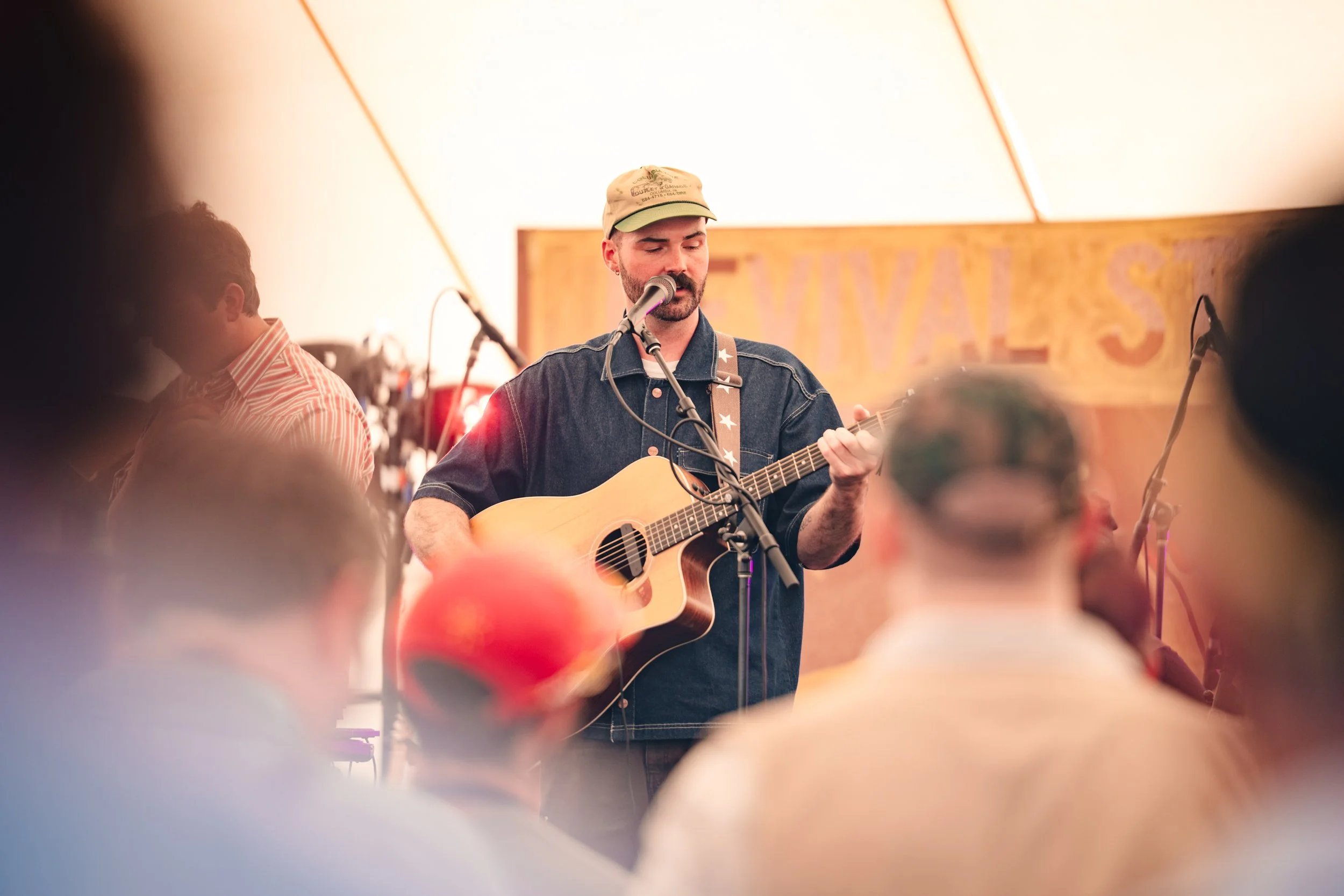
Photo by Roger Ho
Luck: Does that heavy operational focus on live tracking and road-tested arrangements change how you write music when you are actively moving between tour dates?
Deloyd: Writing on the road is incredibly difficult because your mind is constantly occupied by daily logistics: load the van, get to the venue on time, clear soundcheck, sell merch, pack up the gear, get some sleep, and rinse and repeat. Because of that, I’ve realized my brain operates in strict phases of input and output. When I’m touring, I am entirely in an intake phase. I’m not finishing songs - I’m just collecting data, jotting down quick fragments in notebooks, looking at landscapes, and hopefully catching some fish with my fly fishing gear on our off days.
The actual output phase only happens when I am completely stationary and alone. I’ll sit down in a room, three hours will completely vanish, and I'll come up for air with seven new songs. I usually have to tinker with the production beds, guitars, or synths before the lyrics ever show up - the sonics visually guide where the words want to go. For example, with Rite of Passage, I was sitting in my sweltering studio garage at two in the morning. I had a basic guitar and synth track looping, picked up a guitar, and suddenly caught a thread. I knew if I packed up to go to bed, that specific thread would be gone forever. I muscled my way through it, looked at the clock, and it was four in the morning. With touring, you just don't have the isolation to turn that creative spout on, so you have to treat the road as your time to soak everything in.
Luck: What do you think an outside observer would learn about regional crowds if they followed your band van across the state lines on this upcoming run?
Deloyd: They’d learn that crowds are incredibly blunt, and you have to earn their trust every single night. Aaron and I did a duo Southeast run opening for a rock band in Birmingham, Alabama. The crowd didn't know who we were, and our duo setup is a lot of ambient, textural, experimental soundscapes. For 45 minutes, the crowd might as well have ignored us completely - they were talking, drinking, and doing their own thing, which is totally fair. They just worked a 40-hour week and were trying to cut loose on a Friday night.
But right after the set, I went to the merch stand and had two classic interactions. This one kid came up, totally fired up about what we were doing. Right behind him was this classic Southern Belle, dripping in jewelry. She walked right up to the table, looked me dead in the eye, and said, "Honey, I just gotta tell you, that was the weirdest thing I have ever heard in my life." I laughed and asked, "Well, ma’am, did you like it?" She said, "No. It was like country music, but it wasn't." I told her, "Well, then my job here is done, because that’s exactly what I’m going for." She smiled, wished us a safe trip, and went on her way. I didn't take it as an offense at all; I loved the gumption it took for her to say that. Under the hood, our music has the literal structural bones of traditional country songwriting. Earning the respect of people on the road who say, "I don’t fully understand what this is, but I like you, and you seem nice" - that’s the whole point of heading out on the highway.
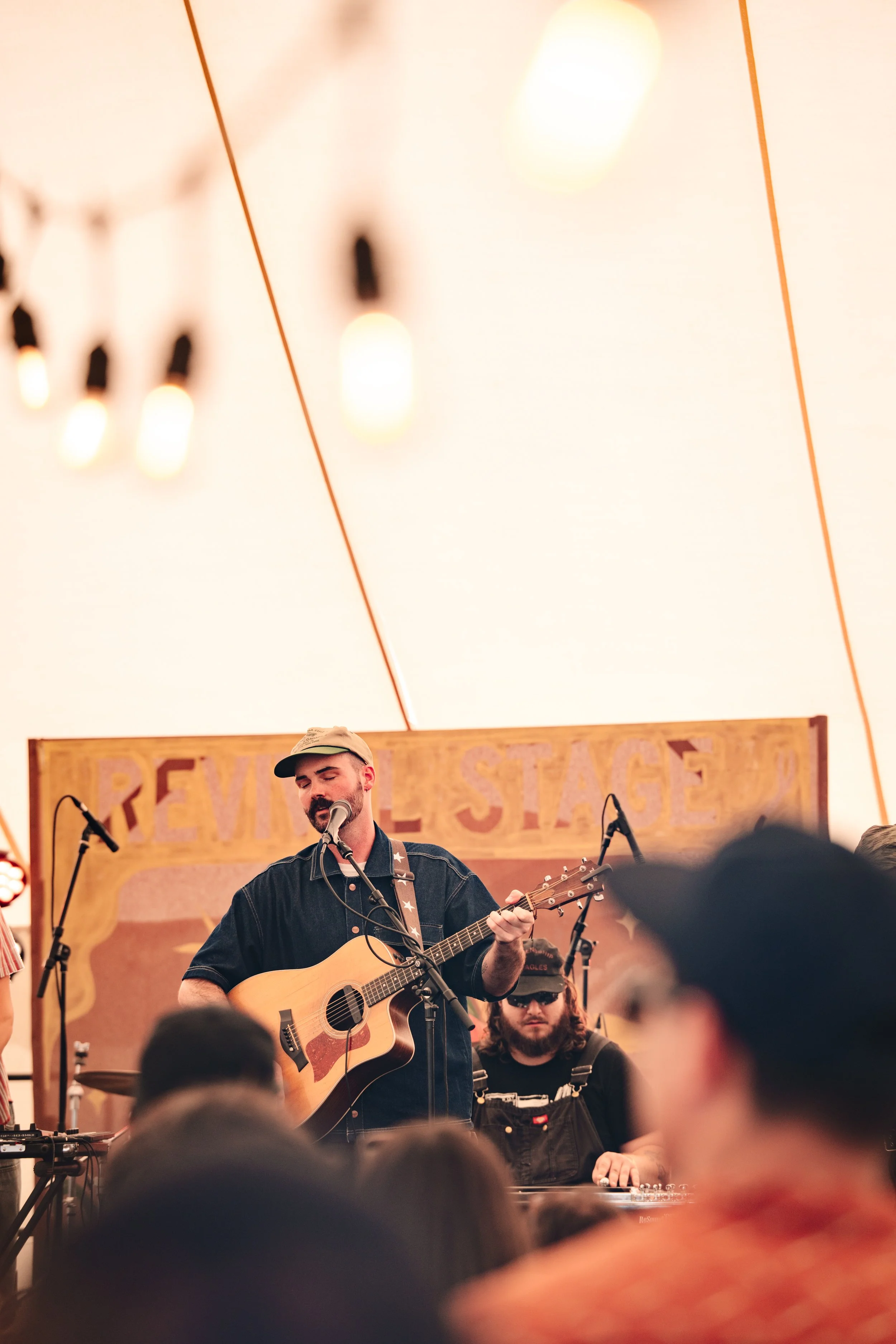
Photo by Roger Ho
Luck: Before you hit the road on July 8th, what are the primary projects or releases you want the Luck audience to dive into?
Deloyd: Definitely spend some time with our latest EP, Nellene, which we released back in March. It’s been incredible seeing how people react to those tracks and the B-sides on the road. Beyond that, our next full-length record is entirely finished and locked down, but it won't be coming out until next year. Right now, this tour is all about getting the live band out there, connecting with the crowds opening for Futurebirds, and collecting the next round of inspiration.