One Verse at a Time: Buddy Cannon on Willie Nelson
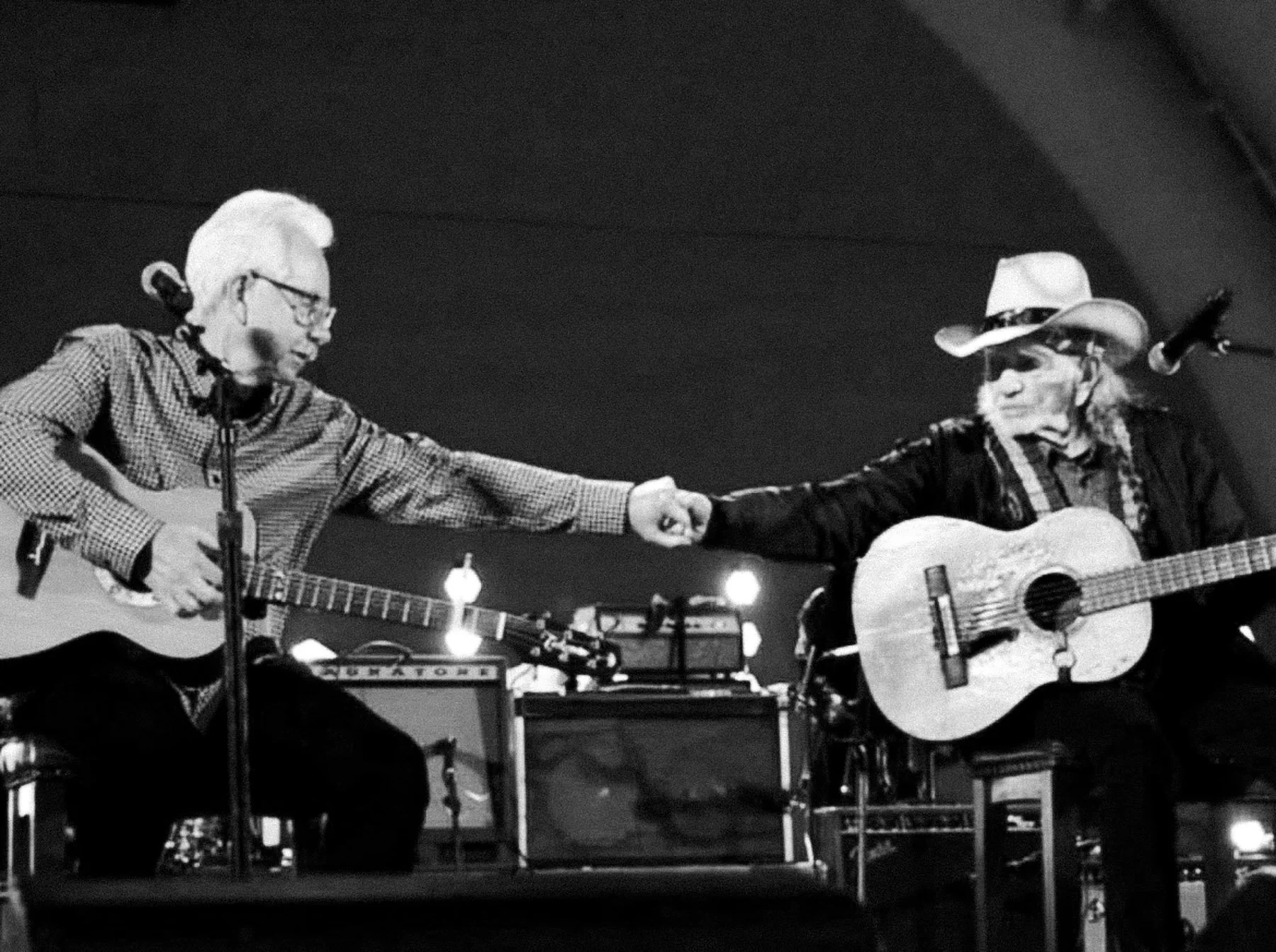
Photo provided by Buddy Cannon
If you happen to call Buddy Cannon on a chill morning, there’s a good chance he’ll answer the phone from a Nashville studio desk, casually balancing a meeting with lawyers and a text thread with Willie Nelson. He moves through the upper stratospheric layers of country music with the effortless calm of a man who has spent fifty years proving he belongs there - despite remaining completely starstruck by his own peers.
"I’m always amazed when I'm with these people," Buddy says, his voice a bit hoarse, but carrying that grounded Southern cadence. " That they even want me to be in there with them. Sometimes I wonder why."
The rest of the industry doesn’t have to wonder. In an industry driven by fleeting trends, Buddy Cannon has built an unshakeable empire of trust.
"I kind of got a reputation around town for being really hard on songs," he smiles. "If I bring somebody a song, they trust that it’s not gonna be a piece of crap. I don’t like mediocre songs. When people ask me what kind of song I’m looking for, I tell them - I’m looking for one I want to hear again."
That simple, uncompromising thermometer for taste has led to one of the most prolific partnerships in American music history: a 22 album alliance as the trusted producer, co-writer, and creative anchor for Willie Nelson.
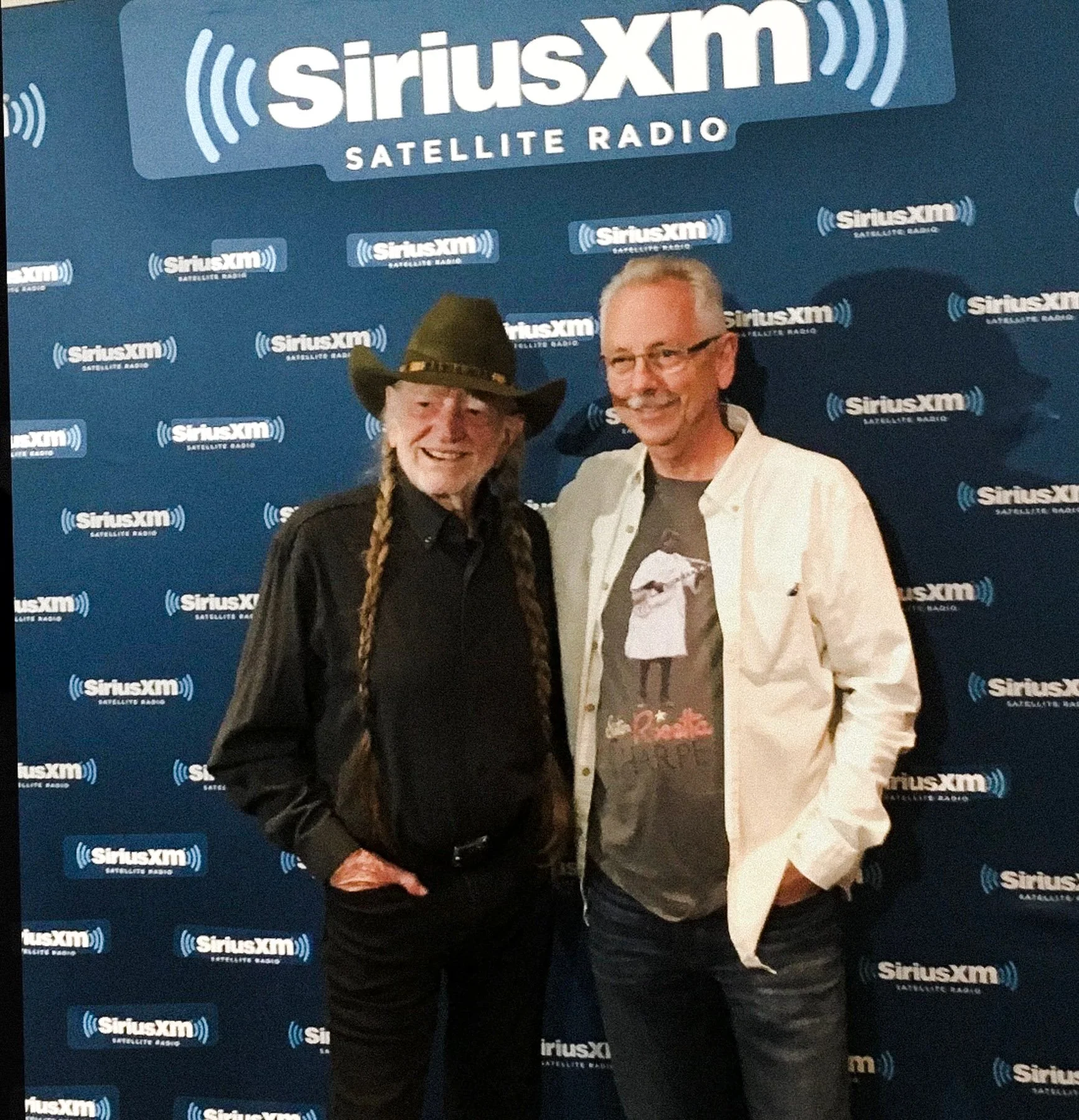
Photo provided by Buddy Cannon
The Parallel Paths
Long before they were passing lyrics back and forth over text, Buddy and Willie were living remarkably parallel lives separated only by a generation.
"I think our backgrounds and our childhoods were very similar," Buddy reflects. "I read a book about Willie's life, and it talked about how his grandmother raised him. I lived in the house with my grandmother until I was in the eighth grade. He picked cotton and bought his first guitar. I picked cotton and bought my first guitar. There are just a lot of parallels."
Those parallel lines finally intersected in 2007 during an island themed recording session with Kenny Chesney. They were cutting a version of the old pop standard "Lucky Old Son" when Chesney looked up and said, "Man, I sure would love to hear Willie Nelson sing on this."
Buddy shuffled through some loose papers on his desk, found Willie's number, and dialed. True to form, Willie rolled through town on his bus a few days later, tracked his vocal, and headed right back out on the highway.
A few days later, Buddy was on vacation in Florida when his phone rang with an unrecognized number.
"I answered it and he said, 'Buddy... This is Willie.' I started shaking in my shoes. He said, 'That Lucky Old Son rough mix you sent me is the best I’ve ever heard that song done. Let’s find some songs and go make an album.' That's how it happened."
Twenty two albums later, the wonder hasn't worn off. "Willie’s always been my hero," Buddy says. "So to get to be around him in creative situations, it’s always mind boggling."
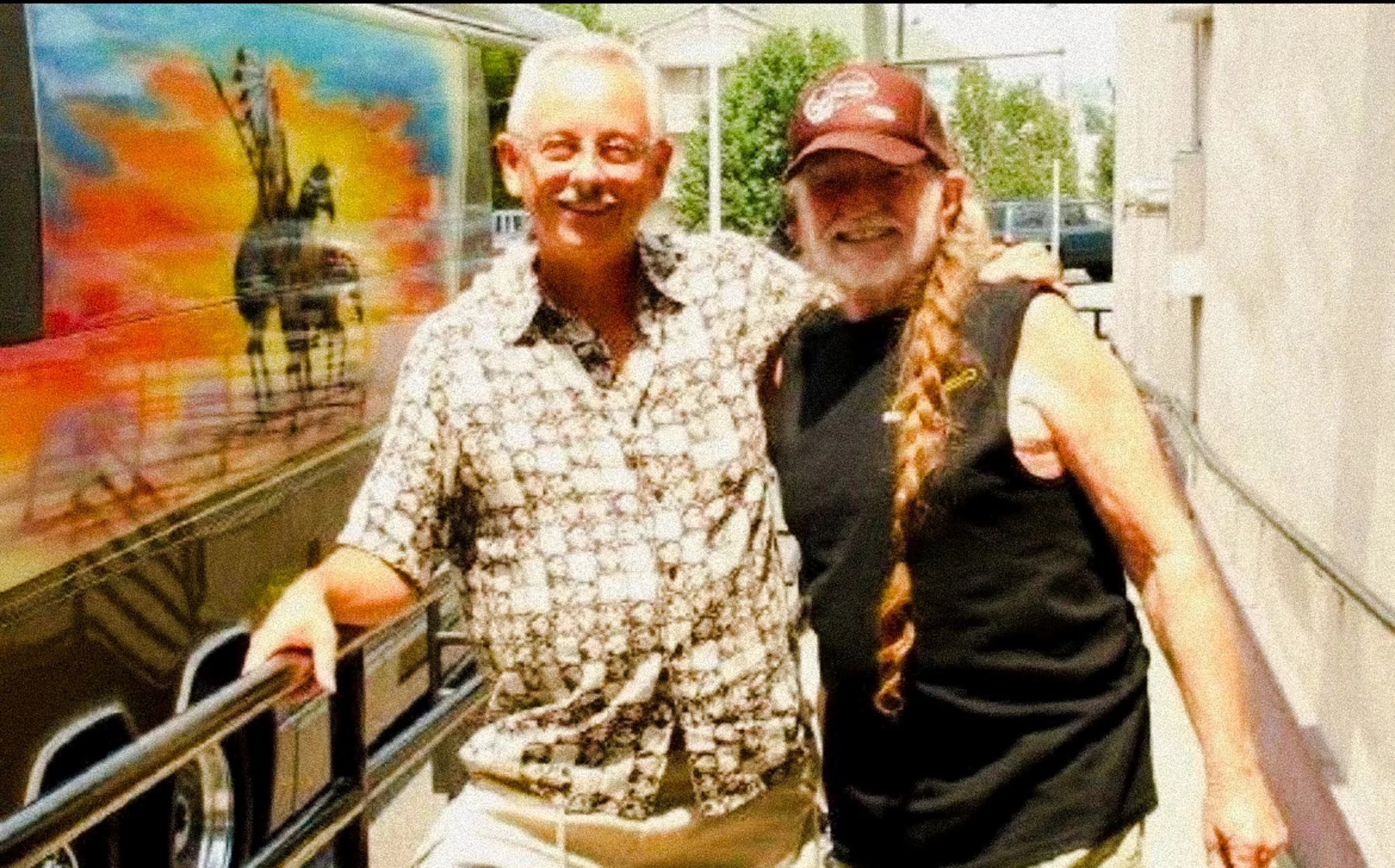
Photo provided by Buddy Cannon
Coming Up in Nashville
Buddy’s ability to navigate the egos and eccentricities of legendary artists was forged in the fiery landscape of 1970s Nashville. His big break came the night after Mel Tillis won the CMA Entertainer of the Year award in 1976. Buddy was playing a club gig he hated when a waitress told him Mel Tillis was on the phone.
"I went over to the phone expecting it to be one of my pals pranking me," Buddy laughs. "He said, 'Get your ass down here to my office.' I drove down, banged on the back door, and I could hear my song playing through the wall. We hung out and drank beer and listened to music until daylight."
The next day at RCA Studio A, Tillis recorded three songs - all of them Buddy's. It kicked off a twelve year residency where Buddy worked as a writer, song plugger, and band member for Mel, watching icons like Glen Campbell wander through the office halls.
It was during this era that Buddy truly learned the weight of an incredible song. In 1981, he pitched a track called "Dream of Me" to his neighbor, the legendary Vern Gosdin. Gosdin fell so deeply in love with the track he played the cassette ten times in a row. Simultaneously, Dwayne Allen of the Oak Ridge Boys called wanting to put a hold on the exact same song.
"I had a war I was trying to mediate," Buddy chuckles. "Vernon was a little strange and he was unhappy about it. He told me, 'You can tell Dwayne he can let the Oak Ridge Boys cut the rest of your effing song!' But I just told the truth and got out of the way. The Oaks ended up cutting it, Vern cut it and had a hit on it, and everybody ended up happy."

Photo provided by Buddy Cannon
The Text Message Album
By the time Buddy took over as a producer for Sammy Kershaw and later launched Kenny Chesney into superstardom with a string of number one records, he had mastered the art of "getting the right people in the room." But when it comes to writing with Willie Nelson, the "room" is entirely digital.
"The only way we’ve ever written a song is over text messaging," Buddy reveals. "We just write the lyrics, pass them back and forth, and when we get the lyrics good, one of us will hum a melody and the other will make a little guitar vocal memo. We’ve probably written 70 or 75 songs that way."
Their very first text message collaboration? The iconic "Roll Me Up and Smoke Me When I Die."
"I woke up one morning about seven o'clock and saw a text alert from Willie. He had written a verse and a chorus. I wrote some stuff down, sent it back to him, and in about twenty minutes we had the song. We don't keep score on who wrote what."
Enter Bob Dylan
Willie’s newest album, releasing this week, wasn't actually part of a grand design. Buddy had been writing songs in town with Bobby Tomberlin and Bobby Whitlock (who famously co-wrote "Layla" with Eric Clapton in 1986). Buddy kept sending the tracks to Willie just to show him what he was working on. Willie's response was always the same: "I like that. Keep it up."
Eventually, the tracks piled up, and Willie rolled into town to cut the vocals - knocking out ten songs in a blistering fifteen minutes each. But it was a track called "I Can't Read Your Mind" that provided the album's most legendary twist.
"Willie started singing it, got through about a verse, and stopped," Buddy says. "He said, 'Hey Buddy, we're gonna have to change the writer names on this song. We're gonna have to add Bob Dylan to this. Bob gave me the idea for this song.'"
As it turned out, Dylan had given Willie the brilliant, poetic seed of a line: I can't read your mind, the letters are too small. Willie texted the line to Buddy, forgot to mention where it came from, and Buddy spun it into a masterpiece.
"Never thought that would happen," Buddy smiles. "A Bob Dylan writing credit in 2026. But he's still writing."
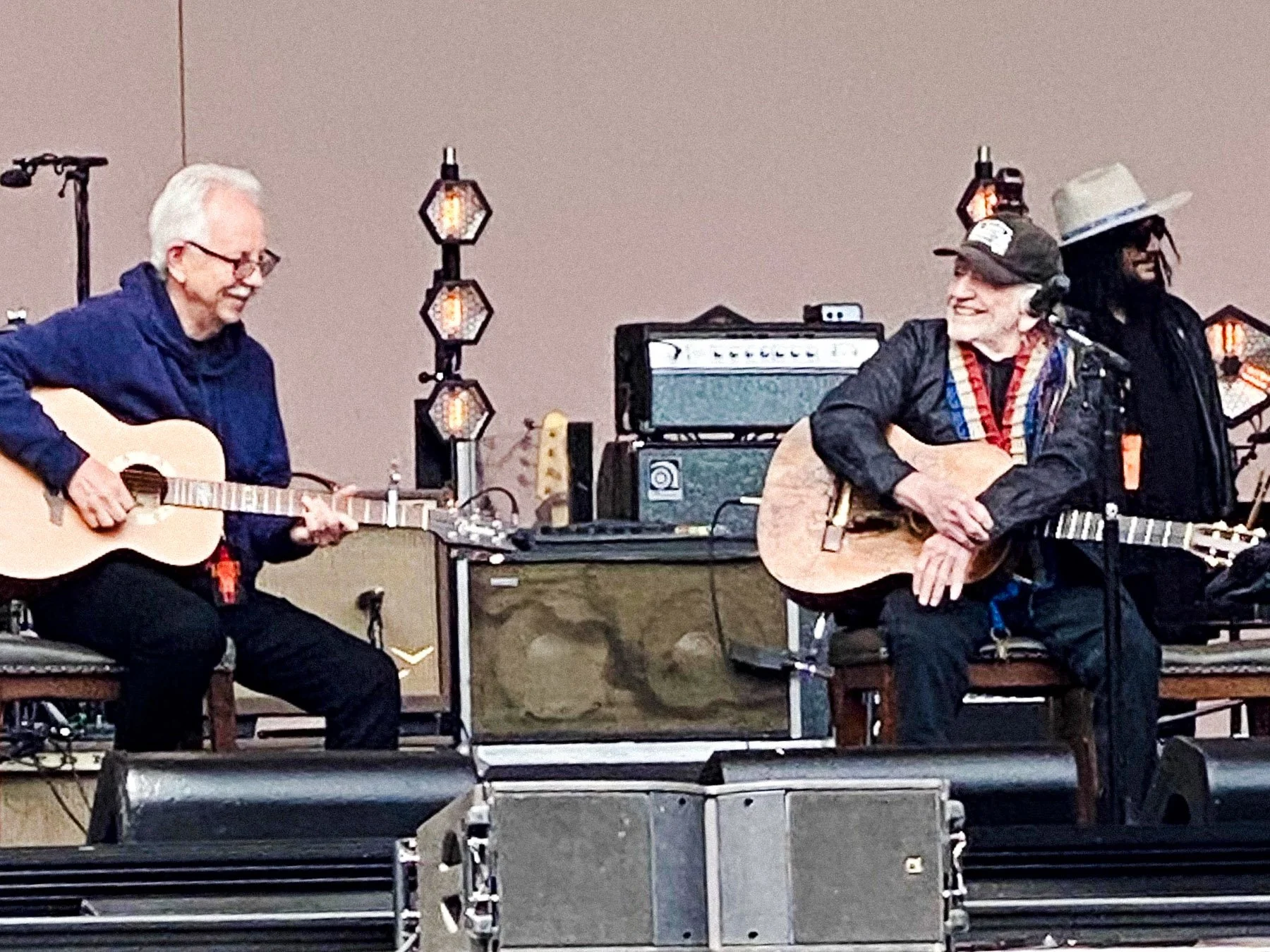
Photo provided by Buddy Cannon
A New Classic
When you look back at the sheer volume of history Buddy Cannon has altered - from the outlaw days to the modern stadium packing country eras - it’s easy to look for a complex formula. But for Buddy, the nature of his entire career remains as pure and unclouded as it was when he was picking cotton to buy his first six string.
As Willie’s newest record hits the stands, it stands as a testament to that exact gravity. It is an album born of friendship, kept alive through text messages, blessed by Bob Dylan, and protected by the finest ears in Nashville.
"For me personally," Buddy says, "I think it’s one of the better ones we’ve had in a long time."
And if Buddy Cannon wants to hear it again, you can bet the rest of the world will too.