To survive two decades in the music industry, you have to possess a rare kind of stamina - and a healthy sense of humor doesn't hurt, either. Aaron Lee Tasjan wears both like a second skin. From his early days of glam rock theater to his status as an Americana pillar, Tasjan’s career has been a masterclass in staying true to your own creativity. On the heels of announcing his new solo tour, we caught up with Aaron to talk about the shift from full band chaos to the power of a single guitar, the survival mechanics of the road, and the lasting impact of the mentors who gave him permission to be himself.
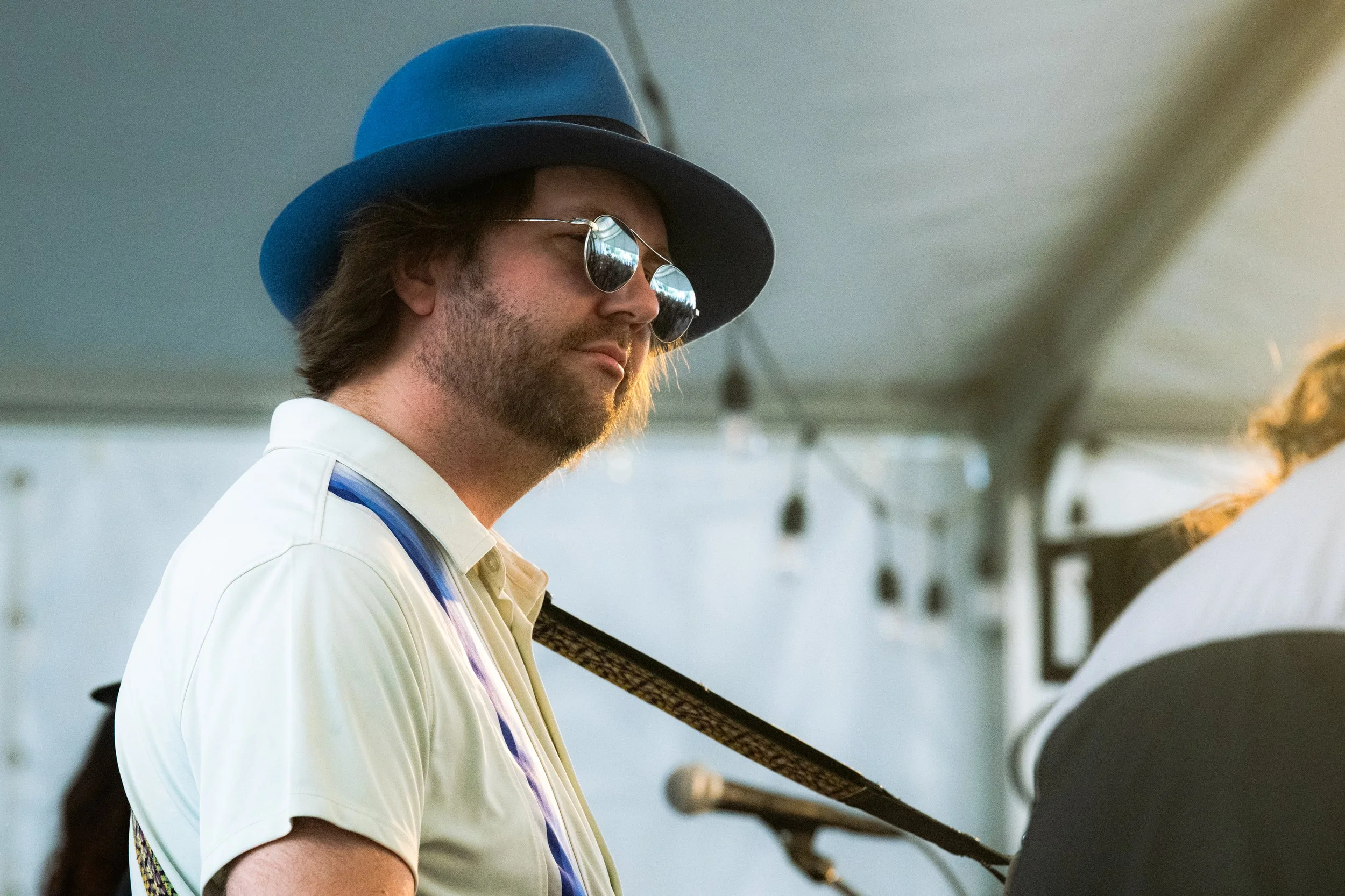
Photo by Michael Weidemann
Luck: Where are you joining me from today?
Aaron: I’m in a casino hotel room in Reno, Nevada. I’m playing a show with The Wallflowers tonight here.
Luck: Amazing. Exactly where I’d hope you’d be taking this interview. What does a typical day in the life look like on the road for you right now?
Aaron: Today I’m gonna get a massage in a little bit, probably finish up a couple of songs that I’m working on in my hotel room, and then go to soundcheck. That’ll take a whopping five to ten minutes because it’s just me with a guitar. I play mostly solo these days. Then I’ll do the show, sell as much merch as I possibly can to offset the price of gas, come back to my room, do some nighttime yoga, and go to bed. Pretty boring, actually.
Luck: Honestly, it sounds incredibly soothing. Are you a big yoga guy?
Aaron: I’m not a huge yoga guy, but I signed up for this mental health app. It has a cool morning routine thing to get you going, and then a separate one for the evening. I have real trouble sleeping, so getting into a cool evening routine is something I’ve had to embrace.
Luck: I would imagine it’s hard. You have to get into such an elevated state of mind to perform late at night, and then suddenly turn it all off to go to sleep.
Aaron: There’s definitely some truth to that, but I’ve actually had trouble sleeping since I was a little kid. They used to put me in sleep studies at Ohio State University to figure out why my internal clock was reversed. It’s just something I’ve dealt with my whole life. Honestly, the older I get, the earlier I play, which I love. A 7PM or 8PM downbeat is my favorite. By 9 I’m getting a little itchy. But I love the job and whatever comes with it. Today it’s dried apricots and coffee, so I’m not complaining.

Photo by Andrea Escobar
Luck: You’ve been at this for over twenty years now, so you definitely have the routine down. When does the songwriting actually happen? Are you a natural night owl?
Aaron: I get up early wherever I am - woke up at eight today - and I get a lot of stuff done first thing. Later in the day, it's just kind of whatever I fancy. It might be some reading, a long walk, or swimming. I’ve been swimming a lot lately, which I really love. It’s just about leaving space to let the energy flow where it wants to go. You just follow that… something groovy is going to happen, and it usually does.
Luck: You didn't exactly start out in this acoustic, Americana space. How would you define your early days on the New York scene?
Aaron: Yeah, early on I was helping out with someone else's band. Semi Precious Weapons was Justin Tranter's band. Justin is a great songwriter - people might know him now from writing giant pop hits like "Sorry" for Justin Bieber. He blossomed into an incredibly successful pop writer, and I co-wrote all those early rock songs with him. Because I listen to so many different kinds of music, I’ve always had the ability to tap into what someone else needed to do in a co-write.
But left to my own devices, I really prefer to write therapeutically. I love it when songs are medicine. Music is medicinal, right? I get really psyched when I feel like I am writing a song that is helping me, because I know those are always, without fail, the ones that help someone else get through a tough time. The job of songwriting is just getting to be a cool little mirror for other people.
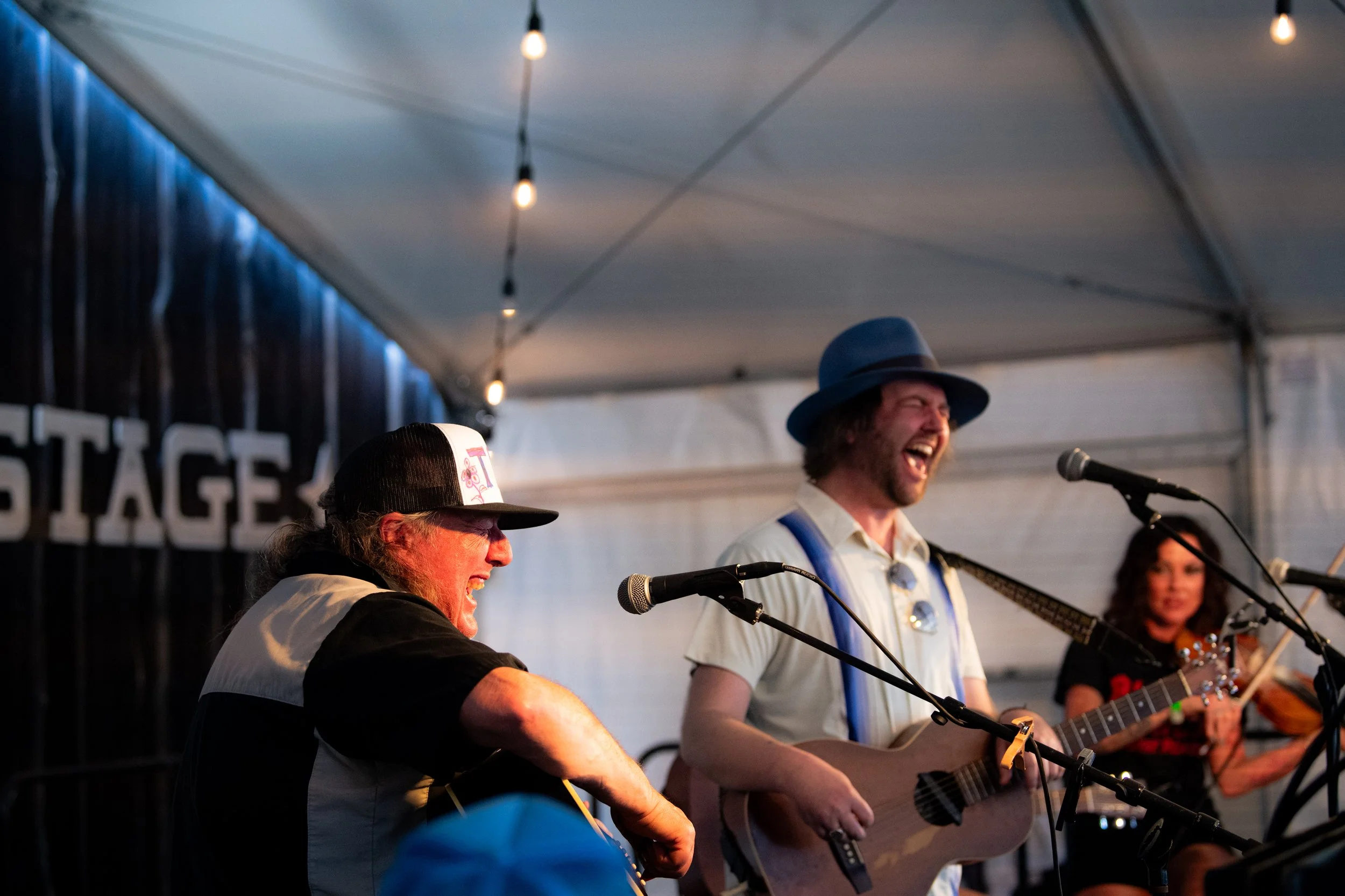
Photo by Michael Weidemann
Luck: So the folk kid was just hiding out in leather pants for a while?
Aaron:[Laughs] Absolutely. You could ask Justin, he’d tell you. The whole time I was putting on leather pants and doing the whole glam rock bit, I was backstage listening to Lucinda Williams, John Prine, and Guy Clark. That’s where my heart has always been.
Luck: One of the elements that connects your glam days to your folk work is your wit. It's razor-sharp, but it always feels deeply human. Do those punchlines come to you first, or do they just show up in the room?
Aaron: I don't know at what point this happens, but my brain just instinctively starts feeding me everything someone says as a punchline. It rearranges the words into a misdirection. It’s almost annoying when you're just trying to listen to a conversation, you're like, 'Man, give me a break.' But I realized I could use that effectively in songwriting. I love trying to find lines where the listener thinks they know exactly what you’re gonna say, and then you take a light left turn. The element of surprise is a really effective tool. A sense of humor is a good way to tackle a heavier topic because it diffuses the tension. People will let you in a little more if they see you aren't taking yourself too seriously.
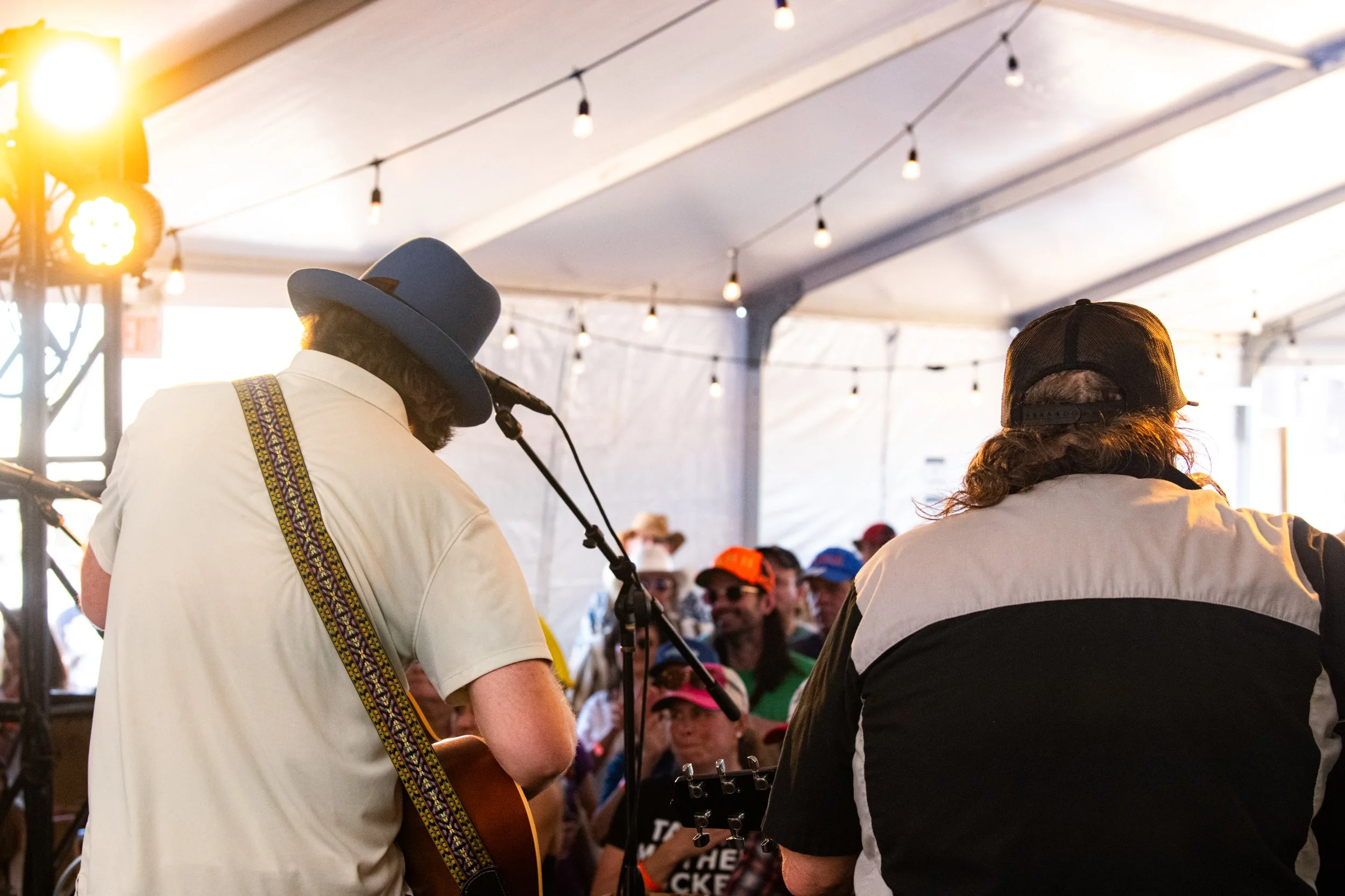
Photo by Michael Weidemann
Luck: It feels like the relationship between the songwriter and the listener has shifted, though. It used to be that the song was a mystery left up to the listener's interpretation, but now everyone wants the granular details.
Aaron: It has totally switched. It used to be.. you put a song out and didn’t say anything about it. Now, people are deeply interested in the context. I get comments at shows all the time like, 'I loved hearing the story behind the song. I thought it was about one thing, but hearing your perspective tonight gave me a whole new look at it.' We’ve become music listeners who crave that old Behind the Music style. It's probably a result of the Information Age - we can Google everything, so we want the granular details.
But I think the most powerful songwriting manages to hold onto both.
Luck: Having spent over two decades navigating this industry, it seems like you’ve moved past the shiny phase and into a place of pure endurance. What does "surviving" the music business actually look like to you?
Aaron: What people in the industry are really looking for - beyond talent or business sense - are artists whose nervous systems can endure the emotional peaks and valleys of trying to be seen, and mostly not being seen.
What that looks like in reality is your last record didn't do very well, your numbers are down, and your agent says the tour is hard to book because the last few turnouts weren't great. That is hard stuff to hear, especially when you’ve been doing this for fifteen or twenty years. Do you internalize those comments and allow the perception of someone else to dictate your worth based on circumstances you can't control? Or do you turn back to the work and say, 'Man, that’s a bunch of noise.' The people who survive are the ones who turn to their process, and trust the creation of something new.
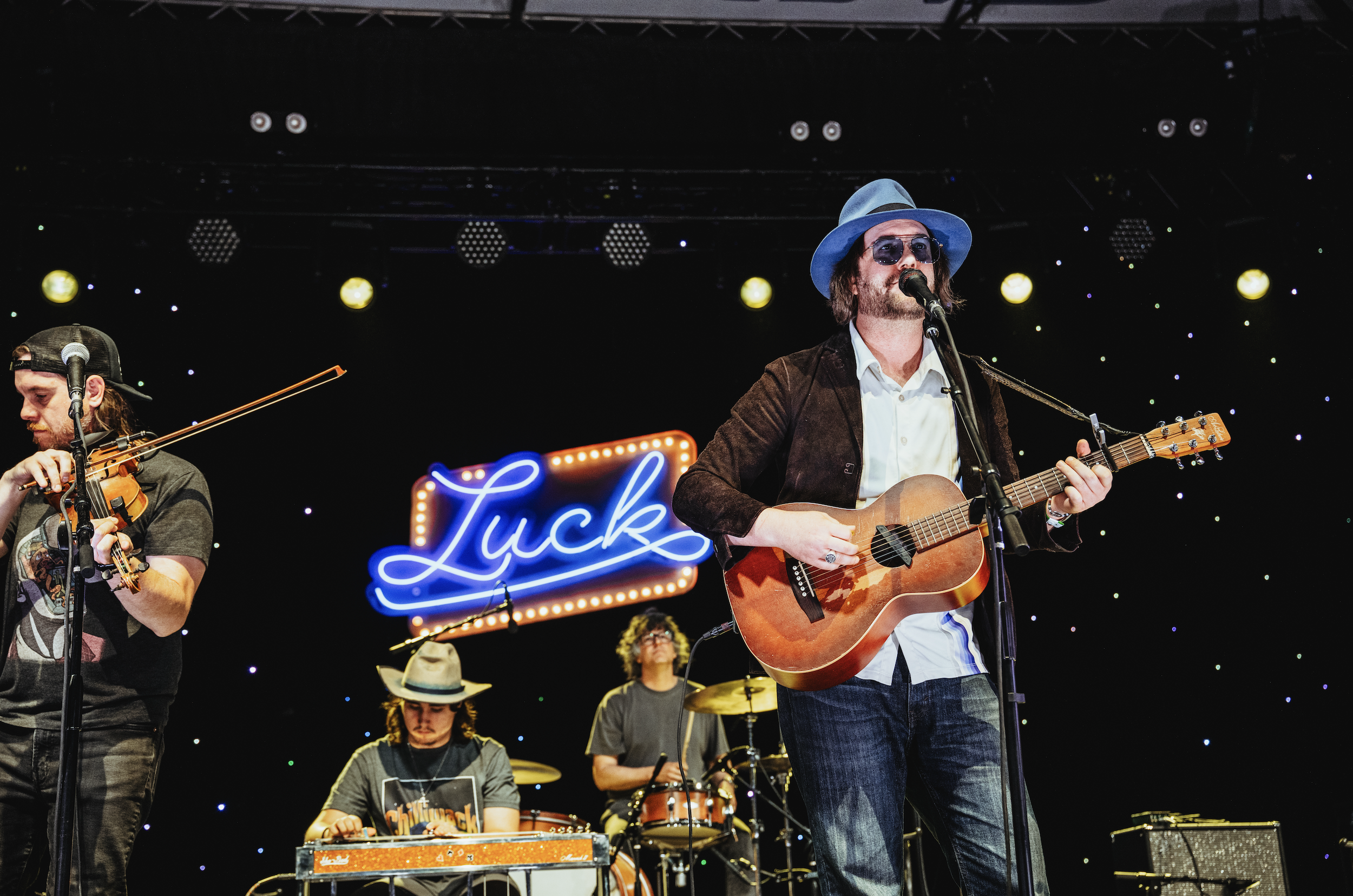
Photo by Andrea Escobar
Luck: You’ve had some legendary people in your corner helping you trust that process. We know how deeply interwoven Todd Snider was in your journey - from you mowing the golf course grass to his records as a kid, to eventually working together. How did he help you anchor your songwriting when the industry noise got too loud?
Aaron: Todd really helped me find what he called the "emotional rock" in a song - a concept he told me he learned from working with John Prine. It’s that one line in a song that you can personally stand on, emotionally. Even if the rest of the song is a narrative or a story you’re kind of making up, that emotional rock allows the song to be completely real for you every single time you sing it.
On my upcoming album, Get Over It, Underdog, I actually ended up giving him a co-writing credit on a song called "The Real" because he offered a couple of lines that completely found that rock for me. He gave me permission to move beyond the limitations I had placed on myself. I’ve learned to stop questioning it and just accept the gift of the friendship and love he gave me. It was a real gift from a higher place.
Luck: Speaking of hallowed ground, I see your Luck ring catching the light while you're gesturing. You were there for the very first Luck Reunion. How has that piece of land shaped things for you?
Aaron: Oh, my God. It is my absolute favorite music festival, period. End of sentence. It is a very special thing that you have to experience for yourself to really get.
The first year, I was actually at South by Southwest playing electric guitar for a band called Alberta Cross. Matt, Clay, and Allie had decided to give me a tiny solo set to play some of my own folk songs at The Chapel on Willie's land. It was going to be the only thing I did for my own music the whole time I was in Texas, but I didn't have any of my acoustic gear with me.
I called my friend Nels Andrews and said, 'Man, I got this wild gig in a chapel on Willie Nelson’s land. I need a ride and I need a guitar.' When we pulled up to the ranch, I felt like I had just set foot on the moon. Gravity felt suspended. All the worry and angst melted away the second I stepped onto the grounds. I went into that tiny chapel, the place filled completely up, and when I finished my set, I got a standing ovation.
In that moment, I remember allowing myself to say, 'This is who you really are, man. Allow yourself to be this guy no matter what.' It cemented my identity. Luck has this unmistakable kernel of authenticity that completely permeates everything Willie Nelson has ever built.
Luck: What a beautiful full circle note to end on. Thank you for diving into the deep end with us today, Aaron. Go have a great soundcheck.
Aaron: You got it, Luck. Thanks so much for doing what you do. I'll send you some photos from the road! Take care.
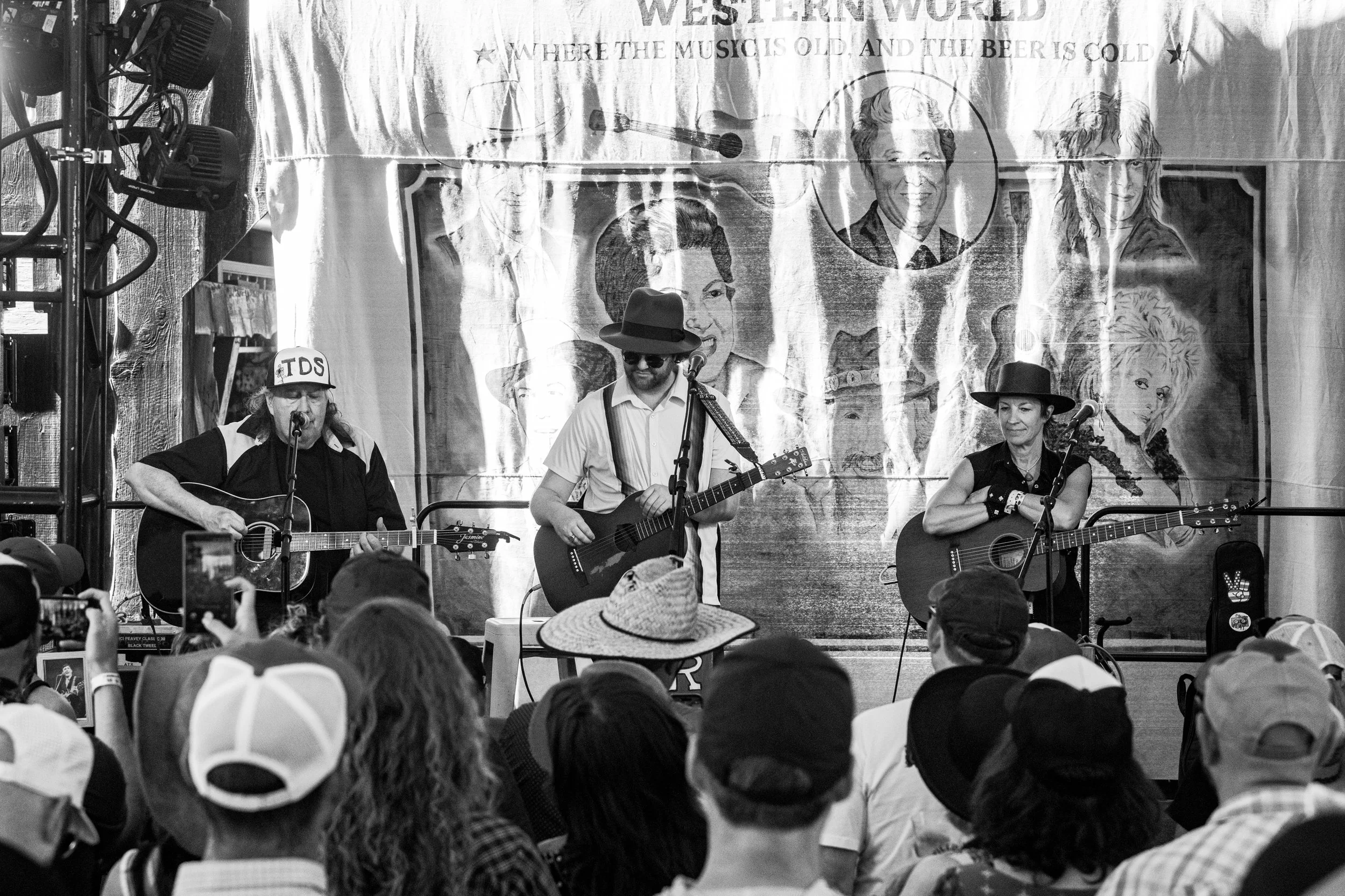
Photo by Michael Weidemann